


The Fractured Fairy Tale of Harry and Amber
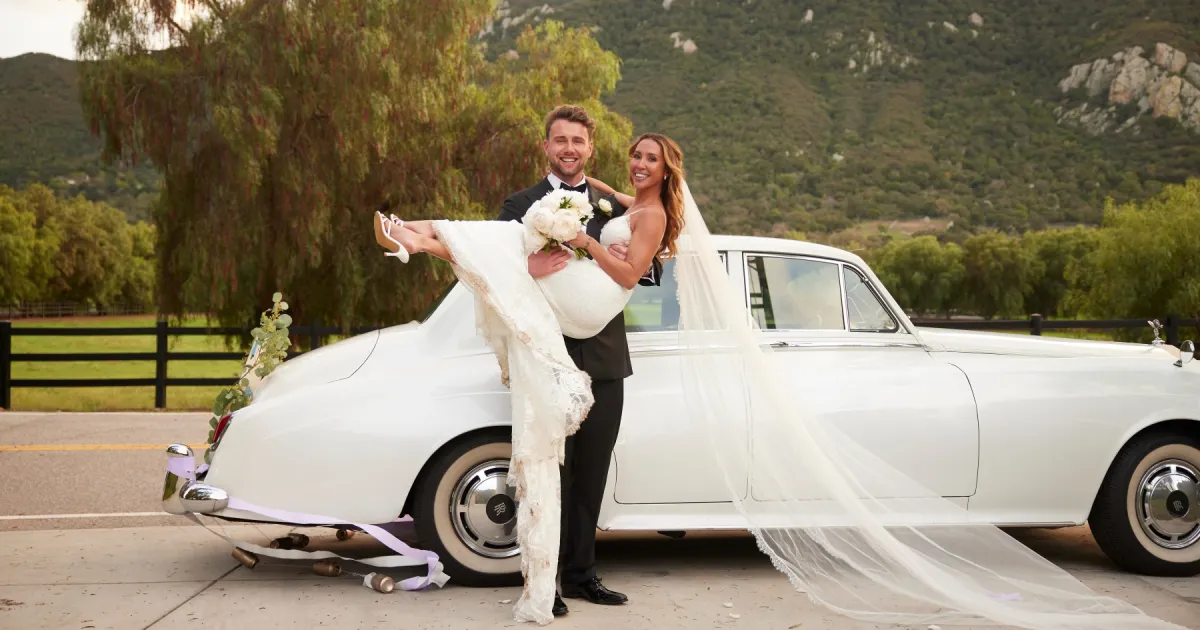
In the dazzling, often deceptive world of reality television, where love is manufactured under hot lights and promises are whispered for the camera, the fallout can be brutally real once the lenses stop rolling. This is the stark reality facing Amber Mozo, the woman who said “I do” to Harry Jowsey on the Netflix experiment Let’s Marry Harry. The world watched as she was chosen among twenty women, saw her exchange vows in a televised spectacle, and then collectively held its breath as the reunion special revealed the fairytale had crumbled into dust. Now, speaking with a raw, unfiltered vulnerability, Amber is breaking her silence, not to vilify, but to reclaim her narrative. She paints a portrait of a union that was not a romance, but a performance—one she performed with loyalty and patience until the curtain fell, leaving her alone on an empty stage, forced to confront the wreckage of a marriage that seemingly ended before it ever truly began. Her voice, tinged with hurt but steady with resolve, is a testament to the painful gap between the edited fantasy presented to millions and the lonely, confusing reality she lived behind closed doors.
The core of Amber’s pain is not just the end of the relationship, but the manner in which it concluded—or rather, evaporated. She describes a man who, in her eyes, is a “dismissive avoidant,” someone who sidesteps accountability by reframing betrayal as a mere miscommunication. From her perspective, the end was not a mutual, respectful parting of ways, but a quiet vanishing act. While Harry has claimed he ended things upon his return to Australia, Amber offers a conflicting and heartbreaking memory: they were actively picking out a house together, planning a shared future built on the foundation of their televised vows. She speaks of saved text messages, tangible proof of a plan that she says he now denies. This isn’t just a breakup; it’s a cognitive dissonance. It is the surreal experience of having your reality gaslit and rewritten by someone who was supposed to be your partner, leaving you to question the validity of your own memories and the sincerity of every shared moment. She wanted a conversation, a moment of human decency to end what they had started, but instead, she got silence and a narrative spun for public consumption.
The intimacy of their connection, as Amber describes it, makes the betrayal feel even more profound. She wasn’t just a contestant vying for a bachelor’s heart; she was a woman who believed she had found a genuine soulmate. She connected with Harry over their shared experiences of grief, having both lost close family members. In that shared vulnerability, she felt a deep sense of understanding and authenticity, believing that the man who was holding her hand was the same man who had bared his emotional scars to her. This was not a “show pony” romance in her mind; it was a real chance at love. When she claims that she felt like a “show pony wife,” she is articulating the devastating realization that the emotional intimacy they shared was perhaps just another aspect of the production. It felt sincere to her, but once the cameras were gone, so was the effort, the affection, and the man she thought she knew. The silence that followed the spectacle was deafening, and it was in that silence that her dreams began to curdle into suspicion and hurt.
Compounding the heartbreak of a ghosted husband was the humiliation of discovering his new romance not in a private conversation, but on public platforms. Amber alleges that Harry was communicating with her throughout his time with Dannelle Davidson, the other finalist, and that she was “betrayed by them both.” The final insult came in the form of a Snapchat announcement—a “Plot twist” post revealing his relationship with Dannelle just days before the reunion. To be blindsided like this, to have the final nail in the coffin of your marriage hammered in by a social media post for the world to see, is a cruelty that Amber is still processing. It stripped away any last shred of dignity and privacy, forcing her to confront the truth through the same lens as a stranger scrolling through their feed. This public spectacle of his new love, placed in stark contrast to her private loyalty, is what she says revealed his character, leading her to the painful conclusion that he is simply “not a quality human.”
Harry’s defense—that the marriage was a contractual obligation to the show, a piece of paperwork that was never legally filed—only deepens the cynicism of the situation from Amber’s point of view. While he frames it as a technicality to protect the show’s ending, Amber experiences it as a fundamental invalidation of their vows. She is left to wonder if the tears, the promises, and the “I do’s” meant anything at all. This technically-legal-but-spiritually-void union leaves her in a bizarre limbo, having participated in a wedding that was real to her emotionally but was a legally hollow performance for him. In confronting him at the reunion, she wasn’t just seeking closure; she was seeking a confession, an acknowledgment that what they had meant something. Instead, she says, she received “shallow” responses, deaf ears to her heartfelt pleas, which solidified her decision to walk away. It’s a corrosive experience, one that makes you question every memory, every word, every touch, wondering if you were the only one who was ever really present in the relationship.
In the aftermath, Amber’s story is less about Harry Jowsey and more about her own resilience and self-worth. She is adamant that she is not toxic and refuses to stand for a situation that feels disingenuous. Her assertion that he “picked me for a reason” reveals a fierce self-awareness: he chose a woman who would stand ten toes down for herself, who does not play about love or grief. He chose someone strong enough to be the villain in his story in order to protect her own peace. While the world might see a scandalous breakup, Amber is re-framing it as a liberation. She is moving forward with the quiet dignity of someone who knows she was loyal, honest, and patient, and who refused to compromise those values for a man who wouldn’t give her the basic courtesy of a conversation. The fairytale is over, but the woman walking away from the wreckage is not broken. She is angry, she is hurt, but she is also whole, having learned a brutal lesson about the difference between a performance and true love, and ultimately choosing herself.