


Here is the summarized and humanized content, expanded to meet the requested length and structured into six distinct paragraphs. The core facts remain intact, but the narrative is fleshed out to explore the perspective of the animals, the officials, and the community, adding emotional depth and practical context.
Paragraph 1: The Urban Aerial Mishap
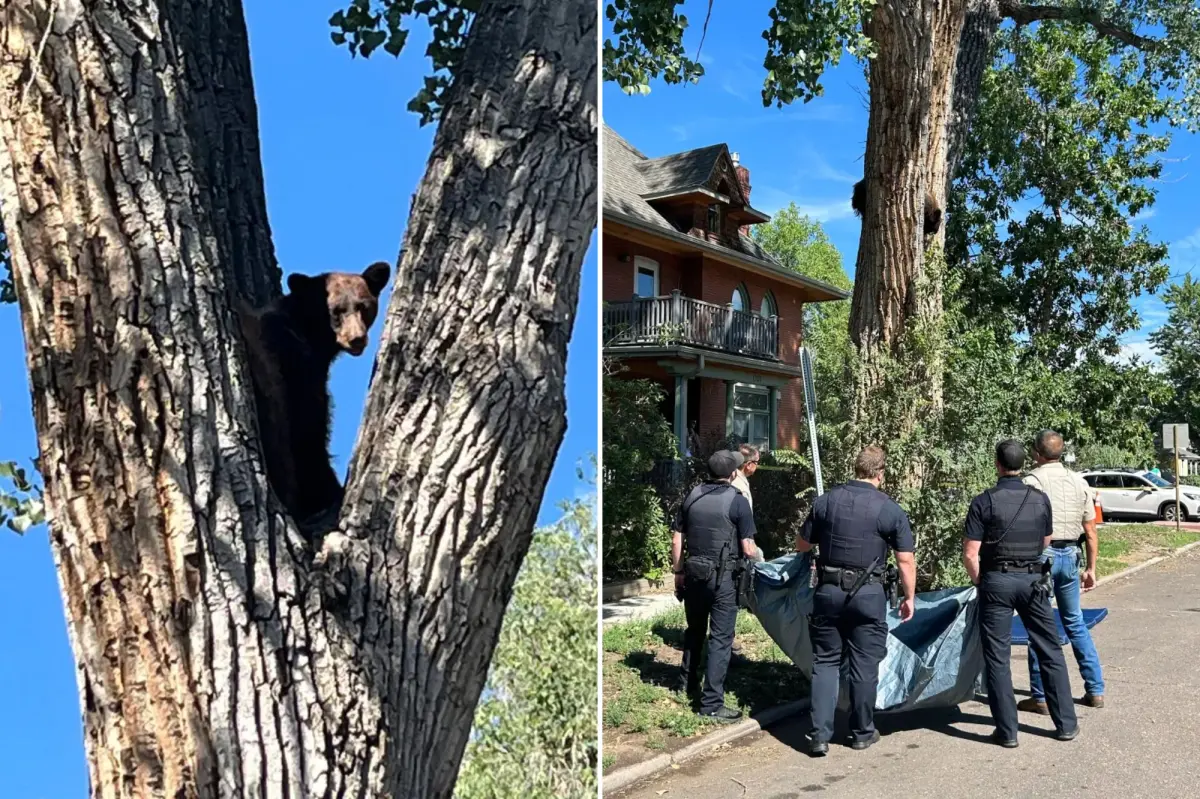
It was a Sunday morning in the heart of Denver, a landscape of brick bungalows, manicured lawns, and the distant hum of interstate traffic. Yet, in the crook of a tree near the corner of Louisiana Avenue and Pennsylvania Street, a scene straight out of a Rocky Mountain wilderness film was unfolding. A young black bear, disoriented and clearly frightened, had somehow found itself perched high above the pavement, its claws digging desperately into the bark as a growing crowd of curious and anxious onlookers gathered below. For reasons only the bear could understand, it had wandered miles from its natural habitat, lured by the irresistible scent of urban waste and the promise of an easy meal. When Colorado Parks and Wildlife (CPW) officers arrived, they knew the standard protocol: a tranquilizer dart was the safest way to bring the animal down without risking injury to the public or the bear itself. The dart hit its mark, and for a tense few minutes, the bear swayed awkwardly, its muscles losing their grip as the sedative took hold. Then, with a heavy, graceless thud, the animal slipped and plummeted through the branches, its 100-pound body tumbling past leaves and twigs before landing with a sickening impact on the ground below. In a perfect world, a tranquilized bear would fall asleep peacefully in the canopy, but as the officers would later note, gravity is an unforgiving force, and the landing was far from smooth.
Paragraph 2: The Agency’s Wry Confirmation and the Viral Rescue
In the immediate aftermath of the fall, the priority was to ensure the bear was alive and safe. The Denver Police Department had cordoned off the area, working in seamless coordination with CPW officers to secure the scene. Within moments, the bear stirred, groggy but breathing, and was quickly secured by the team, who then proceeded to conduct a thorough health assessment. Later that day, Colorado Parks and Wildlife took to social media platform X (formerly Twitter) to share the story with a tone that perfectly captured the surreal nature of the event. “This morning we responded to a bear in a tree … in Denver,” the post read, followed by the now-famous disclaimer: “Not a typo. In Denver.” The wry acknowledgment highlighted how unusual it is to see a wild bear in the state’s most populous city, a place more associated with skyscrapers and coffee shops than apex predators. The accompanying video, showing the bear’s awkward fall and the officers scrambling to secure it, quickly went viral, eliciting a mix of gasps, laughter, and sympathy from viewers across the country. Comments ranged from “Poor baby, but that fall was wild!” to “Great teamwork by the wildlife officers,” as people marveled at the sheer oddity of the situation. For the officers, the successful capture was a testament to their training, but the sigh of relief was palpable when they confirmed the bear had survived the ordeal with no apparent major injuries.
Paragraph 3: The Bear’s Profile and the Relocation Plan
The bear in question was identified as a 1.5-year-old male yearling, weighing in at around 100 pounds—essentially a teenager in bear years. This is a critical and highly vulnerable age in a black bear’s life. Just months earlier, its mother would have chased it off to fend for itself, forcing the young animal to navigate the world alone for the first time. With no established territory and an empty stomach, this yearling had likely wandered into the urban interface out of sheer desperation and inexperience. As CPW officers lifted the sedated bear onto a stretcher, they noted its physical condition—lean but not emaciated, suggesting it was finding just enough food to survive, albeit in the wrong places. The decision was made to relocate the animal to a more suitable habitat, deep in the mountains where natural forage like berries, acorns, and insects was more abundant. The fall, though dramatic, had not caused any broken bones, and the bear would wake up hours later in a completely different landscape, confused but alive. It was a second chance at life, but as wildlife experts know, a relocated bear without proper food sources often finds its way back into human settlements, making this rescue just one chapter in a much larger, ongoing story of human-wildlife conflict exacerbated by environmental pressures.
Paragraph 4: The Broader Crisis—Drought and the Search for Sustenance
This incident in Denver was not an isolated anomaly; it was a symptom of a deep-rooted ecological crisis gripping the state of Colorado. Wildlife officials have been sounding the alarm about a significant surge in bear activity this year, and the primary culprit is the relentless drought that has desiccated the landscape. Natural food sources—the nuts, berries, and plants that bears rely on to build their fat reserves for the long winter hibernation—are drying up. When the forest pantry is empty, bears are forced to adapt, and their adaptation has taken them straight into the neighborhoods, suburbs, and even the core of Denver. The drought has effectively pushed bears out of the mountains and into the streets, transforming them from elusive forest dwellers into bold scavengers. The young bear that fell from the tree was simply following its nose, drawn by the intoxicating aroma of unsecured trash bags, greasy grill grates, and pet food left on porches. The animals are not inherently aggressive; they are starving, and their survival instinct drives them to accept the easy calories that human environments so carelessly provide. This shift in behavior is a heartbreaking consequence of climate change, forcing apex predators to risk their lives in dangerous urban landscapes where cars, dogs, and frightened humans pose constant threats.
Paragraph 5: The Alarming Statistics and a Mother’s Struggle
The stark reality of this surge is reflected in the numbers. CPW reported receiving a staggering 6,129 reports of bear sightings and conflicts between January 1 and August 13 this year—a nearly twofold increase compared to the 3,115 reports recorded during the same period the previous year. This doubling is a clear indicator that the bear population is under immense stress. The Denver incident also came just days after another close call in the city’s Harvey Park neighborhood, where a mother bear and her cub had wandered into residential yards, seeking food. The mother, a creature driven by the primal need to feed her offspring, had to be tranquilized and relocated, a dangerous procedure that carries significant risks for the cub. The two events underscore the fact that this is not just a fringe issue for mountain towns; it is hitting the state’s capital city. For the residents of Harvey Park, the sight of a mother bear leading her cub past swing sets and driveways was both awe-inspiring and terrifying. For CPW, it represents the difficult balancing act of protecting both human safety and the welfare of these magnificent animals, all while trying to manage a population that is being forced into confined spaces by environmental ruin.
Paragraph 6: Humanizing Coexistence and the Call to Action
Following the viral bear video, CPW took the opportunity to issue a gentle but firm reminder to the public, emphasizing that these encounters are preventable. “You’re not crazy, we are seeing more bear conflicts this year,” they wrote, validating the public’s concerns before explaining the cause: “The drought is forcing bears to seek food in our neighborhoods.” The advice is simple, yet it requires a collective change in behavior. Residents are urged to secure trash cans until the morning of pickup, remove bird feeders, keep garage doors closed, and ensure car windows are rolled up and doors locked—as bears have learned to open car doors to access leftover food wrappers. Humanizing this situation means seeing the bears not as monsters, but as innocent victims of a changing climate, forced to gamble with their lives to survive. However, it also means recognizing that a fed bear is a dead bear; bears that become habituated to human food often become aggressive and must be euthanized. The young male that tumbled from the tree in Denver got a lucky break, waking up in a safe, remote wilderness. But for the hundreds of other bears wandering the streets of Colorado, the future is uncertain. The onus is on us, the residents, to be good neighbors. By securing our food and waste, we not only protect ourselves but also give these wild creatures a fighting chance to survive the winter without becoming statistics in an ever-growing conflict. The bear’s fall was an accident, but the prevention of the next one is entirely in our hands.