


I will summarize the provided content and expand it into a cohesive, six-paragraph narrative.
—
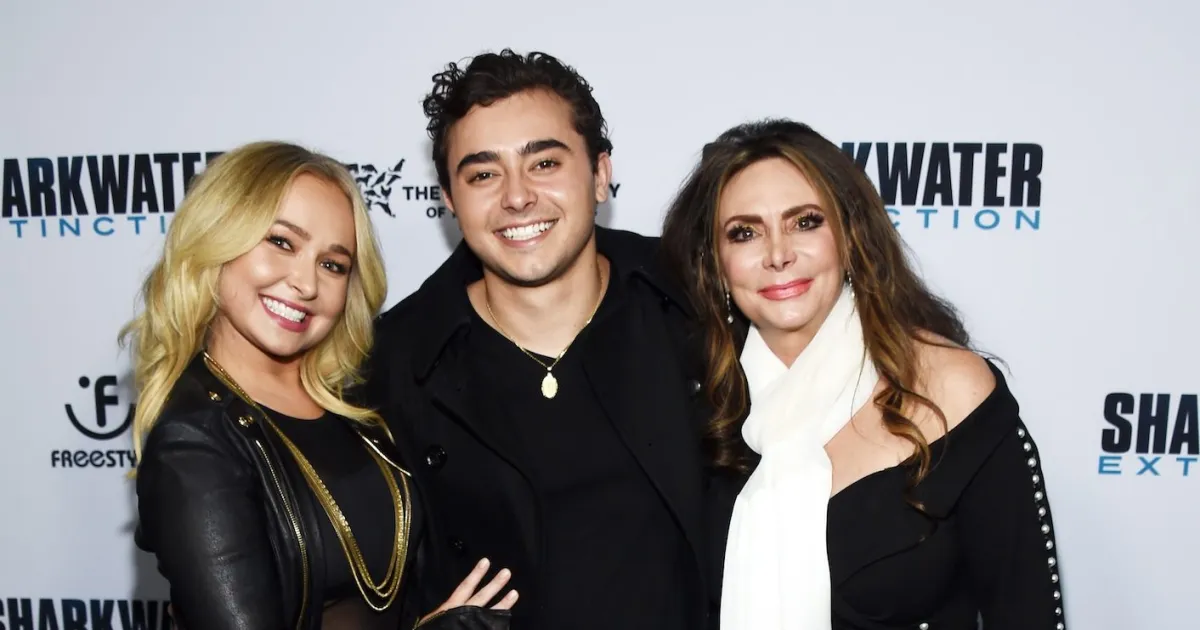
The entertainment world was shaken by the sudden and tragic passing of actress Hayden Panettiere, and in the immediate aftermath, a secondary storm erupted around the words of her grieving mother, Lesley Vogel. In her first public comments following the discovery of her daughter at her residence in South Carolina, Vogel offered a reflection on Hayden’s life that many perceived as an unfair indictment of the actress’s character, rather than a simple expression of sorrow. Her statement, which touched upon the struggles inherent in the entertainment industry for young people, was met with swift and intense backlash from prominent figures and the public alike, who felt her words lacked the empathy and understanding expected of a mother in such devastating circumstances. The criticism was so fierce that it transformed a moment of private grief into a very public and painful controversy, forcing Vogel to defend not only her initial remarks but also her entire history as a mother and manager.
At the center of the public’s scrutiny was Vogel’s long-established role in launching her daughter’s career, a decision that had been a point of discussion for years. From the very beginning, Vogel was the architect of Hayden’s path to stardom, signing her infant daughter with the prestigious Wilhelmina modeling agency when she was just eight months old. This early entry into the professional world quickly accelerated, with Hayden landing her first commercial just three months later and securing a recurring role on the beloved soap opera “One Life to Live” by the tender age of five. For decades, this narrative painted a picture of a stage mother, and in the wake of Hayden’s death, critics and fans were quick to revisit these origins, questioning whether the pressure of such an early career had contributed to the personal demons the actress battled throughout her life.
When the backlash against her initial statement reached a fever pitch, Vogel chose to sit down for an extensive interview with the Daily Mail to clarify her words, defend her actions, and offer a more detailed account of her relationship with her daughter. In this emotional conversation, she directly addressed the accusations that she had forced Hayden into the limelight, pushing back against the notion that her daughter was an unwilling participant in her own success. Vogel recounted her perspective from those early days, explaining that her decision to put Hayden into the industry was born from a mother’s belief in her child’s natural gifts and a desire to secure her future, not from a place of ambition or control. She described her initial intentions as purely practical, framing the work as a means of building a college fund for the beautiful baby she saw before her, never imagining the colossal fame that would follow.
Vogel was adamant that the idea of her daughter being a miserable, coerced child star was a complete fabrication, a narrative she found both hurtful and inaccurate. She painted a picture of a young girl who was not only talented but also driven, a self-motivated professional even in her earliest years. According to Vogel, it was Hayden herself who possessed the discipline and the desire to succeed, and the mother’s role was more about management and support than forceful direction. She challenged her critics with a simple, folksy logic: “Try making a 2-to-5-year-old child do something they don’t want to do. Are you going to be successful? No, you’re not.” For Vogel, this was proof that Hayden was not a passive victim but an active participant in her own career, a child who genuinely enjoyed the work and the praise that came with it.
As the interview progressed, Vogel delved deeper into Hayden’s personality, offering a more nuanced explanation for the pressures that may have contributed to her later struggles, which included well-documented battles with addiction and mental health. She rejected the idea that she had imposed expectations on Hayden, instead suggesting that her daughter was a self-critical perfectionist who placed immense pressure on herself to please others. Vogel conceded that Hayden may have felt a need to please her, but insisted this internal drive was not something she planted. The interview served as a platform for Vogel to share a more intimate portrait of her daughter as a complex individual, acknowledging that her struggles were multifaceted and not the simple result of a domineering mother, but a lifelong battle that was deeply personal.
Woven into this defense of her parenting was the profound and layered grief of a mother who had lost not one, but two children. Vogel poignantly referenced the death of her son, Jansen Panettiere, who had passed away just over a year earlier at the age of 28 from an undiagnosed heart condition. This immense loss added a harrowing context to her words, as she was now navigating the unimaginable pain of burying a second child. It was in this emotional space that she turned her attention to her critics, expressing her deep “hurt” and disappointment at the “lack of compassion” shown towards her as a mother in mourning. Having already endured one devastating loss, the public’s harsh judgment following Hayden’s death felt like a cruel second blow, one that compounded her grief with a profound sense of isolation and betrayal.