


The Quiet List: How an Idaho County’s Probation Office Became an Unexpected Front Line in Immigration Enforcement
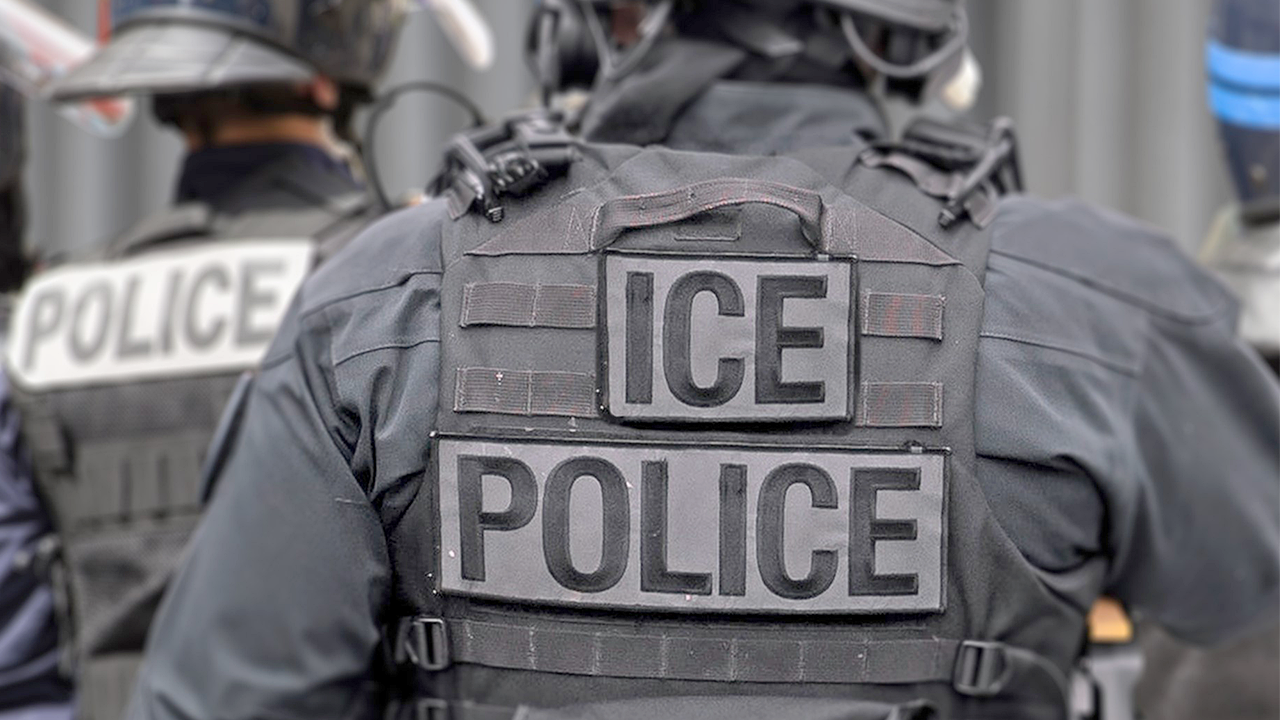
In the sprawling, agricultural landscape of southwestern Idaho, a quiet but consequential process has been unfolding within the administrative machinery of Canyon County’s criminal justice system. The daily routine of the county’s misdemeanor probation department—a world of check-ins, drug tests, and progress reports—has become intertwined with the broader, often contentious, efforts to enforce the nation’s immigration laws. Probation officers, whose primary role is to guide lower-level offenders toward rehabilitation and compliance, have been actively compiling and sharing detailed lists of individuals under their supervision with federal Immigration and Customs Enforcement (ICE) agents. A cache of internal emails, obtained by the investigative outlet InvestigateWest, reveals over 140 communications exchanged between May and July 2026, painting a complex and deeply concerning picture of local-federal cooperation. The emails show how everyday probation appointments at the county office have transformed into what are effectively staging grounds for potential arrests, creating a silent, stressful, and legally uncertain environment for anyone who happens to be born outside the United States. This system, births and held up as a safety measure, raises profound questions about privacy, the presumption of innocence, and the accuracy of local law enforcement’s role as an auxiliary arm of the federal immigration system. The core of the issue lies not just in the cooperation itself, but in the crude and potentially inaccurate methods used to identify the subjects, the reliance on birthplace rather than verified immigration status, and the personal, consequential human interactions that fill in the gaps of official redacted documents.
The mechanics of this operation, as revealed by Investigate, describe a process that seemingly began with the best of intentions to assist federal authorities, but quickly blurred the lines of what is deemed acceptable, or even lawful, practice. The email chain began in May when Norma Naranjo, a senior probation officer, reached out to six ICE agents to flag a and an upcoming appointment a man under her supervision. The emails are dripping with logistical detail—the exact time of a 7:30 a.m. meeting—providing a window of opportunity for an enforcement action. A day after the initial notice, she wrote again, the tension evident in her phrasing: “He is here are you guys on your way?” This pointed communication introduces the reader to the heart of the matter: the probation office, a place meant to be a supportive environment, was being transformed into a trap, or at least a holding pen, for an individual whose lack of national documentation was a presumption based on their birth origin, not a verified legal or illegal immigration status. The analysis of the emails shows a consistent pattern; officers reviewed their files to determine who had been born outside the U.S. and then proactively submitted those names to ICE. The emails are full of redactions and sometimes confusing wording, but the message is clear: “a list of foreign-born people” was a standard request, and “we are working on a procedure to keep a list current for your agency.” These direct lines of communication highlight the grim reality that the very professionals tasked with reintegration are also supposed to be gatekeepers for the enforcement mechanism.
The ethical chasm in this practice is immense. A public defense attorney, Nikki Ramirez-Smith, framed the operation as a basic violation of privacy in its most raw sense. The targeting of any person merely because they were born in another country, without the due diligence to confirm their immigration status, is a major civil liberties violation that strikes at the heart of the country’s values. The distinction between an “undocumented individual” and a lawful permanent resident is not a trivial legal opinion; it is a fundamental difference in the rights of a person. The words of one probation officer in the email chain, who stated he had provided a list of “Everyone in my cabinet that filled out (an) intake form and stated not born in US” highlights a concerning overreach. Another officer’s judgment that a person may be “here illegally” because he only had an ID from Mexico during an arrest is an example of the kind of racial and legal profiling that does not stand up to scrutiny. This method undeniably leaves room for error, and errors here can have life-wrecking consequences. The worst-case scenario, which is not theoretical, is that a U.S. citizen by naturalization, or a legal permanent resident, could be swept into a detention center based on a disparate marker like family origin. Attorneys worry that even those with proper legal status, the range of immigrant visas and temporary statuses, are at risk, especially as the administration ramps up deportation efforts and targets people who may not be immediately able to present documentation, even if they have law.
The behavior of the probation officers themselves also becomes a point of examination despite the department director, Jeff Bresch’s, defense. He argues the list is compiled with the best of intentions, as a factual, non-legal information exchange. He claims it is coordinator’s duty to provide “information to their lawful duties,” and that this is akin to cooperation with any other local or state law enforcement agency. In one email, he directed staff to go through case loads and send a list of “offenders who you believe are in the illegally.” The discrepancy is in the word “believe,” which stands in complete opposition to the legal standards of verification. The emails show that the department seems to have instructed a practice of presumed and compiled good faith, hoping that ICE would correct the local errors. Officer Brandon Black, in a response, said his list was all those who “filled out intake form” and stated to be born outside the US. The system misses the fundamental point that foreign birth does not equal illegal presence. The case of a legal immigrant who has a temporary visa, or a green card holder is lost in the system’s mechanics. The administrative duty of turning over these names, and the check-ins from ICE, leans into a human story where the probation officer acts as a “tipster” from the office, providing details like car license plate numbers, home addresses, and, of course, exact meeting times. The proceedings show a kind of ordinary complicity, a departure from the rehabilitative role into a policing mode, and the regular scheduling of actions based on these leads violates the core probation mandate to be a dedicated non-adversarial partner.
In the broader context, these actions from Canyon County’s administration are not an isolated incident. The county has a history of such collaborations, which has drawn lawsuits and public ire. In 2019, the Sheriff’s Office’s own policies to alert ICE about “all foreign-born inmates” was a subject of legal challenges, including a man who was held even after a bond was paid, a due process nightmare fit for a settlement. The ACLU of Idaho is now pursuing a lawsuit against the county and others for a 2025 incident, alleging racial profiling and unlawful detentions at a horse-racing venue, a case that remains open and unresolved. This current action with probation feels like a another chapter in a systematic strategy that began even before the Trump era. The frequency of the emails and the specific maneuvers at check-ins, the pending confirmation, gives a label to a routine that undermasses public trust and instills a terror in immigrant communities, even those with legal status. The wording from one defense lawyer indicates that ICE may target those with legal status if they have prior convictions, creating a parallel system to punishment with a shadow punishment of deportation. The added layer of precision—the examination of what each probationer is convicted of, DUI, drugs, disturbing the peace—shows that even the most minor crimes become a trigger for federal enforcement. There is no distinction between a person who has served their time and a potential threat. The departments believe they are helping the “safety of all,” but the methods have led to a state where the subject of enforcement is not on the final end of a verdict but from a link in their personal data on a file cabinet.
Ultimately, this window into the county’s probationary practices shows a significant shift in how a local administrative agencies might be co-opted into federal immigration enforcement without sufficient checks. The reality is that the probation department is not an extension of the immigration system, but they are operating as one by default. The main ethical conflict lies in using a person’s personal details (place of birth, address, and sobriety check-in times) to create a data set, and then handing that over to the federal government for them to possibly execute an arrest. The fact that they have admission to their unsubstantiated method is internal emails impacting that this is a routine of practice, not a one-time anomaly. The result is a silence and fear that falls in the immigrant community, where a traffic stop for a DUI is not just an interaction with the local justice system, but the “Meet” sign to see if the federal ICE will come to court. The local office and local sheriff have not taken the step to verify the information they are sending to federal agencies. The timeliness of information gives a strong, effective, pre-emptive filter for ICE, and, while they are careful about not crossing into a legally grey area, they are funding to operate in an ethically murky gray area. The normalization of this data transfer makes every person exposed to one more layer of administrative extraction from the very government charged with safeguarding their fair treatment under the law.
The reply also deepens as the constitutional could question of procedural fairness comes to the fore—both the unfairness of using a checklist based on a birth announcement and the fact that the enforcement is based on a privilege of appearance, not a person’s in-court. The list is purely an unsettling modern tool of proactive policing. It seems to hinge on the idea that ICE’s role is to be the ultimate filter, thus the county has a guaranteed layer of arm to work, but the harm is still being done. On the individual level, the story of a potential green card holder pulled into a maneuver, perhaps with family in the waiting room, is a nightmare that is possible. The raw fear from the dialogue between officers and ICE agents in the emails is almost impossible to quantify. In this story, the probation officer is both a helper of the person in their charge and the person who may be recommending them to a possible hold. The unstated exchange goes something like this: “You are here, I will help, but I also have to call the federal government, in case you are not supposed to be.” This seems to tell the community that not only is it possible to die from a traffic stop, but that a ‘traffic’ in terms of a legal visit can work as an invisible net. The future will depend on whether such methodical data-drawers will write policy to stop. The path to reconciliation would be to build a system that treats legal residents as legal residents, as it already does for paperwork. The issue is not to end the cooperation, but to make it lawful and safe, with proper legal verification and transparency. Until then, the system in Canyon County is a testament to the changing nature of who can be considered an anti constitutional citizen of the United States. The county’s admission that they are complete from getting status is correct—it’s they are being watched, and attempted to aid the federal. But these safeguards, the ability to challenge the mechanism, the check for accuracy, the due process, are clearly absent, creating panic in a rural county that may not have the legal support to live in a constant state of prior-to-violation. The future implications for the state and the country are in the town’s careful handling of their situation, a test case for the rest of the nation in how to manage the intersection of local justice and federal immigration.