



The Enduring Legacy of Point Break: A 1991 Action Classic
Introduction
The year 1991 stands as a remarkable moment in entertainment history, a time when popular culture seemed to align in ways that would define a generation. Will Smith was captivating television audiences with his charismatic performance in the beloved NBC sitcom The Fresh Prince of Bel-Air, while Whitney Houston’s powerful rendition of “The Star-Spangled Banner” at Super Bowl XXV became an iconic moment that transcended sports and entertainment. Meanwhile, Arnold Schwarzenegger was dominating the summer box office with the groundbreaking sequel Terminator 2: Judgment Day. Yet amidst these cultural touchstones, another film quietly emerged that would capture something indefinable in the teenage psyche. On July 12, 1991, director Kathryn Bigelow unleashed Point Break upon the world, a movie that initially performed respectably at the box office but has since evolved into something far more significant: a cultural phenomenon that continues to resonate with audiences more than three decades after its release. The film’s journey from modest success to beloved classic is a testament to its unique vision, unforgettable performances, and the passionate following it has cultivated over the years, particularly following the 2009 death of its leading man, Patrick Swayze.
The Story and Its Enduring Appeal
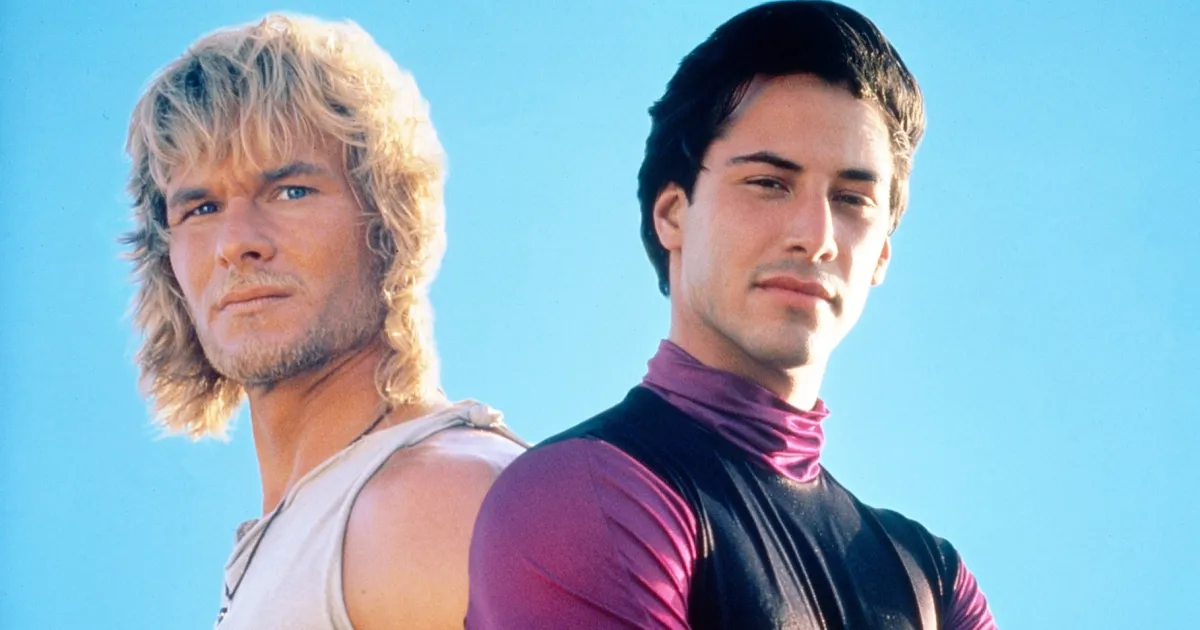
At its heart, Point Break tells the story of Johnny Utah, portrayed with earnest intensity by a young Keanu Reeves, an FBI agent with a promising career ahead of him and something fundamental to prove to himself and his superiors. When the opportunity arises to go undercover and infiltrate a suspected gang of bank robbers operating throughout the Los Angeles area, Utah seizes the chance with the reckless enthusiasm of someone who believes wholeheartedly in the righteousness of his mission. His investigation leads him to Bodhi, played with magnetic charisma by Patrick Swayze, a philosophical surfer who has assembled a crew of thrill-seekers to fund their endless pursuit of the perfect wave through increasingly audacious heists. What makes this setup so compelling is not the procedural elements but rather the complex relationship that develops between these two men from opposite sides of the law. As Utah immerses himself deeper into Bodhi’s world of surf, adrenaline, and living entirely in the moment, he finds himself increasingly drawn to a lifestyle that offers freedom from the constraints of conventional society. The film masterfully explores whether genuine human connection can transcend the circumstances that bring people together, making us question what we would sacrifice for the things we truly want in life.
A Stellar Cast
The casting of Point Break represents a perfect storm of talent, with Patrick Swayze at the height of his powers following career-defining performances in Dirty Dancing and Ghost. Swayze brings an otherworldly quality to Bodhi, making him simultaneously dangerous and deeply sympathetic. Keanu Reeves, still establishing himself as a leading man after impressive dramatic turns in independent films like River’s Edge and My Own Private Idaho, embodies Johnny Utah with a combination of physicality and vulnerability that would later become his signature. The supporting cast adds immeasurably to the film’s texture, with Gary Busey bringing his characteristic intensity to the role of FBI Agent Angelo Pappas, as well as memorable performances from Lori Petty as Tyler, the woman caught between both worlds, John C. McGinley as his long-suffering superior, and a young Tom Sizemore in a small but memorable role. Perhaps most surprisingly, Anthony Kiedis, the frontman of the Red Hot Chili Peppers, appears in an early acting role, adding to the film’s authentic early-nineties California atmosphere. Each performer brings depth and authenticity to their roles, creating characters that feel genuinely lived-in and compelling.
Critical Reception and Lasting Legacy
When Point Break was released, it received generally positive but somewhat muted reviews, with many critics praising its style and performances while noting its occasionally preposterous plotting. However, the legendary film critic Roger Ebert recognized something special in Bigelow’s direction, awarding the film three and a half stars in his review. Ebert astutely observed that Bigelow was interested in characters who live dangerously for philosophical reasons, noting, “They aren’t men of action, but men of thought who choose action as a way of expressing their beliefs.” This insight captures what elevates Point Break above the typical action film. Ebert understood that the movie’s explosive set pieces and meticulously crafted action sequences were ultimately in service of a deeper examination of why we do the things we do. The film’s exploration of masculine identity, friendship, and the search for meaning in a modern world that often feels empty and meaningless has only become more relevant as the years have passed. Patricia Sutherland, like many critics who initially dismissed the film, later recognized its brilliance, particularly in the context of appreciating how far ahead of its time it truly was.
The Artistry Behind the Action
The behind-the-scenes story of Point Break is as compelling as anything that appears on screen. Kathryn Bigelow, who would later achieve historic success as the first woman to win the Academy Award for Best Director for The Hurt Locker, brought a level of artistry and technical sophistication to the action genre that had rarely been seen before. Petty’s recollections of the production emphasize the collaborative and supportive atmosphere Bigelow created on set, describing the experience as harmonious and inclusive, where everyone worked as a team and no one was waiting around being difficult or entitled. This sense of creative freedom and mutual respect among the cast and crew is evident in the final product, which has a polish and confidence that comes from a shared vision. Bigelow’s decision to shoot the film’s surfing sequences with unprecedented technical innovation, including a system that allowed for incredible water-level photography, created images that continue to inspire filmmakers today. Her ability to balance these technical achievements with genuine character development and emotional storytelling raised the bar for what action films could achieve artistically.
A Timeless Classic
Three and a half decades after its release, Point Break continues to be discovered by new audiences and appreciated by those who grew up with it. The film’s influence can be seen throughout popular culture, from the 2015 remake that failed to capture the magic of the original to the countless homages and parodies that have appeared in various media over the years. The movie’s appeal has not diminished with age, thanks in large part to its perfect balance of genuine excitement, thoughtful themes, and the undeniable chemistry between its two leads. The final confrontation between Johnny and Bodhi remains a masterclass in dramatic filmmaking, offering no easy answers but honoring both characters’ essential natures. It’s the rare action movie that truly has it all: heart, brains, incredible stunts, and above all, a genuine sense of joy in the act of storytelling. For those looking to experience or reexperience this masterpiece, it’s currently available to stream for free on Pluto TV, offering the perfect opportunity to see why Point Break remains an enduring classic. It’s a film that speaks to the eternal human desire for freedom, the bonds that form between people, and the lengths we’ll go to live life on our own terms.