


In a surprise move that has sent shockwaves through the legal world, federal prosecutors and defense attorneys for Luigi Mangione have jointly asked a U.S. judge to schedule a conference for Friday morning. The request, filed Tuesday with the Southern District of New York, has sparked intense speculation that the 28-year-old accused killer may be negotiating a plea deal in his federal case—just days before he is set to face trial on state murder charges. Mangione is accused of fatally shooting UnitedHealthcare CEO Brian Thompson in Manhattan last December, and his case has become a lightning rod for debates about justice, mental health, and the healthcare industry. But the real legal drama unfolding now is not just about what Mangione did; it is about the complex and often contradictory layers of America’s dual sovereignty system, where state and federal charges can overlap in ways that create strange constitutional puzzles. The timing of the Friday conference is telling, and it has legal experts and casual observers alike asking whether Mangione is about to strike a deal that could undermine the entire state prosecution—or whether he has simply decided that a federal prison cell is preferable to a state one.
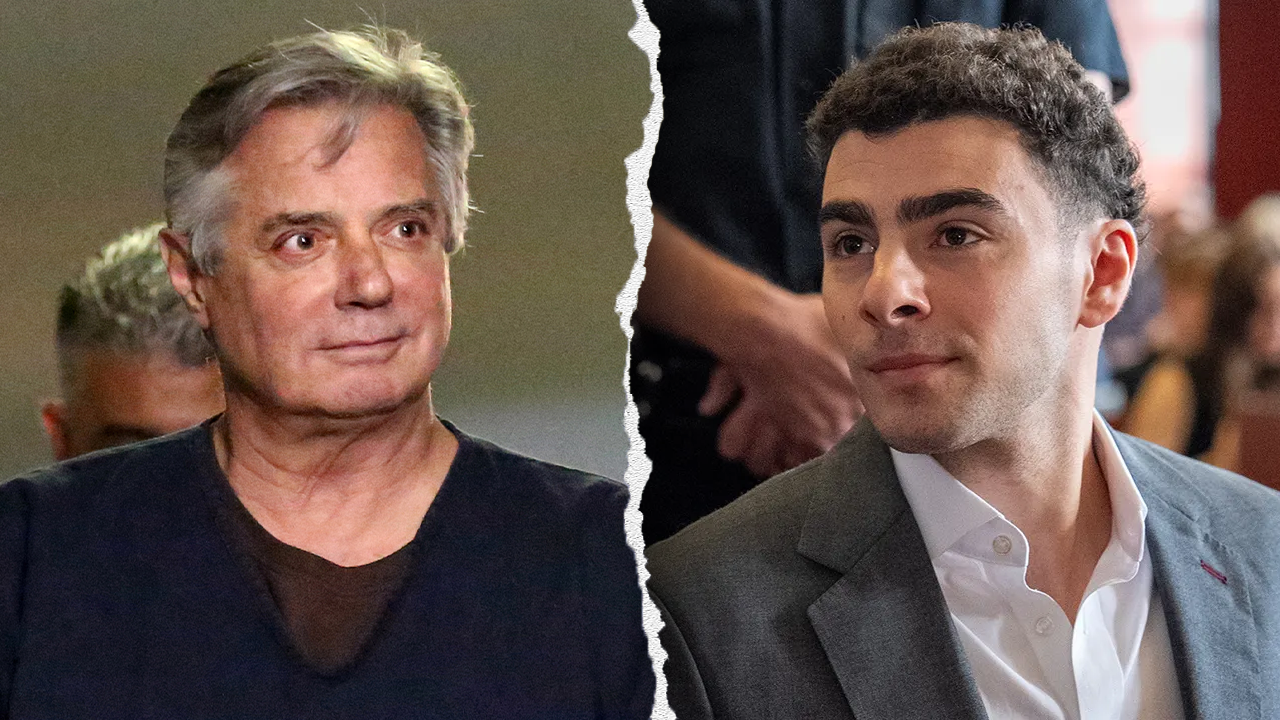
At the center of this swirling speculation is New York’s unusually broad double jeopardy protection, which is far more expansive than the federal standard. Under federal law, a person can sometimes be tried twice for the same underlying conduct if the charges come from different sovereigns—state and federal governments. But New York law takes a stricter view, and it has been interpreted to bar state prosecution when a federal conviction for the same conduct has already occurred, especially when the state and federal charges are aimed at preventing the same kinds of harm. This is exactly what happened in 2019 with Paul Manafort, the former Trump campaign chairman. Manafort had been convicted federally on fraud charges, and when Manhattan prosecutors tried to bring similar state charges, a New York judge threw them out, ruling that the overlap between the state and federal cases was “extensive—if not total.” The state’s appeal failed, and the case became a cautionary tale for prosecutors everywhere. Donna Rotunno, a Chicago-based defense attorney and Fox News contributor, explained the tension plainly: if Mangione takes a federal plea, the state case could be in serious jeopardy. “The prosecutors reached out to Judge Carro via letter back in July when they were talking about which case should be set for trial first and the importance of setting the state case for trial before the federal one,” she said. “So now here we are in a situation where the state is saying wait, wait, why is the government allowing Luigi Mangione to possibly take a plea on the federal side? Because if that’s the case, it could potentially upend our case on the state side.”
The Manhattan District Attorney’s office, led by Alvin Bragg, has been aware of this risk for months. In July, prosecutors wrote to Judge Gregory Carro, who is presiding over the state case, warning that they might need to “advise” the federal judge if any plea agreement in the federal case would threaten the “just outcome” of the state prosecution. That letter, which has since come to light, shows how seriously the state is taking the possibility of a federal plea. The concern is not just theoretical; it is a direct response to the Manafort precedent. But there are important differences between Manafort’s situation and Mangione’s. In Manafort, the state charges were for fraud crimes that were essentially identical to the federal charges he had already been convicted of—same conduct, same victims, same kind of harm. The court found that the two sets of laws were not designed to prevent “very different kinds” of offenses, so the state case could not move forward. In Mangione’s case, the state charge is second-degree murder, while the top federal charge is stalking resulting in death. The question would likely become whether those two statutes are aimed at different kinds of harm—murder being about the taking of a life, and stalking being about the pattern of harassment and intimidation that ultimately led to that life being taken. Rotunno, however, is skeptical that the distinction is enough to save the state case. “There’s a little bit of an argument to be made there, but again, if that was not an issue, then why were the prosecutors so concerned about making sure they go first?” she asked. “If you look at this law, this law really has to do with the state going first because the feds can prosecute any charges they want, even if they’re based on the same conduct. If the charges were so different, they wouldn’t worry about it.”
The stakes in this legal chess match could not be higher for Mangione. If he is convicted at trial on the federal charge of stalking resulting in death, he faces a maximum sentence of life in federal prison without the possibility of parole. At the state level, he faces a maximum of 25 years to life for second-degree murder. But Rotunno notes that even a conviction might not result in the maximum sentence, given that Mangione has no prior criminal history. “Odds of him getting life are probably slim even after a trial, given the fact that he had no background, and the maximum is life,” she said. “But either way, he would’ve gotten such a big number that odds of him getting out would be very slim.” This calculus may be driving the defense strategy. A plea deal in the federal case could potentially cap his sentence at something less than life, which would be a meaningful victory for someone facing the prospect of dying in prison. And from Mangione’s perspective, there might be another incentive: federal prisons are generally considered to have better conditions than state facilities. Paul Mauro, a retired NYPD inspector and Fox News contributor, put it bluntly: “Maybe Luigi has just decided he prefers federal prison to state prison. Because of generally better conditions.” That kind of practical consideration, while unglamorous, can be decisive in high-profile cases where the defendant is already facing the reality of spending decades behind bars.
This is not the first time the intersection of state and federal law has created complications in Mangione’s case. In February, during a court appearance, Mangione himself lashed out, claiming he was being subjected to “the same trial twice.” As he was escorted out of the courtroom, he shouted, “One plus one is two. Double jeopardy by any common sense.” Judge Carro had previously rejected a double jeopardy claim from Mangione’s defense team, but the issue has clearly not gone away. Then, in May, a different kind of legal conflict emerged. Judge Carro ruled that some key evidence recovered from Mangione’s backpack during his arrest at a Pennsylvania McDonald’s would be inadmissible at his state trial. But Judge Margaret Garnett, who is overseeing the federal case, rejected the defense team’s argument that the search was improper, allowing the evidence in the federal proceedings. This divergence between state and federal rulings is a reminder that Mangione is navigating two parallel legal systems with different rules, different judges, and different outcomes. Adding another layer to the complexity, Garnett also threw out the possibility of the death penalty in the federal case, ruling that the underlying stalking charge did not qualify as a “crime of violence.” That decision, which came as a relief to Mangione’s supporters and a blow to those seeking the harshest punishment, could also factor into the double jeopardy calculus. If the federal government has already determined that stalking is not a violent crime, then it becomes harder to argue that the state murder charge and the federal stalking charge are aimed at the same kind of harm—a distinction that could give the state prosecution a fighting chance.
As the legal world waits for Friday’s conference, the questions multiply. Is Mangione actually close to a plea deal, or is the hearing simply a routine scheduling matter? Neither side has commented, and the purpose of the conference remains unclear. Todd Blanche, who was Manafort’s lawyer in that 2019 double jeopardy case and is now the U.S. attorney general, was asked about the Mangione hearing at a Justice Department briefing on Wednesday. He declined to answer. The silence is deafening, and it has only intensified the speculation. For Manhattan District Attorney Alvin Bragg, the situation is a nightmare scenario. He has spent months preparing for a high-stakes murder trial, only to see the feds potentially swoop in and make it moot. For Mangione’s defense team, the possibility of a federal plea offers a path to a more predictable outcome, and one that might be more tolerable for their client. For the families of the victim, the public, and everyone following this saga, it means more uncertainty and more waiting. But whatever happens Friday, one thing is clear: the case against Luigi Mangione has become a landmark legal battle, not just about the facts of an assassination, but about the very structure of American justice—a system where the same act can be prosecuted twice, where state and federal laws collide, and where a single procedural decision can change the course of a life. The human story beneath the legal jargon is one of a young man accused of a shocking crime, sitting in a cell while lawyers fight over the meaning of double jeopardy, and a city still trying to make sense of an act of violence that seemed ripped from a political thriller. Whether he pleads, goes to trial, or finds some unexpected escape hatch, the outcome will be felt far beyond the courtroom.