


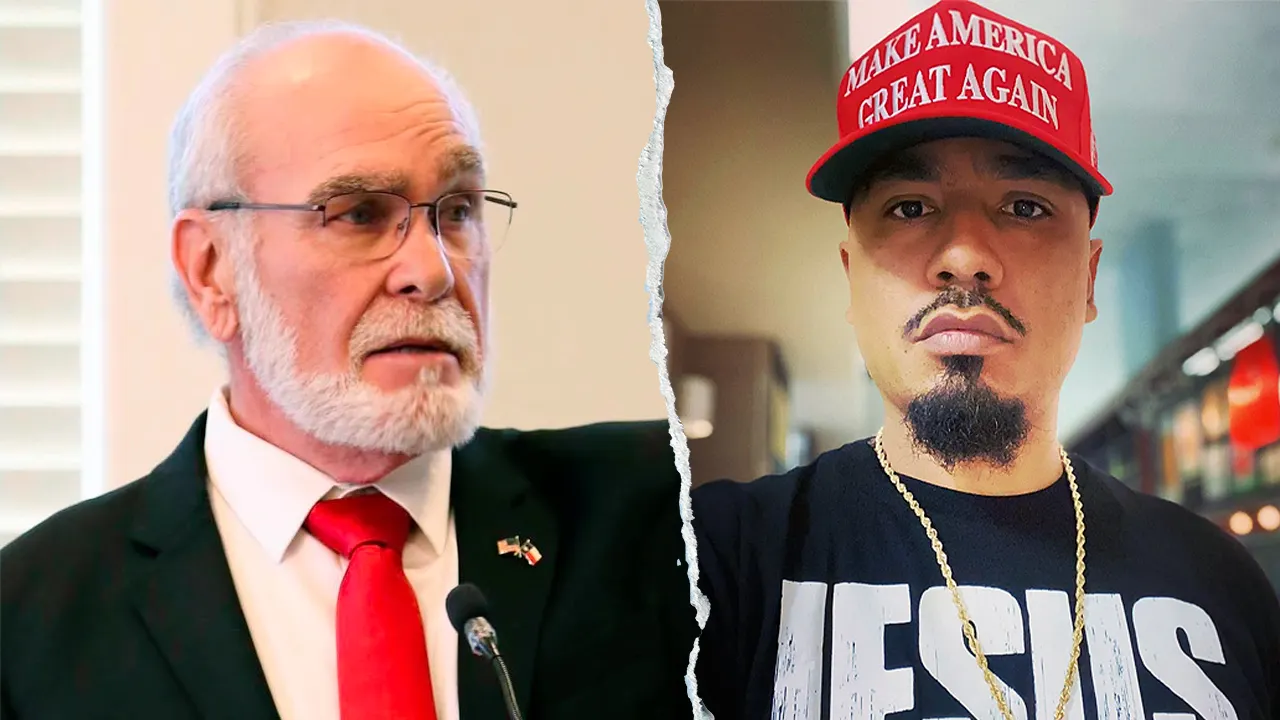
The Perils of Power: A West Texas Judge’s Facebook Post Ignites a Legal Firestorm
In the sprawling, sun-baked landscape of West Texas, where oil derricks punctuate the horizon and community ties run deep, a seemingly impulsive act by a local judge has unraveled into a complex legal saga that strikes at the very heart of civic trust and the abuse of governmental authority. What began as a single, controversial Facebook post has spiraled into a federal civil rights lawsuit and an unprecedented, multi-pronged effort to remove a sitting county judge from office. The case, which pits a vocal government critic against the county’s highest-ranking elected official, has become a cautionary tale about the dangers of wielding public office as a weapon against private citizens. At the center of this storm is Midland County Judge Terry Johnson, who stands accused of a brazen act of retaliation: publishing the personal identifying information of a political adversary on social media, a practice commonly known as doxxing. The fallout from this digital missive has not only threatened the privacy and safety of one man but has also raised profound questions about the limits of political discourse, the sanctity of confidential data, and the mechanisms available to hold powerful figures accountable.
The genesis of this legal battle lies in a digital confrontation that escalated with alarming speed. Christino Rodriquez, a Midland resident who is known online by the moniker “Nino America,” has long been a vocal presence at local government meetings, frequently using public forums to criticize the actions of county officials. His outspokenness, however, appears to have made him a target. According to a 26-page federal lawsuit filed by his attorney, James “Trey” Trainor, the conflict reached a boiling point after Rodriquez published federal court records involving Midland County online. Less than 24 hours later, Judge Johnson allegedly retaliated. The lawsuit alleges that Johnson, using his official position to access a criminal justice information system, obtained a 2015 arrest warrant for Rodriquez and posted it on his personal Facebook page. The caption accompanying the document was a pointed attempt at public humiliation: “Convicted felon trying to be a player.” The implication was clear, but the facts were murkier. The complaint asserts that the charges connected to that warrant were ultimately dismissed, and Rodriquez was never convicted of the crime, making the judge’s characterization both defamatory and misleading.
What makes the alleged act even more insidious, however, is the meticulous, almost calculated, nature of the disclosure. The lawsuit points to a chilling detail: the arrest warrant was partially redacted, but not in a way that protected the subject. While Rodriquez’s home address and telephone number were blacked out, his Social Security number and driver’s license number were left fully visible for all of Johnson’s Facebook friends and followers to see. This selective redaction is a critical piece of evidence for the plaintiff’s legal team, as it suggests the exposure of the most sensitive data was not an oversight but a deliberate choice. “The lawsuit is really about retaliation and abuse of power,” Trainor told Fox News Digital. “It’s kind of secondarily about First Amendment rights and the ability of people to actually criticize government without having government being used as a weapon against them.” The attorney’s words frame the case as more than a simple privacy violation; they position it as a direct assault on the democratic principle that citizens can hold their leaders accountable without fear of reprisal. By allegedly using the machinery of the state to dig up and broadcast a citizen’s most private information, Johnson is accused of weaponizing his office to silence a dissenting voice.
The human cost of this alleged abuse of power extends far beyond the initial embarrassment of a public post. For Rodriquez and his wife, the publication of his Social Security number and driver’s license has created a persistent state of anxiety and vulnerability. In an age where identity theft is a rampant and devastating crime, having one’s most sensitive personal data broadcast to the public is a nightmare scenario. “This is probably the highest form of doxxing that you could ever engage in by putting this type of personal information out there,” Trainor explained. The fear is not just about the immediate exposure but about the long-term consequences. “We don’t know how many pictures were taken, how many screenshots were saved, all of those types of things,” he added. “So we really don’t have an overall understanding yet of how broad the damage is.” The lawsuit seeks compensatory and punitive damages, as well as a lifetime of identity-theft protection and credit monitoring for the plaintiff. Trainor’s team has even begun discussions with the Social Security Administration about the drastic step of issuing Rodriquez a new Social Security number, a process that is notoriously difficult and disruptive, underscoring the severity of the situation. The psychological toll of knowing that a government official, someone sworn to protect the public, deliberately exposed you to potential financial ruin is a burden that cannot be quantified in a court filing.
While the federal lawsuit seeks monetary damages for the victim, a separate, parallel battle is being waged on the political front to strip Johnson of his authority altogether. Midland County District Attorney Glenn Harwood filed a petition in early August seeking Johnson’s removal from office, marking the first step in a rarely used legal process under Texas law. Harwood, who has stated he has “no role” in the federal lawsuit, has been careful to describe the removal effort as a distinct matter, though the underlying facts are the same. The process is a labyrinthine one, requiring the petition to be reviewed by an administrative judge who can either dismiss it or assign it to another court. An outside prosecutor would then have to decide whether to pursue the civil action, a series of procedural hurdles that could easily derail the effort. Recognizing this fragility, a third party has stepped into the fray. Midland ISD Trustee Brandon Hodges has filed a motion to intervene in the removal case, arguing that his involvement is crucial to ensuring the effort doesn’t die on a technicality. Hodges’s filing is a strategic maneuver designed to keep the case alive, particularly if a legal challenge arises over Harwood’s dual role as both the district attorney and the resident who initiated the proceeding. “I intervened so this removal case does not die on a procedural technicality tied to Glenn Harwood’s dual role,” Hodges said in a statement. “If the court rules against him on that issue, the case still needs to move.” This intervention highlights the deep desire within the community to see a formal reckoning for the judge’s actions, beyond just a financial penalty.
The controversy has also ignited a broader conversation about accountability and has drawn public calls for Johnson to step down. During a recent Commissioners Court meeting, Midland County resident Shandi Williams publicly demanded Johnson’s resignation, a sentiment echoed by others in the community and online. Steven Villela, a candidate for Midland County Commissioner, took to Facebook to voice his agreement, writing, “No elected official is above the law, and every public servant has a duty to protect the rights and confidential information of the people they serve. Accountability isn’t about politics, it’s about doing what’s right.” The political pressure is mounting, though Johnson, who lost his reelection bid in the March primary, has so far remained defiant. If he stays in office, his term is slated to end in early 2027, meaning the community could be forced to endure his presence for months to come. Meanwhile, the legal net is tightening. Trainor revealed that he and Rodriquez have been interviewed by a Texas Ranger, indicating a potential criminal investigation is underway. Subpoenas have also been issued to Meta, the parent company of Facebook, to confirm the exact timing and reach of the post. The combination of a federal civil suit, a state removal proceeding, and a potential criminal inquiry represents a multi-front war against the judge, ensuring that this story will continue to unfold for a long time.
Ultimately, this case transcends the actions of a single judge in a single county. It serves as a stark and unsettling reminder of the immense power wielded by public officials and the vulnerability of ordinary citizens who choose to speak truth to power. The alleged actions of Judge Johnson represent a fundamental betrayal of the public trust, transforming the tools of law enforcement—designed to protect the innocent and convict the guilty—into instruments of personal vendetta. As Trainor poignantly noted, “We need that information to be available to law enforcement to track down the bad guys. The only difference here is that my client wasn’t a bad guy. He was just somebody who decided to speak out about a local issue.” This simple statement cuts to the core of the matter. If a citizen can be doxxed by a county judge for criticizing local government, the very foundation of democratic participation is threatened. The outcome of this case, both in the federal courtroom and in the political arena, will send a powerful message about whether such abuses of power will be tolerated or whether the guardians of the public trust will be held to the highest standard. For now, the people of Midland County, and indeed the nation, are watching to see if justice will prevail.