



Here is a humanized and expanded summary of the provided text, crafted into six substantial paragraphs to convey the full narrative with warmth, detail, and emotional resonance.
—
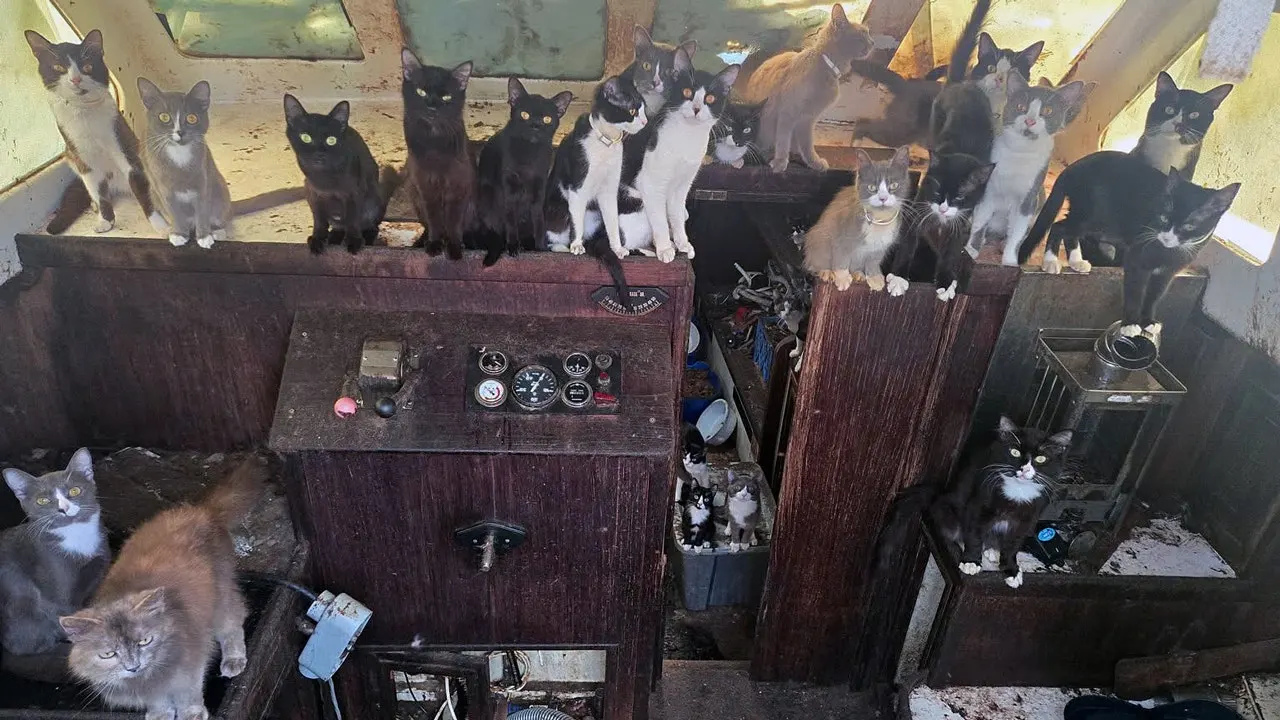
On a hazy Tuesday morning in early August, the serene waters off Owen Beach in Tacoma, Washington, became the backdrop for an extraordinary and heartbreaking sight. A 40-foot sailboat, battered and clearly abandoned, sat listlessly bobbing in the Puget Sound. It wasn’t the vessel’s neglect that drew the attention of the Tacoma Police Department’s Marine Services Unit, but rather the desperate, thin meows that carried across the water—a chorus of distress that signaled a floating crisis. Upon boarding, officers were confronted with a scene of quiet tragedy: more than thirty cats and kittens, their fur matted and ribs showing, cowering in the boat’s cramped, filthy cabin. They were frightened, malnourished, and utterly bewildered. The initial discovery was not just a rescue call; it was the beginning of a complex, delicate, and emotionally taxing operation that would grip the local community and test the patience and compassion of every first responder involved. It was a stark reminder that sometimes, the most unexpected places hold the most vulnerable souls, and that the duty to protect extends far beyond the city streets.
The immediate challenge was not simply to grab the animals and go. The cats were terrified, and a boat is a labyrinth of nooks, crannies, and dangerous mechanical spaces. Marine Services quickly realized they could not do this alone, and a coordinated effort was launched, bringing in the city’s Animal Control officers and even the department’s Forensics Unit. The presence of forensics signaled that this was not just an animal welfare issue but a potential criminal investigation into neglect and abandonment. For days, the rescue team worked methodically, using humane traps baited with food, gentle persuasion, and an enormous amount of patience. Each cat successfully secured was a small victory, but it was slow, meticulous work. The initial count of thirty soon grew, slipping past forty, then fifty. As the days stretched on, the operation took on a rhythm of its own; the team would arrive at dawn, check the traps, soothe the frightened felines, and carefully transport them to safety. The physical toll was immense—the rocking boat, the smell of ammonia and decay, the constant vigilance—but the emotional weight was heavier. Every pair of wide, terrified eyes they met told a story of neglect, and every purr they managed to coax out was a testament to the resilient spirit of these animals.
What began as a two-day operation stretched into a grueling, six-day marathon. The final tally was staggering: sixty cats and kittens had been living aboard that single vessel. Sixty individual lives, each with its own distinct personality, all sharing the same trauma of overcrowding and scarcity. The team worked through fatigue, weather delays, and the logistical nightmare of moving dozens of animals off a floating structure. This was no longer just a rescue; it was a full-scale evacuation. The community watched with bated breath, sharing social media updates and offering support. The officers, who had initially braced for a quick job, found themselves bonding with the little creatures, giving them names and celebrating each successful capture. The sheer scale of the hoarding situation highlighted a deeper, sadder truth about how easily animals can be overwhelmed by human neglect. Yet, amidst the exhaustion, there was an unshakeable resolve. They were not going to leave a single cat behind. The promise to see this through became a mantra, driving them through the final, most difficult hours of the extraction.
On the sixth day, the moment finally arrived. The last cat, a skittish tabby that had evaded capture longer than the rest, was gently secured. The relief that washed over the team was palpable. It was time to announce the successful end of the operation, and in a moment of pure, wholesome levity, the Tacoma Police Department took to social media to share the news. Their post was a masterpiece of endearing wordplay: “That’s a wrap! The final cat is off the boat. Fur real this time! Final cat count: 60!” They continued, “That’s all for meow!” The puns were a deliberate, joyful release of tension, a way to humanize the difficult work and connect with the public who had followed the saga. It was a brilliant reminder that behind the badges and the serious work, there are people with hearts full of compassion and a willingness to find humor in the face of adversity. The announcement was met with an outpouring of congratulations, gratitude, and relief from the public, who had been anxiously awaiting the news. The quirky tone of the message perfectly encapsulated the collective feeling of a community exhaling after a long, tense week.
However, the story was not without its complications. While the official rescue was complete, the investigation into the boat’s owner was ongoing. In their initial statement, police had a clear, firm message for the public, delivered in all caps: “PLEASE DO NOT BOARD THE VESSEL unless you are the legal owner.” This warning was not born of paranoia but from a specific incident that had occurred during the rescue. A private individual, Camille Sutherland, acting on her own good intentions, had boarded the vessel without authorization during the operation. She managed to capture two cats and transported them to a local Humane Society. While her desire to help was understandable, her unauthorized entry created a significant headache for the authorities. It compromised the integrity of a potential crime scene, put her own safety at risk, and complicated the official chain of custody for the animals. Police explained that the vessel was legally registered and that Marine Services was in the process of having it moved. They also stated that, despite the success, they would continue to make trips to the boat as a precaution, because, as they wisely noted, “cats are exceptionally good at hiding.” The incident served as a teaching moment: while compassion is commendable, it must be channeled through proper channels to ensure both safety and legal integrity.
In the aftermath, the happy ending began to take shape. Over forty of the sixty rescued cats were transported to the Humane Society for Tacoma & Pierce County, where they would receive medical care, nourishment, and plenty of love. The remaining felines were placed directly into foster homes, ensuring they would not have to endure the stress of a shelter environment. For the animals, a new chapter of life was beginning—a life defined by warm beds, full bowls, and gentle hands instead of cold, cramped darkness. For the police, the work was done, though the investigation into the owner remained open, with no arrests or charges announced yet. The story, which could have been a grim footnote about animal neglect, instead became a testament to community collaboration and the unyielding spirit of those who care for the voiceless. It echoed a similar case in Florida, where a mail carrier was accused of hoarding over a hundred animals, reminding us that this is a nationwide issue. But in Tacoma, the focus was on the sixty survivors. Their rescue was a collective effort of professionals, and their future was now bright. As the sailboat was finally moved away, the waters off Owen Beach grew quiet once more, but the memory of the great cat rescue—and the hope it inspired—would linger for a long time.