


Paragraph 1: The Shocking Fall of Francesca Hong and the Soul of the Democratic Party
Tuesday night’s slate of primaries across America delivered a resounding message that the battle for the Democratic Party’s soul is far from settled, and that the left’s aggressive messaging often backfires spectacularly on the local level. The most seismic shock came in the Wisconsin gubernatorial primary, where radical socialist state legislator Francesca Hong suffered a stunning, humiliating upset despite polls showing her leading her nearest rival by nearly twenty percentage points. Hong’s defeat, however, was not a sudden shift in voter ideology, but rather a catastrophic failure of public relations and cultural awareness. The 37-year-old chef and first-term lawmaker, who had the progressive wind at her back, was sunk by a single, poisonous word: Thanksgiving. Her long-deleted November 2020 social media post attacking the “colonizer holiday” was unearthed, and rather than serving as a footnote, it became the defining narrative of her campaign. This single gaffe sent Wisconsin’s Democratic power brokers into a frenzy, desperately scrambling to unify behind a more electable, less controversial figure—Milwaukee County Executive David Crowley—who re-entered the race just in time to prevent a Hong victory that would have made the party a national laughingstock. The night contained other surprises, including the ousting of a longtime congressman in Connecticut, the crushing defeat of a Trump-endorsed candidate in Minnesota, and the sobering advance of the late Senator Lindsey Graham’s sister in South Carolina, yet the Hong story encapsulated a central truth: in the modern political arena, one poorly-timed tweet can outweigh a lifetime of community service.
Paragraph 2: The Thanksgiving Gaffe That Derailed a Campaign
To understand how Hong lost, one must examine the devastating interview that sealed her fate. When CNN’s Kaitlan Collins pressed her on the deleted post, Hong attempted a 46-second filibuster that was equal parts confusing and tone-deaf. She invoked her background as a chef, explaining how at sixteen she prepared a community Thanksgiving meal and cherished bringing people together around a table—a genuinely humanizing sentiment that was immediately undercut by her assertion that Thanksgiving is “also a time that’s incredibly painful for many people in our communities.” She then claimed her views had “evolved,” suggesting that her hospitality experience would make her a better governor. It was a rambling disaster that satisfied no one. Realizing she had “stepped in it,” Hong frantically tried to walk it back days later, telling Politico’s Playbook podcast that her “favorite holiday is Thanksgiving” and that she “actually love[s] it.” Yet her past social media history, which included vitriolic rants against Christmas, Halloween, Valentine’s Day, and even Mother’s and Father’s Day, painted a picture of a chronic contrarian who viewed America’s most cherished traditions with scorn. The combination of the original post, the rambling defense, and the embarrassing backtracking proved to be the perfect kryptonite for a socialist candidate. It handed moderate Democrats a clean, visceral issue with which to define her, transforming a policy debate about healthcare and wages into a question of cultural patriotism. By the time the panic set in, Crowley was already being positioned as the sane, mature alternative, and Hong’s momentum evaporated as quickly as leftovers after the big feast.
Paragraph 3: The Graham Name Faces Its Ultimate Test in the Palmetto State
Far away from the liberal heartland, South Carolina witnessed the unusual spectacle of a political dynasty attempting to consolidate power under extraordinary circumstances. Darline Graham Nordone, the 62-year-old sister of the late Senator Lindsey Graham, advanced to an Aug. 25 runoff election against Rep. Ralph Norman in the special GOP primary to fill the seat left vacant by her brother’s abrupt death on July 11. Nordone, who received the coveted endorsement of President Trump, dominated the rural regions of the Lowcountry—her late brother’s political base—garnering 32.7% of the vote to Norman’s 24.6%. Neither candidate secured the necessary majority, forcing a runoff that will now hinge on a delicate calculus of regional alliances. Nordone’s performance was less impressive in the suburban enclaves around Charleston and the state capital, Columbia, where many voters instead backed former Governor Mark Sanford. Norman, who built his support in the northern counties around Greenville, will now battle Nordone for the loyalties of Sanford’s supporters, as well as those Republicans in the Myrtle Beach area who opted for eliminated candidate Rep. Russell Fry. It is a crash course in campaigning for Nordone, a native of Central, South Carolina, who has never held elected office and has had just over five weeks to prepare for the fight of her life. The winner of this runoff will be heavily favored to keep the seat in Republican hands against Democratic pediatrician Annie Andrews in November, meaning the Graham name—once a force of political pragmatism—is now facing its ultimate test of survival in a deeply polarized state. The race is as much about legacy as it is about ideology.
Paragraph 4: Minnesota’s Historic Shift and the Shadow of a $9 Billion Fraud
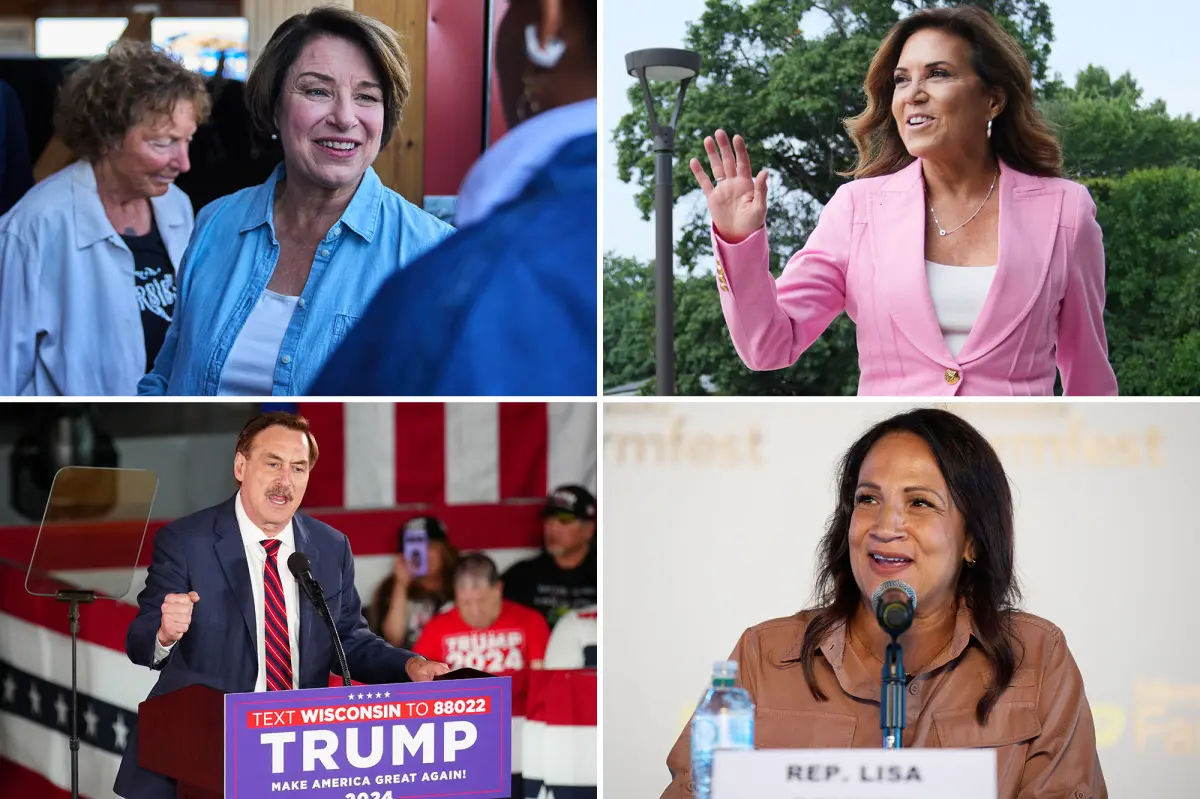
In the Land of 10,000 Lakes, Tuesday night made history by guaranteeing that Minnesota will have its first-ever female governor next January. Regardless of whether Democrat Senator Amy Klobuchar or Republican state House Speaker Lisa Demuth wins the general election this fall, the state’s glass ceiling has been shattered. Both emerged victorious from their respective primaries, setting up a general election clash that will be dominated by a massive, sprawling scandal involving the theft of up to $9 billion in taxpayer money through several fraudulent social services schemes. Demuth, who herself made history as the first black lawmaker and first Republican woman to serve as Speaker of the Minnesota House, has campaigned relentlessly on an anti-fraud agenda, pledging to immediately implement a “Fraud Prevention Plan” if elected. At her election night watch party, she painted Klobuchar as a career politician who would simply be “2.0 Tim Walz,” accusing the 20-year Capitol Hill veteran of having “never protected our taxpayer dollars.” “Not once did she talk about fraud until she started running for governor,” Demuth declared, hammering home the point that Klobuchar’s “eyes have been on either being president or working in Washington.” Klobuchar, however, has attempted to counter this narrative by promising a “top-to-bottom audit” of state agencies starting on “day one” of her administration. While Klobuchar remains a heavy favorite to win the general election—the last Republican elected governor in Minnesota was Tim Pawlenty in 2006—the sheer scale of the fraud scandal has made this race far tighter than historical trends would suggest, forcing a veteran senator to adopt a combative, accountability-driven tone on the trail.
Paragraph 5: Progressive Victories and Mike Lindell’s Crushing Defeat
While the progressive left mourned the loss of Francesca Hong in Wisconsin, they found a huge consolation prize just across the border in Minnesota. Lieutenant Governor Peggy Flanagan, a staunch progressive who campaigned on “Medicare for all” and ending US aid to Israel, defeated centrist swing-district congresswoman Angie Craig in the Democratic primary to replace retiring Senator Tina Smith. The race represented a microcosm of the national ideological civil war, with Flanagan securing endorsements from socialist Senator Bernie Sanders, lefty Senator Elizabeth Warren, and “Squad” Rep. Ilhan Omar, while Craig was backed by House Minority Leader Hakeem Jeffries and former Speaker Nancy Pelosi. Flanagan’s victory signals that the activist base still holds significant sway in deep-blue states, even as the establishment pushes back elsewhere. She will face Republican nominee Michele Tafoya, a former NFL sideline reporter, in the general election. However, the most intriguing Republican story in Minnesota was the outright rejection of MyPillow founder Mike Lindell. Despite a glowing, last-minute endorsement from President Trump, who wrote on Truth Social that “Mike Lindell deserves a BIG WIN IN MINNESOTA today,” Lindell lost the gubernatorial primary by a crushing 11 percentage points to Demuth. Lindell, a prominent voice pushing claims that the 2020 presidential election was rigged, reportedly refused to concede on Tuesday night, citing “anomalies” he wanted his campaign to investigate. This result demonstrates a critical rift within the MAGA base: while Trump’s endorsement is powerful, it cannot always overcome a candidate’s reputation for eccentricity and fringe conspiracy theories, particularly in state-level races where voters prioritize competence and electability over loyalty to the national brand.
Paragraph 6: The Fall of the Old Guard and the Enduring Lessons of Primary Night
Finally, the night’s results in Connecticut underscored a broader generational shift sweeping through American politics. Rep. John Larson, a 78-year-old Democrat who has served in the House since 1999, was decisively defeated by Luke Bronin, a former Hartford mayor who is 32 years his junior. Larson lost by a staggering 21.6 percentage points in the sprawling 1st District. The writing had been on the wall for months, particularly after a deeply concerning incident last year when Larson froze mid-speech on the House floor, suffering what his office later described as a “complex partial seizure.” Voters in the Nutmeg State, anchored by the capital city of Hartford, clearly decided that age and health were liabilities that could no longer be ignored. Bronin, a US Navy Reserve officer, received a monumental boost in May when he secured the endorsement of the Connecticut Democratic Party—a rare feat for a non-incumbent—signaling a coordinated effort by the establishment to push the aging congressman into retirement. Taken together, these five primary results paint a portrait of a political landscape in flux. It is a landscape where a misguided comment about Thanksgiving can derail a rising star, where the health of a candidate matters as much as their voting record, where a historic victory for women can be overshadowed by a multi-billion-dollar fraud scandal, and where even the endorsement of a sitting president holds limited power against a deeply skeptical local electorate. The primary season has revealed that voters are increasingly ruthless in their pragmatism, sacrificing ideological purity for stability and rejecting candidates who appear unprepared for the scrutiny of the modern digital age. As the general election approaches, the parties must now reckon with the insurgent forces that these primaries have unleashed.