



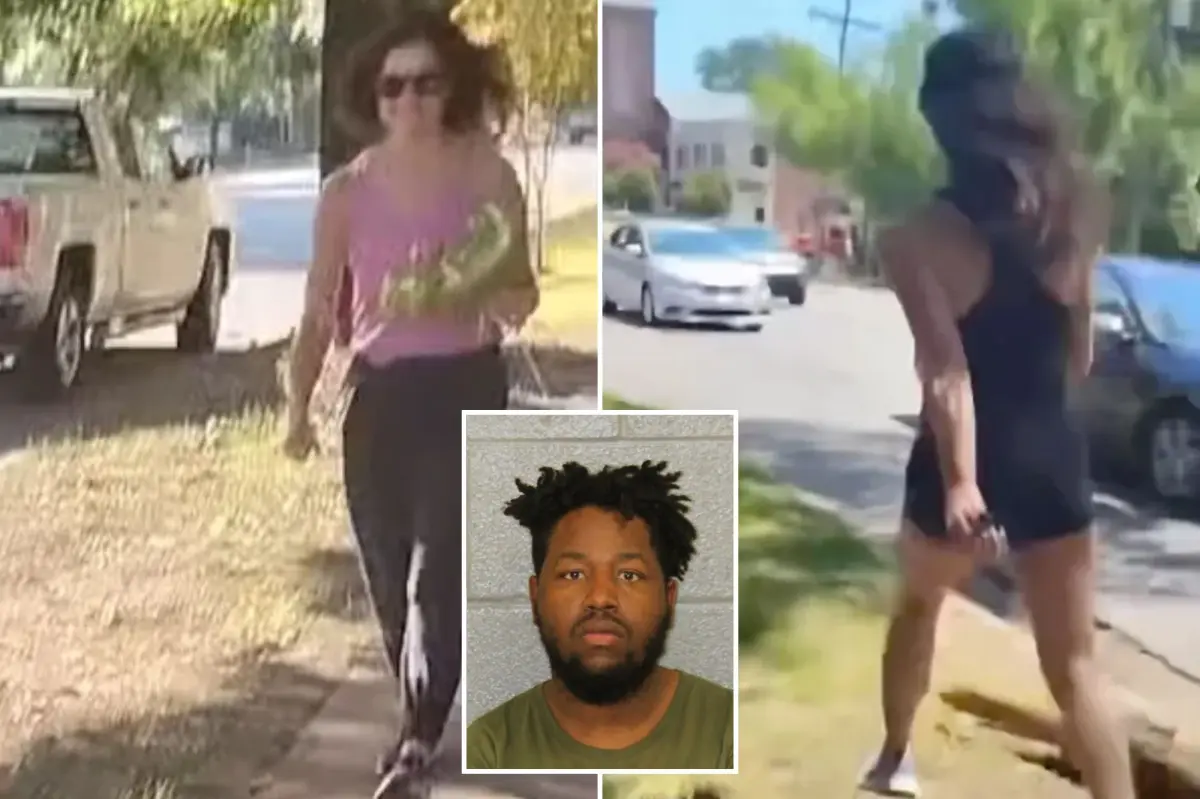
The quiet peace of a summer afternoon in a charming, tree-lined Charlotte, North Carolina neighborhood was shattered on July 30, when a routine walk became a scene of inexplicable terror for an unsuspecting woman. Walking down the 400 block of East Boulevard, she carried a simple get-well balloon—a universal, tender symbol of hope, care, and human connection meant for someone in recovery—completely unaware that she was about to cross paths with 32-year-old Di-Quan Schafar Hunt, a man whose volatile anger was primed to erupt without a shred of provocation. Hunt, who recorded the entire encounter on his phone to broadcast to his social media followers, reacted with instant, fiery rage when the woman crossed his path. Refusing even the mildest gesture of neighborly warmth or polite acknowledgment, Hunt screamed, “Nah, don’t wave to me,” before violently launching his imposing 5-foot-9, 220-pound frame at her. The brutal physical assault sent the defenseless woman crashing onto the hard pavement, leaving her severely injured and eventually requiring hospitalization. As she lay motionless and vulnerable on the concrete, Hunt stood over her, shouting racial slurs and aggressive, incoherent rants about personal grievances, showing an utter lack of basic human empathy or remorse. To compound the cruelty of the physical attack, Hunt stooped down to rip the broken frames of her sunglasses from her face, kicked the cheerful get-well balloon out of her hand, and fled into the city, leaving behind a victim who was not only physically shattered but deeply traumatized by an act of sheer, unprovoked malice that turned a peaceful afternoon into a living nightmare. This shocking level of cruelty highlights the profound vulnerability of everyday citizens walking through their own neighborhoods, where a simple gesture of kindness can be twisted into a trigger for life-altering violence.
Unfortunately, this savage assault was not an isolated incident of rage, but part of a terrifying pattern of behavior that Hunt proudly documented and shared with the digital world. In a separate, equally disturbing video that later surfaced on his social media page, Hunt is seen filming himself while walking down a public sidewalk, embarking on a bizarre, aggressive rant about the fast-food chain McDonald’s. The footage takes a dark and sudden turn when he spots another woman walking ahead of him. Without warning, his focus shifts from his dietary complaints to predatory hunting, as he charges directly at the terrified pedestrian. The video captures the sheer terror of the moment as the woman attempts to flee, desperately running around a parked car to escape his grasp while Hunt relentlessly pursues her, filming the chase like a twisted game. “You wanna run bitch, you wanna run motherf–ker, huh? I betcha run again motherf–ker,” he screams into the camera, his voice dripping with malice and a disturbing sense of amusement at her fright. This digital footprint of terror reveals a man who did not merely commit acts of violence in secret, but actively sought online notoriety and validation by terrorizing innocent female strangers. For his victims and those who viewed the footage, the horror is doubled by the realization that their suffering was weaponized as content for social media, transforming deeply personal, terrifying violations of safety into public spectacles of intimidation.
The reign of terror finally came to an end on a Thursday morning when alert citizens and law enforcement officers in the heart of Charlotte connected the dots between these vicious viral videos and the real-world suffering of local residents. Responding to an “attempt to locate” call, Charlotte-Mecklenburg police officers were presented with the disturbing social media footage that Hunt had foolishly posted online, which served as undeniable, self-incriminating evidence of his crimes. Recognizing the immediate threat Hunt posed to the public, officers launched a targeted search and successfully took him into custody on an arrest warrant at approximately 7:30 p.m. that evening. However, rather than being booked directly into jail, Hunt was first transported to a local medical facility for treatment, though authorities did not release specific details regarding his physical or mental health condition at the time. This detour to a medical center underscores the complex, often tragic intersection of severe mental health crises, homelessness, and violent crime that plagues modern urban areas. Once medically cleared, Hunt is scheduled to be formally booked into the Mecklenburg County Sheriff’s Office, where he will face serious charges of Assault with a Deadly Weapon, bringing a temporary sense of relief to a community that had been holding its breath while a dangerous predator roamed their streets.
For many residents of Charlotte, the relief brought by Hunt’s arrest is heavily overshadowed by a profound sense of frustration with a criminal justice system that seems to operate on a revolving door. Hunt, a well-known vagrant in the city, is no stranger to law enforcement; jail records reveal that he has been arrested at least nine times over the past 34 months alone in Mecklenburg County. His rap sheet is an exhausting list of offenses, including simple assault, assault on a female, assault with a deadly weapon, trespassing, domestic violence protective order violations, and probation violations. Going back even further, between 2012 and 2019, Hunt was arrested multiple times for domestic violence and even for discharging a firearm within city limits, yet almost all of those prior cases were ultimately dismissed, allowing him to return to the streets time and time again. Even when he pled guilty in 2019 to discharging a weapon into an occupied property and was sentenced to 20-36 months in prison, he was inexplicably released early, only to continue his cycle of criminal behavior. Most recently, in March 2026, he was convicted of assault with a deadly weapon but walked free without serving additional prison time due to credit for time served while awaiting trial. This chronic failure of the legal system to permanently intervene or rehabilitate Hunt has left community members asking hard questions about why a violent, repeat offender was repeatedly allowed back onto the streets to target innocent women.
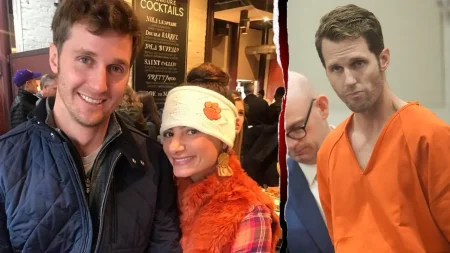
The terror inflicted by Hunt is part of a larger, deeply unsettling shadow that has hung over the city of Charlotte, where random acts of violence have left residents feeling increasingly unsafe in public spaces. Just eleven months prior to Hunt’s July attack, the community was rocked by the tragic and senseless murder of Iryna Zarutska, a 23-year-old Ukrainian refugee who had fled the unimaginable horrors of the Russian invasion in her homeland, searching for safety and a fresh start in the United States. While riding a Charlotte light rail train home from her job at a local pizzeria on August 22, 2025, Zarutska was randomly and fatally stabbed by Decarlos Brown Jr., another unhoused individual with a history of violent behavior. Zarutska, who was sitting quietly by herself, died just minutes after the unprovoked assault, a heartbreaking tragedy that shattered her family’s dreams of a peaceful life in America. The painful parallel between Zarutska’s death and the attacks perpetrated by Hunt highlights a growing public safety crisis, where the lives of innocent, hardworking citizens are cut short or forever changed by violent individuals who slip through the cracks of social safety nets and law enforcement custody. These tragedies serve as a stark reminder of the human cost of negligence, where the failure to address chronic homelessness, mental illness, and criminal behavior results in the loss of innocent lives and the destruction of a community’s sense of peace.
As Charlotte grapples with the aftermath of these devastating events, the focus must shift toward healing the survivors and addressing the systemic issues that allow such violence to flourish. Humanizing these stories means remembering that behind every police report and social media video is a real person whose sense of safety, dignity, and bodily autonomy has been violently stripped away. The woman holding the get-well balloon on East Boulevard, the woman chased around her car, and the family of Iryna Zarutska are the true faces of this crisis, bearing scars that may never fully heal. Moving forward, the city must confront the difficult task of balancing compassion for vulnerable, unhoused populations with the absolute necessity of maintaining public safety and enforcing the law. Only by holding repeat offenders accountable, repairing the fractures in the judicial system, and providing robust mental health interventions can Charlotte hope to prevent future tragedies. It is a collective responsibility to ensure that public sidewalks, neighborhood streets, and transit systems remain spaces of safety and community, rather than arenas of fear and unprovoked violence, so that every resident can walk through their city without the fear of becoming the next headline.