



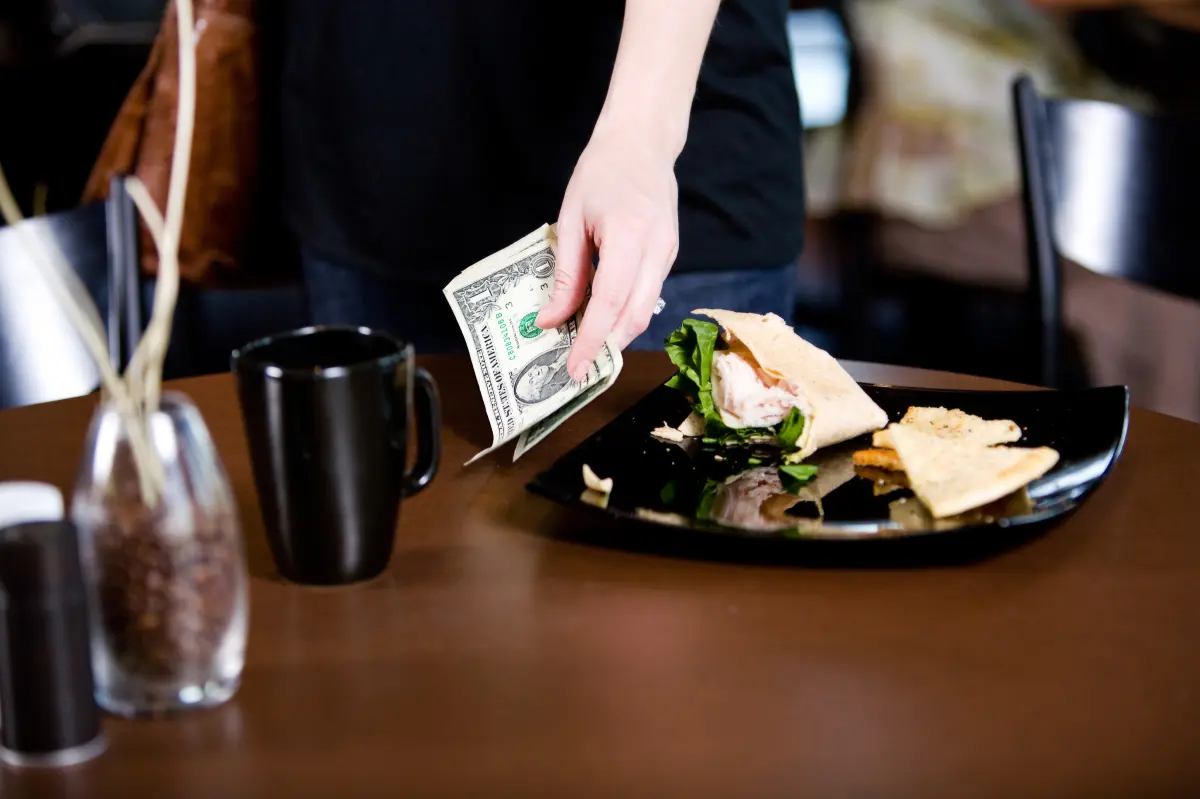
When we picture dining out in California, our minds naturally drift to images of sun-drenched patios, ocean breezes, and beautifully plated, locally sourced cuisine enjoyed under the warmth of the golden West Coast sky. Yet, beneath this picture-postcard exterior of luxury and relaxation lies a surprisingly chilly reality for the servers, bartenders, and busser staff who keep the state’s massive hospitality industry running. According to a comprehensive quarterly report released by restaurant technology giant Toast, which analyzed credit card and digital transaction data across approximately 171,000 dining locations nationwide, California has earned the unenviable title of the least generous tipping state in the country. While the average American diner left an overall tip of 18.8% during the first quarter of 2026, those dining in the Golden State squeezed their wallets significantly tighter, leaving behind a meager average of just 17.3%. This discrepancy of 1.5 percentage points might seem trivial on a single coffee tab, but across millions of daily transactions, it represents a massive financial shortfall for working-class service staff. The sting of this ranking was felt across all styles of dining, refusing to spare even high-end, sit-down establishments where service is typically a highly interactive, personalized art form. In California’s full-service restaurants, where waiters spend hours catering to a table’s every whim, the average gratuity crawled to just 17.7%, falling far short of the national full-service baseline of 19.3%. Quick-service venues, such as casual walk-up counters and trendy fast-casual spots, fared even worse, with local diners offering a mere 14.8% compared to the national average of 15.8%. Although these digital payment figures do not account for cash slipped discreetly under a plate, they paint a stark portrait of a region increasingly hesitant to reward service at the register, leaving local hospitality workers feeling cast in the shade.
To label California diners as inherently selfish or uniquely mean-spirited, however, would be to ignore a highly complex web of economic pressures, shifting legislation, and evolving industry standards that uniquely define the West Coast culinary landscape. Dining out in California has become an incredibly expensive luxury, driven by unprecedented menu inflation and the skyrocketing costs of doing business in a state known for its high overhead. Unlike many states across the country that utilize a federal tipped minimum wage system—where employers can pay tipped staff as little as $2.13 per hour so long as their gratuities make up the difference—California legally mandates that all employers pay service workers the full state minimum wage before a single dollar of tips is ever counted. Because of this, a server in Los Angeles or San Francisco starts their shift earning one of the highest base hourly wages in the country, a progressive labor policy designed to protect workers but one that also fundamentally alters the diner’s perception of necessity when the bill arrives. Furthermore, to cope with these rising labor expenses and high local taxes, an increasing number of California restaurant owners have begun adding mandatory service fees, wellness surcharges, and automatic gratuities directly onto the final receipt. When customers are already facing elevated menu prices alongside a 5% to 18% service fee printed at the bottom of their bill, their willingness to add an additional 20% on top of that total understandably evaporates, transforming what looks like stinginess on paper into a practical, defensive reaction to compounding surcharges.
This shift in tipping behavior is not isolated to the Pacific coast; rather, it highlights a vast, fascinating geographic and cultural divide in how Americans across different regions value and reward hospitality. While California languishes at the very bottom of the national tipping totem pole, other states present a completely different attitude toward service staff, showcasing a patchwork of regional financial habits. Delaware emerged as the undisputed champion of restaurant generosity in the Toast report, with its diners leaving an astounding overall average tip of 22.1%, far surpassing the rest of the nation. New York, a state famous for its demanding dining scene and high cost of living, landed comfortably in the middle of the pack at 18.7%, hovering just a fraction of a percentage point below the national average. Meanwhile, California found company at the bottom of the rankings alongside other high-cost, high-tourism hubs like the District of Columbia, where average tips rested at 17.5%, Washington at 17.8%, Nevada at 18.2%, and Florida at 18.3%. This geographical breakdown suggests a compelling trend: in regions where local minimum wages are higher, or where tourism and service charges heavily influence the dining ecosystem, traditional tipping percentages tend to drop. Conversely, in states where diners are acutely aware that their servers rely almost entirely on tips to survive, or where local community ties foster a stronger sense of personal connection to local businesses, the urge to support service workers remains deeply entrenched.
Beyond regional economics, the nationwide slide in tipping enthusiasm points to a deeper, more emotional conflict brewing between American consumers and the digital checkout terminals that have taken over modern commerce. Across the country, diners are experiencing a profound sense of fatigue caused by what industry analysts call “tip creep”—the aggressive expansion of gratuity prompts into everyday transactions where tips were historically never expected or requested. According to a recent consumer survey conducted by Popmenu, an overwhelming 78% of adults expressed that current tipping practices have officially “become ridiculous,” while 74% noted with frustration that restaurants are actively raising the default, pre-programmed percentage suggestions on their payment screens. Anyone who has recently purchased a simple drip coffee, a pre-packaged snack, or a takeout container has likely experienced the awkward, high-pressure social interaction of the flipped iPad. The terminal screen suddenly presents a row of smiling, digital boxes suggesting tips of 20%, 25%, or even 30% for a transaction that took less than thirty seconds and involved zero table service. While 59% of respondents admitted they feel socially coerced into leaving a tip when put on the spot by these digital prompts, the emotional cost is a rising tide of resentment, turning what was once a joyful gesture of voluntary appreciation into an annoying tax of convenience.
This collective consumer frustration is actively reshaping the traditional unspoken contract between the server and the served, as voices from within the restaurant industry itself call for a return to common sense. Restaurant owners, who are caught in the middle of trying to retain talented staff while keeping customers happy, recognize that the current path is unsustainable. Vicki Parmelee, the owner of Jumby Bay Island Grill in Jupiter, Florida, recently articulated this delicate balance, noting that while a 20% gratuity remains a well-established, culturally ingrained reward for a pleasant, sit-down dining experience, the expansion of tipping requests to basic counter service has alienated the public. Parmelee pointed out that customers are increasingly irritated by the expectation to tip someone simply for handing them a cup of coffee over a counter, emphasizing that a tip should always be earned through genuine hospitality, rather than demanded through clever software design. In response to this perceived overreach, a growing contingent of savvy diners is fighting back to reclaim their agency; the Popmenu survey revealed that 36% of consumers now bypass the preset, inflated percentage buttons altogether, choosing instead to manually enter a custom tip amount that accurately reflects the level of service they actually received. This trend suggests that while Americans still value the hardworking people who prepare and serve their food, they are actively resisting the automated guilt-trips designed by modern financial technology.
Ultimately, the revelation that California sits at the bottom of the national tipping rankings is not merely a story of cheap diners under the sun, but a harbinger of a broader transformation occurring across the entire American hospitality sector. As the traditional boundaries of tipping continue to blur under the influence of rising labor costs, digital payment platforms, and changing legislation, both consumers and restaurant operators are being forced to re-evaluate the true value of service. California, with its progressive wage mandates and high-cost environment, may simply be at the leading edge of a national shift where the traditional percentage-based tip is slowly dismantled and replaced by more transparent, integrated service pricing. In the meantime, the tension between the financial survival of service workers and the budget constraints of weary diners continues to mount at the cash register. Whether sitting down for a multi-course meal in a coastal California bistro or grabbing a quick coffee at a Delaware bakery, the act of tipping has evolved from a simple gesture of gratitude into a complex, stress-filled negotiation of modern etiquette and economic survival. How we choose to navigate this delicate social contract in the coming years will inevitably dictate not only the financial well-being of millions of service workers, but the very warmth and hospitality of the American dining experience itself.