



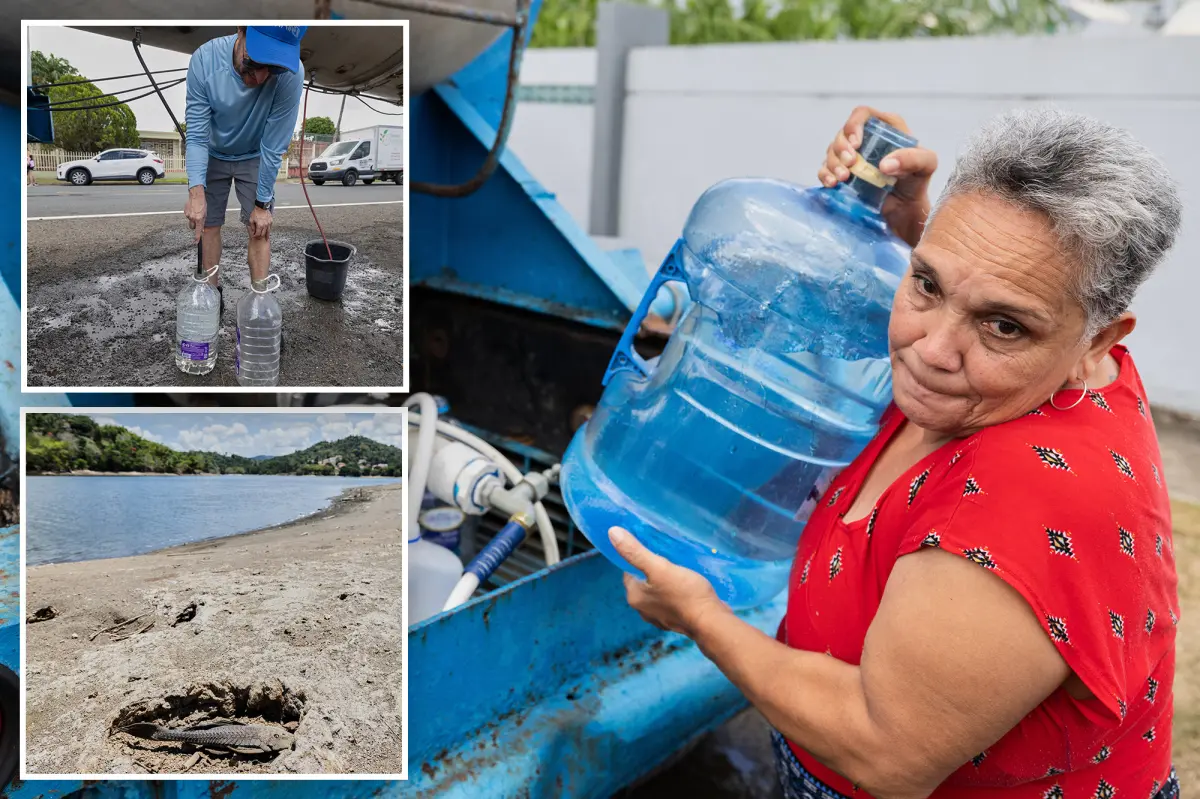
The scorching Caribbean sun has transformed the vibrant, tropical landscape of Puerto Rico into a parched canvas of cracked earth and dusty riverbeds, forcing the island’s government to implement drastic water rationing measures. Starting this Friday, more than 180,000 utility customers across San Juan and several neighboring metropolitan areas will find their taps running dry for 48 hours at a time on a relentless, alternating schedule. This desperate measure comes as a severe drought grips the United States territory with a suffocating intensity, leaving local authorities scrambling for solutions while extreme heat warnings continue to blanket the island. The physical and emotional weight of this impending crisis was palpable when Governor Jenniffer González addressed the public, her tone a mix of resignation and urgency as she acknowledged that the environmental catastrophe is entirely out of human hands. With the island’s reservoirs shrinking daily under a merciless sun, the governor offered a grim warning to a weary population, stating plainly that nothing currently prevents this dire situation from worsening in the coming weeks. The crisis is not merely a temporary inconvenience but an existential challenge for families who must now restructure their entire daily lives around the sporadic availability of a basic human right, highlighting the fragile relationship between the island’s inhabitants and the changing climate that surrounds them.
The atmospheric conditions driving this crisis are historic in their severity, painting a worrisome picture of a rapidly changing global climate. This past July went down in the annals of meteorological history as the driest month San Juan has experienced in more than 120 years, while simultaneously registering as the second hottest month the capital city has ever endured. According to the United States Drought Monitor, the crisis is widespread, with nearly a quarter of Puerto Rico currently classified as experiencing a severe drought, and an additional 36 percent languishing under moderate drought conditions. María Novoa García, a prominent meteorologist with the National Weather Service in San Juan, has offered little comfort in her recent forecasts, indicating that dry conditions are highly likely to persist until at least September, even as experts predict a milder 2026 hurricane season. She warned that rainfall over the next two to three weeks is projected to remain at least 50 percent below seasonal averages, a deficit driven by a steadily strengthening El Niño cycle, a natural warming pattern in the Pacific Ocean that suppresses storm development and alters weather patterns across the Caribbean. This lack of rain means that the natural cycle of renewal the island relies on during the summer months has been utterly disrupted, leaving the environment locked in a feedback loop of rising temperatures and evaporating water resources.
Beyond the statistical severity of the weather, the true crisis of this drought lies in the profound human suffering and daily exhaustion of the people who call the island home. The rationing schedule will stretch far beyond San Juan, directly impacting families in the communities of Carolina, Juncos, Gurabo, Trujillo Alto, Canovanas, and Loiza, leaving hundreds of thousands of residents in a state of perpetual anxiety. For many Puerto Ricans, however, the official rationing announcement does not mark the beginning of a crisis, but rather the formalization of a struggle they have already been enduring for nearly a year. Among those facing this harsh reality is 61-year-old community leader Marcia Soler París, who expressed profound frustration and exhaustion when discussing the new government mandates. For months, Soler París and her neighbors have opened their faucets only to find empty space and silence, rendering the new official 48-hour rationing schedule almost meaningless to a community already living in a state of perpetual water scarcity. She described the situation as absolute “chaos,” highlighting the logical impossibility of preparing for water rationing when there is no water to store in the first place. Her deepest, most heart-wrenching anxieties are reserved for the most vulnerable members of her community—the bedridden, the sick, and the elderly—who are physically incapable of lifting, carrying, and hauling heavy plastic buckets of water to their homes just to perform basic sanitary tasks or to keep themselves cool in the suffocating heat.
This environmental catastrophe has also laid bare the deep-seated systemic failures and decades of infrastructure neglect that have plagued Puerto Rico’s utility systems. The island is surrounded by water and home to numerous natural reservoirs, yet its physical infrastructure is so severely compromised that it cannot efficiently capture, treat, or deliver this vital resource to its citizens. The ongoing water shortages that predated the drought led San Juan Mayor Miguel Romero to take the extraordinary step of filing a lawsuit in late May against the island’s own Water and Sewer Authority. This legal action forced a public reckoning, with Governor González herself openly admitting that the utility agency’s physical infrastructure has suffered from a catastrophic lack of capital investment, preventative maintenance, and strategic planning for decades. Leaky, decaying pipelines lose millions of gallons of treated water daily before it can ever reach a consumer’s home, meaning that even when reservoirs are full, the system is actively failing. This realization has transformed the drought from a simple natural disaster into a symbol of institutional neglect, leaving citizens to wonder why a territory under the jurisdiction of the United States cannot guarantee reliable water flow to its population during times of environmental stress.
The intersection of natural disaster and administrative failure has ignited a volatile political environment on the island, with local leaders demanding transparency and legal accountability on behalf of their constituents. Puerto Rico Representative Domingo J. Torres García has emerged as a vocal advocate for frustrated citizens, issuing a stern warning to the Water and Sewer Authority that he is prepared to take the matter to court if he does not receive immediate, detailed explanations regarding the chronic, pre-existing water distribution problems. Torres García emphasized that the citizens of Puerto Rico have a fundamental, indisputable right to know exactly what is happening within the utility agency, what concrete long-term plans are being formulated, and what immediate actions are being taken to mitigate this public health crisis. This political friction highlights a growing rift between the governing bodies and a populace that feels abandoned by the very institutions meant to protect and serve them. The demand for information is driven by a collective exhaustion; the people are no longer willing to accept vague promises or bureaucratic deflections while they are forced to ration their drinking, cooking, and bathing water. The legal battles initiated by municipal leaders reflect a deeper societal demand for systemic reform, asserting that natural droughts are inevitable, but the structural collapse of a vital utility is entirely preventable.
As the island braces for the difficult days ahead, emergency contingency plans are being set into motion to prevent a complete collapse of public health and safety. Luis González Delgado, the president of Puerto Rico’s water and sewer system, announced that a fleet of large tanker trucks would be deployed to distribute potable water to affected communities, with strict instructions to prioritize hospitals, medical clinics, and residential care facilities for the elderly. Trying to maintain a sense of stability, Tania Conde Sterling, the president of Puerto Rico’s Association of Health Services Administrators, urged the public to remain calm, assuring residents that the island’s medical facilities are highly prepared for the rationing and possess comprehensive emergency protocols and manuals for these exact scenarios. Yet, despite these reassuring words, a sense of collective weariness hangs over the island, as this is far from the first time Puerto Ricans have had to adapt to such harsh conditions. Having endured similar severe water rationing measures in both 2015 and 2020—when hundreds of thousands of customers were forced to live with water access only every third day—the population is well-acquainted with the grueling logistics of survival. While the people of Puerto Rico are renowned for their profound resilience and community solidarity in the face of adversity, this latest drought serves as a sobering reminder of the compounding challenges they face, waiting under dry skies for a relief that seems perpetually out of reach.