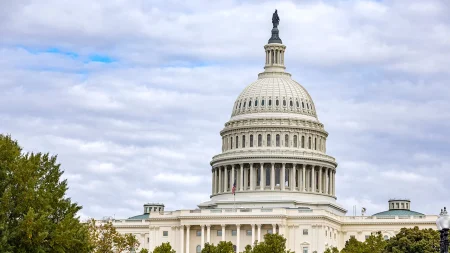



There is a palpable, suffocating warmth in the air of modern American public life, the kind of dry heat that precedes a devastating wildfire. To look upon the current landscape of American politics is to witness two deeply entrenched factions, each holding a box of matches, standing in a forest of dry brush, and insisting that only the other side is capable of starting a conflagration. For decades, the political system of the United States operated under an unspoken agreement that, despite fierce disagreements over taxes, foreign policy, and social issues, the preservation of the democratic experiment itself was paramount. Today, that agreement has been discarded in favor of a relentless, zero-sum war of attrition where compromise is branded as treason, and moderation is treated as cowardice. Everyday Americans find themselves trapped in the middle of this high-stakes game of chicken, watching with growing anxiety as their leaders trade the tedious, difficult work of governance for the instant gratification of performative outrage. The tragedy of this moment is that neither the Democratic nor the Republican party seems to realize that if the house burns down, no one wins the right to rule the ashes.
On the left, the Democratic Party is playing with a fire that threatens to consume the very institutional foundations of the republic they claim to defend. In their urgency to enact social change, protect marginalized communities, and combat systemic inequities, Democrats have increasingly adopted a posture of moral absolutism that leaves little room for dissent or incrementalism. This mindset has led to a dangerous flirtation with dismantling long-standing democratic guardrails—such as advocating for the packing of the Supreme Court, proposing the abolition of the Senate filibuster, or dismissing the Constitution as an outdated document written by flawed men rather than a living shield against tyranny. When every policy debate is framed not as a disagreement over means but as a cosmic battle between absolute justice and irredeemable bigotry, the basic machinery of democracy begins to seize. By demanding immediate conformity on complex cultural questions and labeling those who hesitate as morally bankrupt, Democrats have alienated a massive swathe of working-class voters who feel culturally disenfranchised and economically abandoned. The risk they run is profound: in their zealous pursuit of a more perfect union, they threaten to break the very instruments of consensus and law that prevent a diverse nation from fracturing into tribal warfare.
On the right, the Republican Party is playing with an equally volatile flame, one fueled by populist grievance, the erosion of truth, and a systematic assault on the peaceful transfer of power. In their eagerness to channel the genuine anger of citizens who feel ignored by coastal elites, conservative leaders have increasingly embraced a brand of politics that prioritizes loyalty to charismatic personalities over adherence to constitutional principles. By validating unsubstantiated conspiracy theories about stolen elections, attacking the legitimacy of the judiciary, and framing law enforcement agencies as partisan weapons, the GOP is systematically dismantling public trust in the essential institutions of self-governance. This is not conservative philosophy; it is a chaotic, anti-institutional populism that replaces the rule of law with the rule of grievance. When a major political party signals to its followers that the democratic process itself is rigged whenever they lose, they are sowing seeds of cynicism and rage that cannot be easily uprooted. The fire they are playing with threatens to unleash a tide of civic instability where elections no longer resolve conflicts, but rather serve as flashpoints for political violence and democratic decay.
While both parties clash violently on the cultural and institutional stages, they have quietly formed a tacit, highly destructive alliance on the fiscal front, playing a joint game of Russian roulette with the nation’s economic future. The national debt has spiraled to astronomical heights, yet neither party is willing to look the American public in the eye and speak the truth about what it will take to avert a financial reckoning. Democrats continue to champion expansive social spending programs and sweeping green energy initiatives without presenting a realistic or sustainable plan to pay for them, often relying on the comforting illusion that taxing the ultra-wealthy alone can fund an endless safety net. Meanwhile, Republicans consistently champion deep tax cuts while refusing to make the politically difficult decisions required to curb government spending, particularly regarding entitlement programs like Social Security and Medicare. Both sides treat the federal treasury as an infinite piggy bank to bribe voters, passing the compounding bill down to younger generations who will inherit a crippled economy, runaway inflation, and a government crippled by the cost of servicing its own debt. This shared financial recklessness is perhaps the most cowardly fire of all, as it quietly burns away the economic foundations of the American dream while both parties point fingers at each other’s budgets.
The true tragedy of this partisan pyromania is not measured in treasury bonds or congressional procedures, but in the quiet, devastating toll it takes on the daily lives and mental health of ordinary people. Across the country, the rich social fabric that once bound communities together—local clubs, religious congregations, neighborhood associations, and simple backyard barbecues—is being dissolved by the acid of political polarization. Families are fractured over Thanksgiving dinners, long-time friendships are dissolved over social media posts, and neighbors look at one another with suspicion rather than solidarity. We are living through an epidemic of loneliness and anxiety, exacerbated by a media-political complex that has discovered that outrage is the most profitable commodity in the modern economy. People are exhausted by the constant state of hyper-vigilance, forced to navigate a culture where neutral ground has been eradicated and every aspects of daily life, from the coffee you drink to the sports you watch, is weaponized as a political statement. In this environment, the human capacity for empathy, nuance, and grace is withered, replaced by a defensive cynicism that leaves individuals feeling isolated, powerless, and deeply afraid of the future.
If we are to extinguish this fire before it consumes our collective future, we must realize that the solution will not come from the very political class that profits from the flames. The path forward requires a quiet, courageous rebellion of the exhausted majority—the millions of Americans who are weary of the drama, the anger, and the endless cultural wars. It begins at the local level, in our schools, our neighborhoods, and our workplaces, where we must deliberately choose to see our political opponents not as existential enemies to be destroyed, but as our fellow citizens with different perspectives. We must demand a return to pragmatic, boring, functional governance, rewarding politicians who are willing to reach across the aisle and punishing the demagogues who thrive on division. This does not mean abandoning our deeply held convictions, but rather adopting a posture of intellectual humility, recognizing that no single political party possesses a monopoly on wisdom or virtue. The American experiment has survived civil war, foreign threats, and economic depressions because, at crucial moments, its people chose unity over tribalism; if we can find the courage to put down the matches and talk to one another once again, we can turn this dangerous, smoldering moment into the dawn of a more resilient, empathetic nation.