



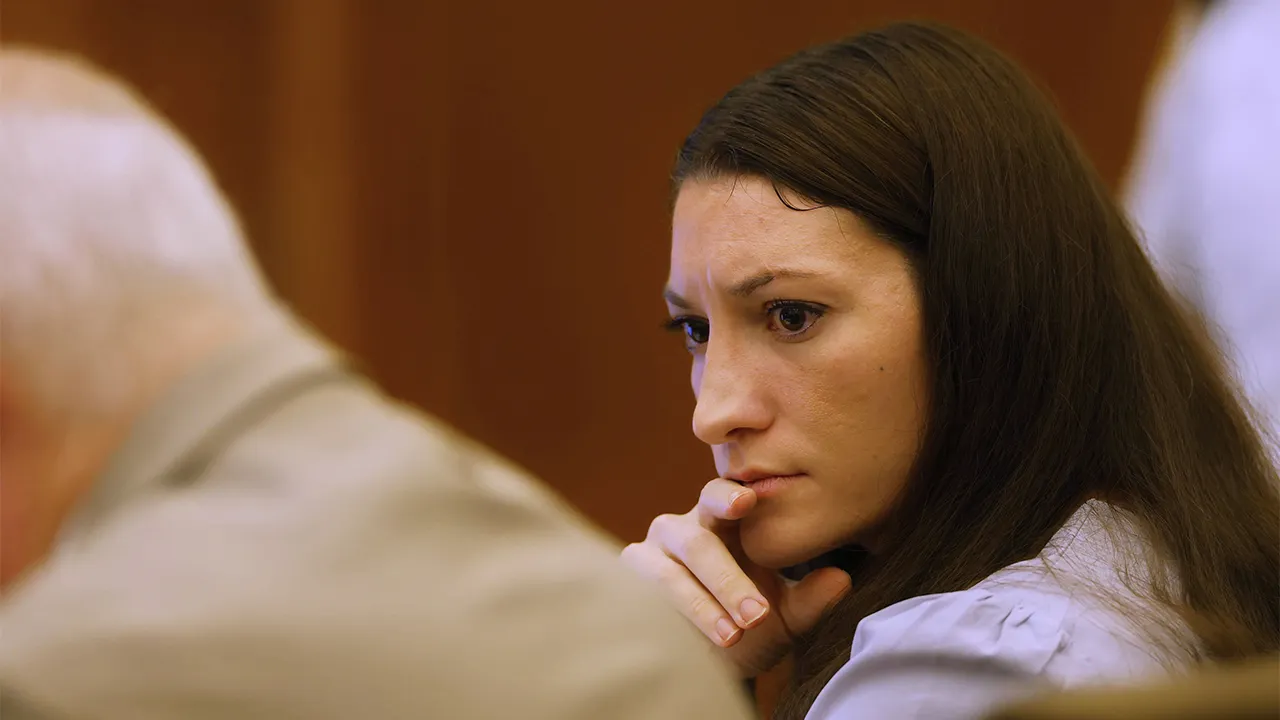
The quiet, steady voice of Lindsay Clancy echoed through the Massachusetts courtroom, offering a stark and sobering contrast to the unspeakable tragedy that had brought her there. Answering with a repeated, polite “Yes, Your Honor,” the former labor and delivery nurse exhibited a calm, measured demeanor that seemed almost incongruous with the devastating reality of her situation. She stood before Judge William Sullivan to formally agree to a legal stipulation, a decision that would allow the prosecution to bypass the presentation of certain forensic facts without requiring her defense team to contest them. This brief, highly structured exchange between the accused mother and the judge served as a poignant reminder of the human lives caught in the cold gears of the justice system. For those watching, Clancy’s polite compliance was a haunting window into her current state of mind—rational, cooperative, and fully aware of her surroundings—which stands in sharp relief against the chaotic, terrifying mental state she is alleged to have experienced on that dark winter evening in Duxbury. This moment of procedural agreement was not merely an administrative step; it was an intimate glimpse of a woman facing the ruin of her family and the cold machinery of the law, where every whispered response is weighed for its sanity, its voluntary nature, and its legal consequence. By confirming that she was entering into this agreement willingly and without coercion, the court established her current competency, setting the stage for a trial that will not focus on the undisputed physical acts of that evening, but on the far more elusive question of whether a mother’s mind was truly her own when her children’s lives were cut short.
At the heart of the proceedings was a strategic legal maneuver designed to fundamentally reshape the battlefield of the trial, orchestrated by defense attorney Kevin Reddington. By signing the stipulation, Clancy effectively agreed that the state did not need to spend days calling a parade of forensic experts, medical technicians, and police officers to establish the chain of custody for DNA, bodily fluids, blood, and physical items recovered from the scene. Reddington openly acknowledged that the defense has no intention of contesting the physical facts of the government’s case-in-chief, recognizing that dragging the jury through hours of tedious, clinical, and potentially gruesome forensic testimony would serve no constructive purpose for either side. This decision represents a deeply calculated effort to spare both the jury and the courtroom from the unnecessary trauma of reliving the clinical details of the crime scene, while simultaneously preventing the prosecution from using those dry, scientific facts to build an emotional narrative of cold, calculated precision. It is crucial to understand that this agreement is neither a plea of guilty nor an admission of criminal responsibility; rather, it is a solemn concession of the physical reality of the tragedy. By stripping away the bureaucratic arguments over how evidence was handled, packaged, and stored, the defense hopes to clear the air of distractions, allowing the courtroom to bypass the undisputed physical mechanics of the deaths of five-year-old Cora, three-year-old Dawson, and eight-month-old Callan, and instead focus entirely on the deep psychological mystery that lies at the core of the defense.
Legal experts view this streamlined approach as a double-edged sword that places the battle squarely on the complex terrain of human psychology and the concept of mens rea, or criminal intent. Margaret McLean, a seasoned former criminal prosecutor and law professor, explained that the defense’s primary objective is to steer the jury’s attention away from the inherently horrifying nature of the acts themselves and direct it toward Clancy’s internal state of mind at the precise moment of the tragedy. In cases of such profound devastation, the sheer shock of the physical evidence can easily overwhelm a jury’s capacity for objective analysis, leading to a verdict driven by anger and grief rather than legal standards. McLean emphasized that Clancy’s articulate and rational responses in court must not be conflated with her mental condition on the day the crimes were committed. The burden on the prosecution is not to prove that Clancy is mentally stable or rational today, but to prove beyond a reasonable doubt that she was legally sane and criminally responsible at the exact time the tragedy unfolded. This distinction is the thin, fragile line upon which the entire trial balances—a challenge that requires jurors to look past the tragic imagery of three lost young lives and attempt to reconstruct the invisible, fractured thoughts of a mother who may have been lost in the grip of severe postpartum depression or psychosis.
Behind the legal jargon, the strategic maneuvers, and the sterile atmosphere of the courtroom lies an immense, suffocating grief that no legal verdict can ever truly heal. The names of Cora, Dawson, and Callan hang heavy over every session, serving as a constant reminder of the human cost of this tragedy. These were not mere names on a docket or figures in a forensic report; they were vibrant young children whose lives were intimately intertwined with a mother who was, by all accounts prior to the incident, deeply devoted to them. The tragedy has sent shockwaves far beyond the walls of the Duxbury home, touching neighbors, first responders, and families across the nation who struggle to comprehend how a household once filled with love, laughter, and the busy routines of young parenthood could transform into a crime scene. Even the physical evidence discussed in court—ordinary household exercise bands and a kitchen knife—holds a tragic double meaning. To the law, they are weapons and exhibits marked with labels; to a family, they are the mundane remnants of a normal, quiet life that was suddenly and inexplicably shattered. This profound sense of loss is the emotional undercurrent of the trial, making it impossible to separate the legal definitions of sanity and intent from the raw, human suffering of a father who lost his entire family in a single afternoon and a community left searching for answers in the dark.
As the trial moved forward, the focus shifted to the physical evidence itself, highlighted by the testimony of Massachusetts State Police Trooper Jonathan O’Loughlin. Taking the stand to describe the rigorous process of gathering evidence, O’Loughlin revealed a surprising detail: forensic analysts were unable to recover any usable or identifiable fingerprints from either the knife or the three exercise bands collected from the home. He explained that fingerprints are incredibly fragile, easily degraded by factors such as the texture of an object, environmental conditions, the grip strength of the person holding it, or even the simple act of wiping a surface clean. This lack of physical trace evidence created an intriguing blank space in the prosecution’s case, which defense attorney Reddington was quick to highlight, confirming that there were absolutely no prints linking his client to the items in a traditional forensic sense. This forensic silence can be interpreted in two vastly different ways, highlighting the delicate dance of perception in a criminal trial. For the prosecution, the absence of prints might subtly suggest an element of planning or concealment, raising the haunting possibility that the scene was deliberately manipulated. For the defense, however, it remains a critical point of caution, a reminder that the jury must not build a mountain of speculation out of a lack of evidence, but must instead stick strictly to the proven facts of the case.
Ultimately, the resolution of this heartbreaking case will rest on the shoulders of twelve ordinary citizens who must carry the immense emotional and intellectual burden of deciding Lindsay Clancy’s fate. As Margaret McLean noted, jurors are encouraged to bring their common sense to the deliberation table, but they are strictly forbidden from engaging in speculation about things that do not exist in the evidence. They will be forced to navigate a complex labyrinth of psychiatric evaluations, emotional testimonies, and cold forensic data, all while trying to remain objective in the face of an unfathomable loss. The trial is not a simple search for a perpetrator, as the physical acts are uncontested; rather, it is a deep, agonizing exploration into the darkest corners of the human mind, post-pregnancy mental health, and the legal definition of sanity. As the community watches and waits, the courtroom remains a solemn space where the law attempts to find order in chaos, seeking to determine whether a mother who took the lives of her beloved children did so with a calculating criminal mind, or if she was a tragic victim of a mind that had completely turned against itself.