


The Capitol Hill Reckoning: Senators Demand SEC Probe into the $TRUMP Token Collapse
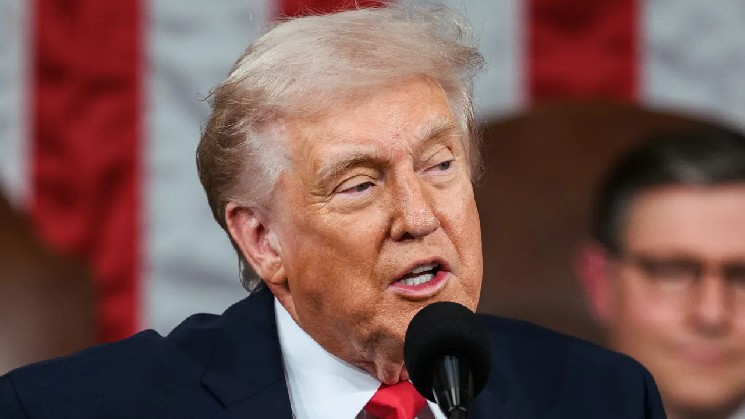
In a major escalation of the political and regulatory battle over digital assets, U.S. Senators Elizabeth Warren (D-MA) and Richard Blumenthal (D-CT) have formally requested that the U.S. Securities and Exchange Commission (SEC) launch a comprehensive investigation into the controversial $TRUMP memecoin. In a sharply worded letter dated August 4, the lawmakers urged the regulatory watchdog to leverage its enforcement authority to determine whether the token’s creators and promoters engaged in illegal financial fraud or unjust enrichment. The congressional demand follows devastating market reports revealing that nearly one million everyday retail investors collectively lost more than $3.81 billion as the digital asset cratered by nearly 98% from its historic peak, even as Trump-affiliated entities quietly pocketed an estimated $636 million in fees and distributions. This stark disparity between devastating public losses and massive insider windfalls has thrust the token into the center of a brewing regulatory storm, with Capitol Hill demanding answers about who benefited from the speculative frenzy and whether federal securities laws were systematically violated.
The Anatomy of a Crash: How Inaugural Hype Turned to Financial Despair
The meteoric rise and subsequent collapse of the $TRUMP token offers a cautionary tale of how political influence can supercharge highly speculative financial markets. Launched on January 17, 2025—just three days prior to Donald Trump’s presidential inauguration—the memecoin was designed to capitalize on the immense public attention surrounding the transfer of executive power. The asset received a massive promotional boost the very next day, January 18, when Donald Trump publicly championed the token to his millions of followers on the social media platform X. However, while retail investors rushed to buy into the hyped asset, the financial structure of the token ensured that Trump-affiliated entities remained insulated from market volatility. According to congressional investigators, these affiliated organizations set up a mechanism to collect substantial trading fees continuously, effectively decoupling their own financial success from the actual performance of the coin. Consequently, as the value of the token entered a devastating downward spiral, the entities tied to the administration continued to rake in millions, leaving average buyers to shoulder the entirety of the financial wreckage.
Disparate Destinies: The Great Wealth Transfer Between Elite Traders and Retail Buyers
The human and financial toll of the token’s collapse has been laid bare by exhaustive blockchain analytics and congressional investigations. Data reveals that out of approximately 1.5 million total market participants, a staggering 988,905 individual buyers—representing roughly two-thirds of all unique wallets that interacted with the token—incurred deep financial losses totaling $3.81 billion through the month of June. Conversely, a highly sophisticated group of approximately 500,000 early traders and high-frequency market makers managed to extract nearly $4 billion in profits before the market turned illiquid. A memorandum compiled by the minority staff of the Senate Permanent Subcommittee on Investigations documented heartbreaking accounts from everyday investors who described feeling utterly abandoned and financially ruined after purchasing the token during its promotional peak. This widespread financial misery was further compounded by what critics describe as glaring ethical conflicts of interest, including exclusive, high-priced private dinners hosted for the token’s wealthiest holders, alongside instances of the White House actively promoting a separate, physical commemorative coin while hundreds of thousands of digital wallet holders remained deeply underwater.
Regulators Sound the Alarm: The Systematic Dangers of Sentiment-Driven Digital Assets
The unfolding controversy surrounding the $TRUMP token highlights the systemic vulnerabilities inherent in the rapidly growing market for sentiment-based digital assets. The SEC’s Division of Corporation Finance has long categorized typical memecoins as highly speculative instruments that derive their value almost exclusively from online community engagement, celebrity endorsements, and viral social media trends, rather than any underlying economic utility or cash flow. Because these assets often operate in a regulatory gray area outside of standard federal registration requirements, they leave consumers highly vulnerable to manipulative market practices. State-level regulators, including those in New York, have issued stern public warnings about the persistent dangers associated with sentiment-driven tokens, pointing to a rise in coordinated pump-and-dump schemes, liquidity-pool “rug pulls,” wash trading, and heavily concentrated ownership structures. The SEC has already demonstrated its willingness to prosecute similar activities, as seen in its recent enforcement action against blockchain engineer Eric Zhu, who was charged with orchestrating a $553,000 rug pull involving the “Game Coin” token, signaling that federal authorities are increasingly focused on protecting retail investors from decentralized financial exploitation.
On-Chain Trails and the Ironclad Grip of Corporate Insiders
A closer inspection of the public ledger reveals the massive scale of the capital flows and the highly centralized ownership structure that characterized the token from its inception. On-chain analysts recently tracked a single, massive transfer of 10.84 million $TRUMP tokens to the institutional custody platform Bitgo on July 25, a transaction valued at approximately $16.9 million at the time. This transaction was part of a larger trend, with three major transfers executed over a five-month span totaling an estimated $172.4 million. Furthermore, blockchain forensics show that Trump-affiliated entities maintain ironclad control over approximately 80% of the total token supply through a strict three-year vesting schedule. This highly concentrated supply distribution gave a very select group of insiders overwhelming influence over the circulating market and the asset’s long-term liquidity. Senators Warren and Blumenthal have directly tied this concentration of supply to ongoing legislative debates on Capitol Hill, arguing that such structures allow political figures and their close associates to reap astronomical profits while exposing the general public to extreme financial risk.
Legislative Crossroads: How a Volatile Memecoin Is Shaping the Future of Crypto Policy
The demands made by Senators Warren and Blumenthal to SEC Chair Paul Atkins come at a pivotal moment, as Congress actively debates the future of cryptocurrency market structure and the ethical boundaries governing public officials profiting from digital assets. In their joint letter, the lawmakers emphasized that as Congress works to draft comprehensive legislation to regulate the digital asset industry, both federal lawmakers and the SEC must work in tandem to establish robust consumer protection safeguards. The outcome of this requested investigation could set a powerful precedent for how federal regulators handle politically connected digital currencies and celebrity-endorsed financial products in the future. By calling for a formal inquiry into whether the $TRUMP memecoin facilitated illicit financial fraud or unjust enrichment, the senators have signaled that the era of unregulated, high-profile token promotions may soon face unprecedented legal scrutiny, forever altering the landscape of decentralized finance and political ethics in the United States.