


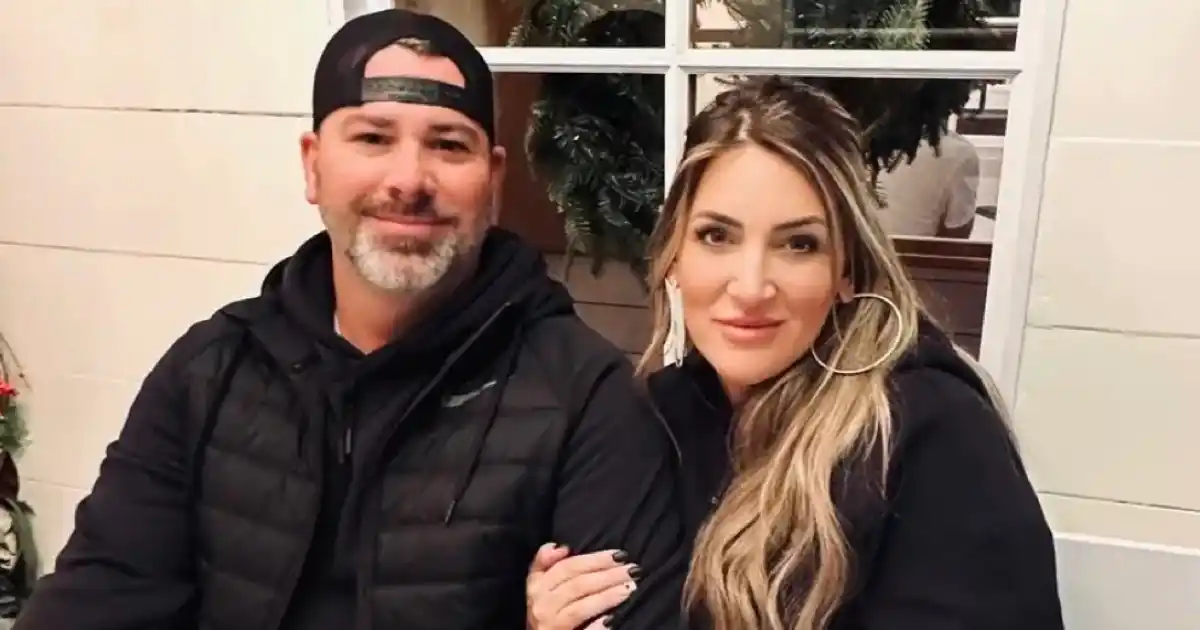
The sudden and tragic death of Sara Gilson, a vibrant 43-year-old social media influencer and dedicated mother, has sent profound shockwaves through both her local community and her expansive online audience, casting a harsh light on the insidious nature of domestic violence. On July 23, within the presumed sanctuary of her Oklahoma City home, Sara’s life was abruptly and violently cut short when her estranged husband, 47-year-old Jeremiah “Shawn” Duffey, broke into the residence and opened fire on her before turning the gun on himself in a devastating murder-suicide. The sheer terror of those final moments was tragically captured during a desperate 911 call placed by an unidentified male who had been at the scene; according to emergency radio logs, the caller pleaded for immediate assistance while describing the heartbreaking sound of Sara begging for her life in another room. Making the situation even more harrowing, the caller informed the dispatcher that a young child was present in the house, a devastating detail that highlights the collateral trauma inflicted on families caught in the crosshairs of domestic abuse. Behind her polished online presence as a creative force and supportive mother, Sara had been quietly battling an increasingly dangerous domestic situation, trying to carve out a safe path forward for herself and her children. Her untimely passing has transformed her social media legacy into a solemn space of mourning, leaving her family, friends, and thousands of followers to grapple with the shocking loss of a woman who possessed so much warmth, resilience, and future promise. As the community attempts to process this immense grief, the narrative surrounding Sara’s death has rapidly transitioned into a complex, emotionally charged legal battle, as her loved ones fight to shield her memory, her children, and her earthly estate from the legacy of the man who took her life, ensuring that a violent end does not dictate the entirety of her earthly legacy.
At the absolute center of this unfolding nightmare are Sara’s two teenage children, 14-year-old Mia and 13-year-old Tye, who have been abruptly thrust into a profound world of grief, confusion, and sudden instability. Having lost their mother in such a brutal, sudden, and highly publicized manner, these young siblings now face the near-impossible task of navigating their formative years without her guidance, affection, and daily presence. In this time of overwhelming sorrow, their father and Sara’s ex-husband, 46-year-old Lyle Landers, has courageously stepped into the breach to serve as both an emotional anchor and a fierce legal protector for his grieving children. Landers, whose divorce from Sara was finalized in 2019, has had to quickly compartmentalize his own shock and sorrow to navigate the complex, often clinical machinery of the probate court system on behalf of his minors. Because Sara’s life was cut short so unexpectedly at the age of 43, she died intestate, meaning she had not yet drafted a formal will to dictate the distribution of her assets or the protection of her children. This lack of a legal blueprint has forced Landers to take immediate, proactive steps in the courts, illustrating a heartbreaking reality for many survivors: that the raw, agonizing process of mourning is frequently interrupted by the urgent necessity of legal self-defense. As Mia and Tye try to comprehend the loss of their mother, their father is fighting a parallel, high-stakes battle to ensure that their immense emotional trauma is not further compounded by financial exploitation or the loss of their mother’s personal legacy. Through these legal filings, Landers is attempting to build a protective barrier around his children, proving that even in the face of unspeakable tragedy, a parent’s instinct to guard their children’s future remains absolute, providing a glimmer of hope amidst their darkest days.
On July 29, a mere six days after the tragedy, Landers filed a series of comprehensive probate documents in a Tulsa court, officially petitioning to be appointed as the administrator of Sara’s estate and as the guardian ad litem for their minor children. The central focus of this legal action is to safeguard Sara’s remaining assets, which primarily consist of personal property in Tulsa, and to ensure they are preserved solely for the future of Mia and Tye. In his court filings, Landers stated that he had made a diligent but ultimately unsuccessful effort to locate any existing will, making immediate judicial intervention absolutely vital to prevent Sara’s estate from falling into legal limbo. Most significantly, Landers is aggressively seeking to block any potential beneficiaries or heirs of Shawn Duffey from inheriting or claiming any portion of the social media star’s estate. To achieve this, he is invoking Oklahoma’s strict “slayer statute,” a legal and ethical doctrine founded on the ancient common-law principle that no person should ever be permitted to profit or benefit from their own wrongful and felonious deeds. The filings argue with clarity that because Duffey intentionally and feloniously took Sara’s life before dying by suicide, any individuals aligned with his estate must be barred from obtaining any interest, devise, or legacy from the victim. Although Duffey’s suicide prevented him from facing a formal criminal trial and conviction for first-degree murder, Landers contends that the undeniable facts of the homicide-suicide must trigger the statutory protections meant to defend victims and their children from further exploitation. By asking the court to officially establish the identity of Sara’s rightful heirs, Landers is demanding a legal boundary that permanently excludes Duffey’s side of the family, ensuring that Sara’s hard-earned assets are kept safe for the children who need them most, reinforcing the idea that justice must prevail even after a perpetrator escapes trial.
The heartbreaking end of Sara’s life was not a sudden, unpredictable anomaly, but rather the catastrophic climax of a prolonged pattern of domestic abuse and systemic limitations that failed to protect her. Court records paint a chilling picture of Sara’s ongoing struggle for survival, revealing that she had turned to the legal system for help on three separate occasions throughout her relationship with Duffey. Her first two petitions for protective orders, filed in rapid succession in August and September of 2021, were ultimately dismissed within the same year—a common and frustrating outcome in domestic abuse cases, where victims often face intense psychological pressure, financial dependence, or fear of violent retaliation that leads to the abandonment of legal remedies. It was not until June of 2024, amid escalating terror and a sudden crisis, that Sara filed her third protective order, which was fortunately granted by a judge prior to her death. In that final, alarming court filing, Sara detailed the immense danger she was facing, explicitly stating that Duffey was carrying a firearm and had gone on the run from law enforcement following serious allegations of child abuse. This heartbreaking timeline exposes a devastating reality faced by countless victims of intimate partner violence: that even when an individual courageously utilizes every legal avenue available—facing their abuser in court, securing emergency orders, and documenting threats—the justice system is frequently unable to provide the continuous, physical protection necessary to stop a determined abuser. The existence of an active protective order at the time of Sara’s murder stands as a tragic testament to the limits of legal paperwork when confronted with armed, unstable offenders, emphasizing the critical need for systemic reforms in how law enforcement monitors and disarms high-risk abusers before they can carry out their final, fatal threats.
The volatile catalyst that ultimately triggered Duffey’s final, lethal downward spiral emerged in June of 2024, when he was publicly accused of sexual misconduct involving a 15-year-old female basketball player whom he had been coaching. This deeply disturbing allegation completely shattered the remnants of his and Sara’s marriage, prompting her to immediately initiate divorce proceedings and courageously speak out about the horrific betrayal. Using her prominent social media platform to process her grief and warn others, Sara posted a remarkably raw and candid TikTok video, stating that she was preparing for the inevitable day when a documentary would be made about her “soon-to-be ex-husband” whom she had just discovered was a pedophile, poignantly adding the phrase, “I wish I was kidding.” This public exposure, coupled with a formal criminal investigation and subsequent protective orders filed by both Sara and the young victim, apparently drove Duffey into a desperate, highly unstable state of mind. Fearing imminent arrest and public ruin, Duffey went on the run with a firearm, setting off a chain of events that culminated in his decision to bypass security, break into Sara’s home, and execute his final, tragic act of control. This devastating timeline highlights a well-documented phenomenon in domestic abuse dynamics: that the period immediately following a victim’s decision to leave, file for divorce, or expose their abuser’s crimes is statistically the most dangerous and potentially lethal phase of the relationship. Sara’s refusal to remain silent in the face of such profound moral wrongdoing, and her determination to protect both her children and the young community members affected by Duffey’s actions, ultimately cost her her life, defining her final weeks as a testament to her immense bravery and maternal protective instinct in the face of overwhelming danger, leaving behind an inspiring model of maternal love and civic responsibility.
As the complex legal proceedings surrounding Sara Gilson’s estate continue to unfold in the Oklahoma courts, her family, friends, and global online community are left with the painful yet vital task of preserving her true legacy. It is absolutely crucial that Sara is remembered not merely as a tragic statistic or the victim of a sensationalized crime, but as a devoted, loving mother, a vibrant creative force, and a woman of profound courage who fought desperately for her family’s safety until the very end. The dedicated legal battle being waged by her ex-husband, Lyle Landers, represents far more than a simple dispute over material assets; it is an act of deep parental love designed to carve out a secure, protected future for Mia and Tye, ensuring they are shielded from further emotional and financial harm. For anyone currently enduring the terrifying cycle of domestic abuse, coercive control, or fear of partner violence, Sara’s story stands as a solemn reminder of the critical importance of seeking external support and utilizing life-saving resources such as the National Domestic Violence Hotline at 1-800-799-7233. This confidential, free service operates 24/7 to provide victims with safety planning, legal resources, and emotional support, offering a lifeline to those who feel trapped in dangerous situations. By remembering Sara Gilson with dignity, empathy, and a commitment to systemic change, we can help ensure that her tragic death is not in vain, but rather serves as a powerful catalyst for increased awareness, stronger protective laws, and greater societal support for survivors of domestic violence, ensuring no other family has to endure a similar heartbreak, and that every child of abuse can eventually find a safe harbor.