


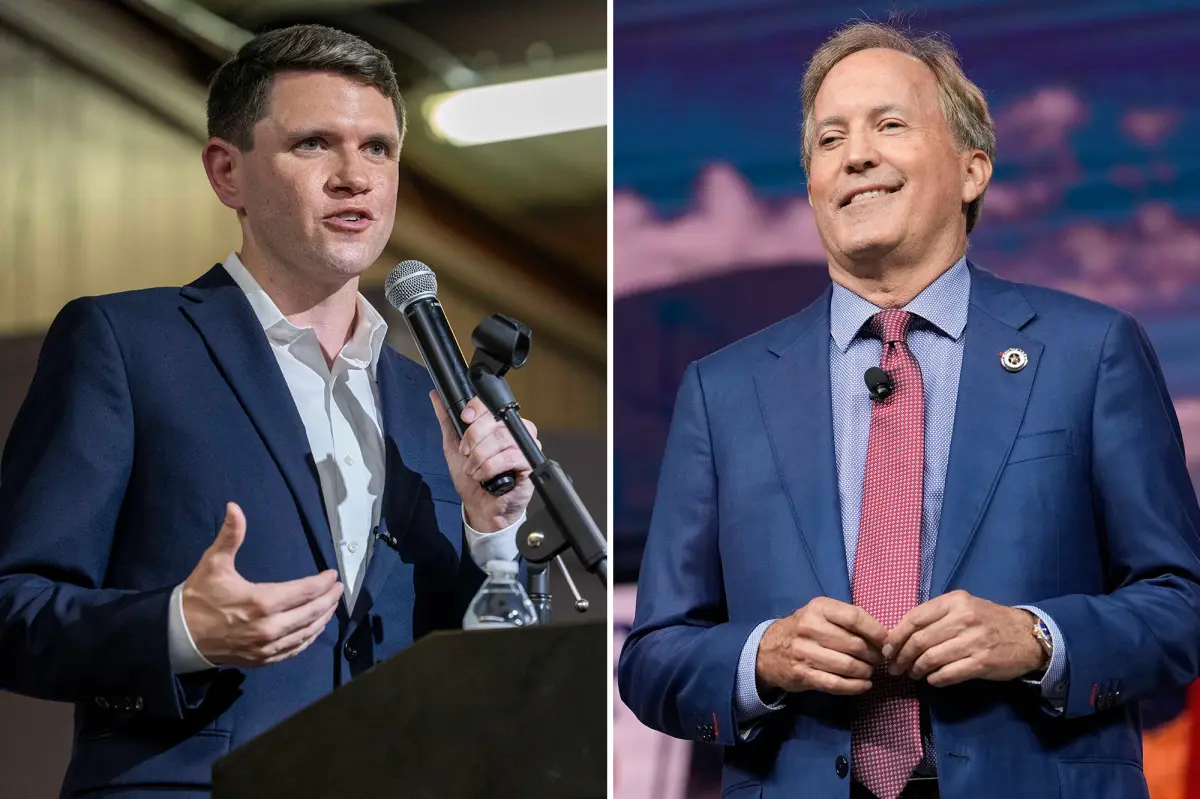
The Texas political landscape has long been defined by its vast, sun-baked expanses, its fiercely independent spirit, and its seemingly unshakeable devotion to the Republican Party. For more than a generation, the Lone Star State has served as the undisputed crown jewel of conservative politics in America, producing national leaders from George W. Bush to Rick Perry and establishing a policy blueprint that championed deregulation, low taxes, and traditional values. For three decades, Democrats in Texas have chased a political mirage—a promised “blue wave” that always seems to evaporate just as it reaches the horizon, leaving behind a trail of high-profile defeats, exhausted volunteers, and broken hearts. Yet, a stunning new poll from Fox News has sent shockwaves through the Austin political establishment and national campaign headquarters alike, suggesting that the deep-red ground underfoot may finally be shifting in a truly fundamental way. In an unexpected turn of events that has caught seasoned political strategists off guard, Democratic challenger James Talarico has managed to carve out a narrow, three-point lead over the state’s controversial Republican heavyweight, Ken Paxton, in their highly anticipated Senate matchup. The survey, which places Talarico ahead at 51% to Paxton’s 48% among registered voters, does not stand alone as an isolated anomaly; it also reveals an incredibly tight gubernatorial race where incumbent Governor Greg Abbott is locked in a dead heat with progressive Democrat Gina Hinojosa, leading by a mere single percentage point at 50% to 49%. For a state that has not elected a Democrat to statewide office since the twilight of the twentieth century, these figures represent far more than just standard statistical noise. They signal a profound undercurrent of voter fatigue, a changing demographic reality driven by urban growth, and an increasing willingness among suburban moderates to rethink their traditional allegiances, suddenly transforming what was once a guaranteed Republican firewall into a highly competitive, deeply unpredictable, and emotionally charged ideological battlefield.
This sudden competitiveness in Texas arrives at a critical juncture for the national Democratic Party, which is currently navigating a treacherous and highly complex path toward reclaiming or maintaining control of the United States Senate. To secure a working majority, Democrats must successfully flip at least four seats currently held by Republicans, a daunting task that has historically led party leaders to focus their precious financial resources on more traditional, purple swing states such as North Carolina, Maine, Ohio, and Alaska. However, as the political map continues to evolve and polarize, none of these targeted races have emerged as guaranteed victories, and growing anxieties over a potentially vulnerable seat in Michigan have forced Democratic strategists to search for viable, high-reward alternatives to keep their hopes alive. In this high-stakes environment, Texas has transformed from a costly, unrealistic pipe dream into an increasingly attractive and necessary frontier, especially as Democrats also find themselves performing surprisingly well in other unexpected locales like Iowa. The current optimism among Texas Democrats is not entirely without precedent; they came tantalizingly close to pulling off a historic upset in 2018, when Senator Ted Cruz barely survived a fierce, high-profile challenge from Beto O’Rourke, squeaking by with a margin of just 2.5 percentage points during a wave of national enthusiasm. By building on the lessons of that historic campaign—which demonstrated the power of grassroots organizing across the state’s massive, expensive media markets from Dallas to Houston—and riding the momentum of a projected blue wave in the 2026 midterm elections, Talarico’s team believes they can finally cross the finish line. This hope is further bolstered by the fact that the young Democrat currently holds a 0.9 percentage point advantage in the latest RealClearPolitics polling aggregate, proving that his early lead is not just a passing fluke but a sustained, highly competitive reality.
The vulnerability of the Republican ticket in Texas is deeply intertwined with the turbulent and controversial political career of Ken Paxton, the state’s embattled attorney general whose long history of legal, ethical, and personal controversies has increasingly become a heavy liability for his party. Even before facing off against a Democratic opponent in the general election, Paxton had to survive a bruising, expensive, and highly divisive Republican primary challenge from incumbent Senator John Cornyn, an institutionalist who warned voters and party insiders alike that Paxton’s extensive ethical baggage would make him dangerously vulnerable to a motivated Democratic opponent in a state that is slowly but surely changing color. Despite these stark warnings from the party’s traditional establishment, Paxton ultimately secured the nomination, thanks in large part to a powerful, late-stage endorsement from former President Donald Trump, who remains an incredibly influential kingmaker among the conservative grassroots. However, the attorney general’s legal troubles have been a constant, dark shadow over his career, dating back to 2015 when he was first indicted on felony securities fraud charges shortly after taking office as the state’s top law enforcement officer. Although Paxton managed to navigate the complex legal system for nearly a decade through a series of delays and jurisdictional battles before eventually reaching a pretrial diversion agreement that saw those specific charges dismissed, the long-running saga cemented his reputation as a politician permanently operating on the edge of legal ruin. For his loyal base, these legal battles were often framed as “deep state” political persecution, but for moderate voters, they painted a picture of a public servant more focused on his own survival than the needs of everyday Texans.
The absolute climax of Paxton’s political troubles arrived in the hot summer of 2023, when the Republican-controlled Texas House of Representatives took the extraordinary, historic step of impeaching him on a laundry list of serious allegations. These charges included obstructing justice in his long-delayed securities fraud case, making false statements to investigators, retaliating against heroic whistleblowers within his own office, providing preferential treatment to wealthy political donors, and misappropriating valuable public resources for personal gain. While Paxton ultimately survived the subsequent trial in the state Senate by an incredibly narrow margin of 16 to 14, the grueling, highly publicized proceedings laid bare a web of personal and professional misconduct that deeply damaged his standing with the broader public. Central to the allegations was his relationship with real estate developer and campaign donor Nate Paul, whom Paxton was accused of aiding by using the power of the attorney general’s office to interfere in federal investigations. To make matters worse, the scandal bled into Paxton’s personal life when details emerged that he had allegedly pressured Paul’s company to hire his mistress, a revelation that contributed to a highly publicized divorce from his wife, Angela Allen—who, in a highly dramatic twist, is herself a state senator. This Shakespearean level of personal and political drama within the state capitol further alienated socially conservative voters who value family integrity, transforming Paxton’s survival from a triumph of political resilience into a costly, ongoing burden for the Texas GOP.
Sensing an unprecedented opportunity to capitalize on Paxton’s tarnished image, James Talarico has positioned himself as a fresh, forward-thinking, and deeply moral alternative, though his rapid rise has also made him the primary target of a fierce Republican counter-offensive designed to paint him as far out of touch with mainstream Texas values. A former public school teacher, Harvard graduate, and student at a local theological seminary, Talarico has built a unique political brand by using Christian scriptures to argue for progressive policies like raising teacher pay, expanding healthcare access, and feeding the poor, making him a unique threat to the traditional Republican monopoly on faith-based messaging. In an effort to damage Talarico’s appeal among moderate and independent voters who might be drawn to this compassionate message, conservative strategists have aggressively seized on his past theological and philosophical comments, portraying him as a far-left ideologue invested in progressive cultural politics. Specifically, Republicans have weaponized remarks Talarico made during discussions about the nature of faith, where he suggested that God transcends traditional gender binaries and noted that some scientific perspectives identify multiple biological sexes. By highlighting these remarks, the GOP hopes to shift the focus of the race away from Paxton’s ethical shortcomings and onto the highly polarizing battlegrounds of cultural identity and religious doctrine. This strategy aims to convince voters that while Paxton may be a flawed individual, Talarico represents an existential threat to the traditional, family-centered way of life in Texas, creating a classic political dilemma where voters must choose between a candidate with serious questions about his personal character and one they are told is ideologically extreme.
Ultimately, the outcome of this historic Senate race will depend on which set of concerns weighs more heavily on the minds of the Texas electorate as they head to the voting booths in the upcoming election. According to the Fox News survey, which sampled 1,006 registered voters and carried a margin of error of three percentage points, a significant 59% of respondents expressed deep and serious concerns about Ken Paxton’s personal character and ethical record, indicating that his political baggage has left a lasting, negative impression. In contrast, a smaller but still substantial 47% of voters expressed worry that Talarico’s progressive political views might be too extreme for the state, suggesting that while the Republican cultural attacks are gaining some traction, they have not yet managed to eclipse the widespread distaste for Paxton’s accumulated scandals. As both campaigns gear up for a grueling, incredibly expensive, and deeply personal battle heading into the 2026 midterms, this tension between character and ideology will define the narrative, forcing Texans to make a profound choice about the moral and political identity of their beloved state. Whether this race ends in a historic Democratic breakthrough that permanently alters the national electoral map or another heartbreaking near-miss for the blue party, the very fact that Texas is now a genuine, high-stakes battleground marks a dramatic new chapter in American political history, proving that no political fortress is completely impregnable when voters begin to demand transparency, integrity, and accountability from their elected leaders.