



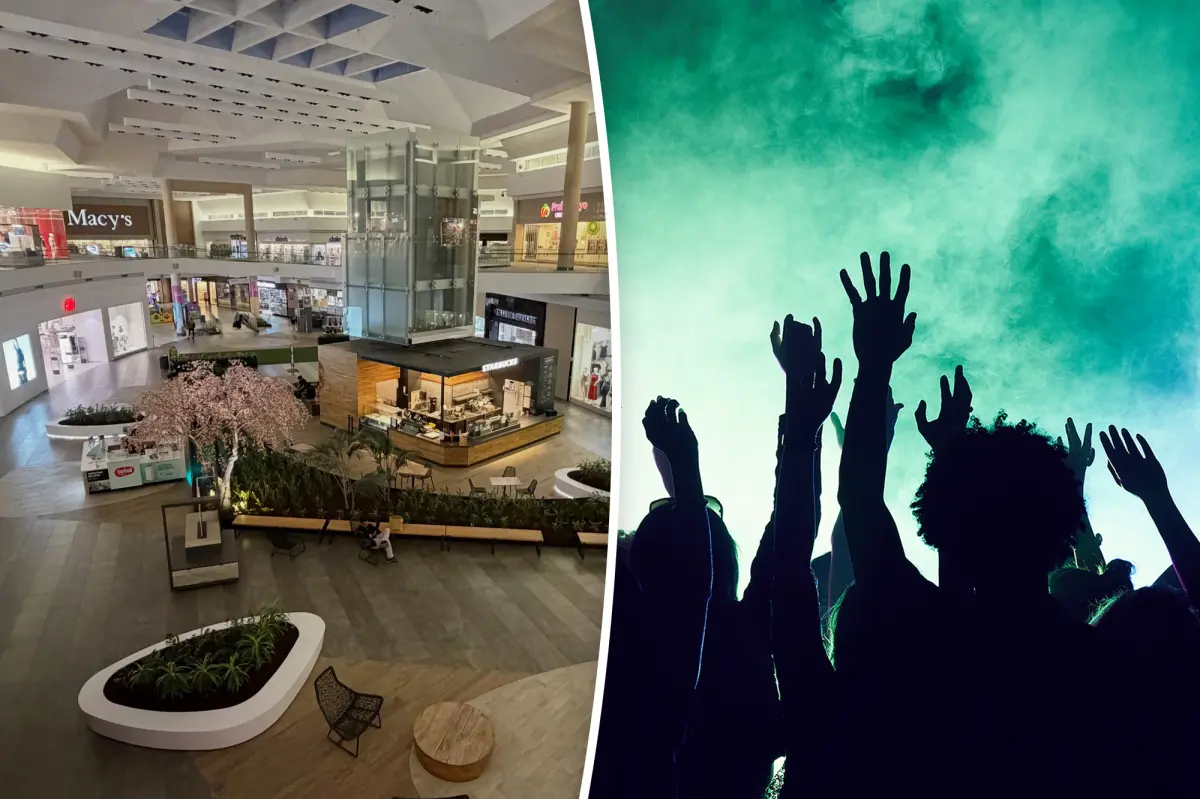
Imagine the familiar sensory tapestry of your local suburban shopping mall: the comforting, buttery aroma of freshly baked pretzels drifting through the warm air, the soft murmur of multi-generational families browsing brightly lit storefronts under soaring architectural skylights, and the gentle, rhythmic hum of escalators carrying shoppers from one level to the next. Now, imagine all of those wholesome daytime sights and sounds suddenly replaced after dark by the bone-rattling thud of a professional sub-bass system, neon laser beams slicing through the cavernous rafters of the atrium, and thousands of energetic electronic dance music fans taking over the central court. This wild, dreamlike contrast is about to become a vivid reality at San Jose’s historic Eastridge Center. On September 5, 2026, this 55-year-old architectural marvel—which, upon its grand opening in 1971, stood proudly as the largest enclosed shopping center on the entire West Coast—will play host to a historic, first-of-its-kind after-hours electronic dance music event playfully dubbed “Mallorama.” The ambitious evening represents a radical departure from the venue’s traditional retail operations, promising to convert the sprawling center court into a massive, high-octane dance floor. Scheduled to kick off at 9:00 p.m.—precisely when the mall’s iron security gates slide shut and the last traditional shoppers depart on typical weekend nights—the party will rage until 2:00 a.m. the following morning. For locals who have spent decades visiting this iconic South Bay staple for back-to-school clothing hauls, holiday photos, or casual weekend hangouts, the event offers a surreal, once-in-a-lifetime opportunity to experience a beloved childhood monument in a completely unprecedented, rebellious light. By breathing fresh, nocturnal energy into a space traditionally defined by bright lights and daytime consumerism, the organizers are not just planning a party; they are orchestrating a profound cultural collision that challenges our collective imagination, marking a major milestone for both the city’s nightlife and the historical retail legacy of the South Bay region.
At the heart of Mallorama is a deep, resonant sense of local pride and nostalgia, spearheaded by a powerhouse collaboration of local and national event organizers who understand the cultural heartbeat of the region. The event is being co-promoted by San Jose Foos, a popular regional event promotion and cultural brand that celebrates the unique identity of the South Bay, alongside the globally renowned electronic music collective Brownies & Lemonade, with additional creative backing from Something New, DJ Dials, and 15Utah. For San Jose Foos, the opportunity to bring such a massive, unique party to Eastridge Center is much more than just another business venture; it is a deeply personal love letter to their hometown. In an emotional social media post that quickly went viral, the brand expressed their profound excitement, writing, “This place holds a real special place in our hearts and to be able to do this with you all is a dream come true.” For generations of San Jose residents, Eastridge Center is not merely a concrete collection of retail shops, but a living museum of childhood memories. It is the place where lifelong friendships were forged over food court meals, where teenagers experienced their first tastes of independence, and where families gathered to watch blockbuster movies at the AMC Theatres or share a sweet treat at Auntie Anne’s. While the promoters are encouraging attendees to continue supporting the mall’s regular daytime businesses, they are tapping into a profound emotional reservoir by allowing adults to reclaim their childhood stomping grounds in a mature, celebratory fashion. By framing the rave around the comforting, shared memories of growing up in the South Bay, the organizers have managed to humanize a large-scale electronic music event, transforming it from a standard concert into an intimate, collective homecoming that honors the shared cultural heritage of the local community, celebrating the roots of the neighborhood in a way that feels incredibly authentic and deeply emotional.
To pull off an event of this scale inside an active, functional shopping center, the production teams are sparing no expense to ensure a seamless, high-caliber, and safe experience for all attendees. The center court will be transformed into a state-of-the-art concert venue featuring a fully built professional stage, a thunderous sound system custom-tuned to the mall’s unique acoustics, and an immersive synchronized lighting rig designed to wash the entire multi-level atrium in brilliant hues of neon green, pink, and blue. True to the mysterious allure of the underground dance music scene, the organizers are keeping the musical lineup closely guarded, teasing only a “secret lineup of heavy hitters” and highly sought-after DJs that promise to keep the crowd dancing until the early morning hours. To guarantee that the night runs smoothly and safely, the organizers have committed to employing a comprehensive staff of event professionals, medical personnel, and a robust security presence throughout the venue. While the vast majority of the mall’s retail clothing shops, department stores, and boutiques will remain securely locked behind their security grates during the five-hour event, attendees will not have to worry about going hungry or thirsty. Recognizing that dancing is intense physical activity, select food vendors and culinary options within the mall will remain open, allowing partygoers to grab a bite to eat and refuel in between high-energy DJ sets. This unique hybrid of standard rave infrastructure and operational mall amenities ensures a comfortable, secure, and incredibly novel environment where guests can truly party hard instead of shopping until they drop, wrapped in the cozy, familiar envelope of their favorite childhood commercial hub, which will feel both incredibly fresh and comfortingly familiar to everyone in attendance. It promises to be a masterclass in event production, seamlessly blending the practical mechanics of a massive music festival with the charming, nostalgic eccentricities of a retro retail center.
The timing of Mallorama is far from accidental; indeed, it represents a fascinating flashpoint in a much larger, nationwide sociological shift regarding how younger generations interact with physical spaces. For years, cultural commentators have lamented the “death of the American mall,” pointing to the rise of e-commerce and the decline of traditional anchor department stores as evidence of an irreversible decline. However, recent data suggests a surprising and heartwarming plot twist: malls are currently experiencing a massive, youth-led renaissance, driven largely by Gen Z and younger millennial consumers who are actively seeking out real-world, in-real-life (IRL) connection. According to industry experts like R.J. Hottovy from Placer.ai, a firm that tracks consumer foot traffic, the modern mall is rapidly evolving from a purely transactional shopping destination into an experiential “third place”—a sociological term referring to a communal space outside of the home and the workplace or classroom where people can gather, socialize, and build relationships. Young people today, weary of the isolation and artificiality of purely digital spaces, are craving physical spaces to hang out and share tangible experiences. Recognizing this shift, forward-thinking mall owners are increasingly welcoming unconventional events like Mallorama, realizing that to survive and thrive in the modern era, they must pivot toward fostering genuine human connection. By hosting a massive after-hours rave, Eastridge Center is positioning itself at the absolute cutting edge of this cultural movement, proving that these sprawling suburban structures still possess immense potential to serve as vibrant, physical anchors of youth culture and community solidarity in the twenty-first century, redefining the very nature of communal architecture. In a world dominated by social media algorithms and virtual interactions, the physical layout of the mall—with its wide corridors, central meeting points, and open plazas—provides a perfect structural canvas for human gathering, transforming a monument to commerce into a sanctuary for human connection, demonstrating that the commercial hubs of the past are fast becoming the experiential sanctuaries of our future.
Unsurprisingly, the sheer novelty and nostalgic appeal of Mallorama have triggered an absolute frenzy of ticket buying among local music lovers and curious community members alike, resulting in rapid sell-outs across multiple pricing tiers. To secure their entry into this exclusive, one-night-only affair, eager prospective guests have been flocking to the event’s promotional channels, including the Something New Club website, which utilizes a direct-to-consumer text messaging service to deliver exclusive presale links, as well as directing traffic straight to the main Eventbrite ticketing platform. The response from the public has been nothing short of overwhelming, as General Admission tickets quickly evaporated through successive pricing brackets. Tier 1, Tier 2, and Tier 3 tickets—which were sold for $48.03, $53.69, and $59.35 respectively, with all site and processing fees included—sold out almost immediately upon release, leaving only Tier 4 tickets available at a flat rate of $65. A “last chance” ticket option priced at $70.66 is also slated to go live as the event date approaches, offering a final lifeline to those who missed the initial buying rush. Crucially, the organizers are maintaining a strict set of entry requirements to preserve the mature, nightlife-oriented atmosphere of the evening; the event is strictly limited to guests who are 21 years of age and older, and a valid government-issued photo identification card will be required and rigorously checked at the entrance. This age restriction adds an interesting layer of exclusivity to the night, ensuring that the crowd is composed entirely of adults who can fully appreciate the irony, nostalgia, and sheer joy of partying responsibly in a space that once served as the backdrop for their awkward teenage years, transforming a nostalgic trip down memory lane into an elevated night out. For many, this is a priceless opportunity to relight the spark of youth and dance beneath the familiar neon lights of a beloved hometown anchor.
Ultimately, Mallorama at Eastridge Center serves as a beautiful and inspiring testament to human ingenuity and the enduring power of physical community spaces in an increasingly fragmented digital age. By taking a 1970s suburban relic and transforming it into a throbbing, neon-lit sanctuary for electronic music and dance, the organizers and mall owners are demonstrating that our built environments are never truly obsolete; they simply require creative imagination, bold collaboration, and a deep respect for local history to find their second acts. When the bass finally drops under the Eastridge skylights on September 5, it will represent more than just a successful night of entertainment; it will symbolize a triumphant reclamation of physical space, proving that the places that shaped our pasts can still evolve to soundtrack our futures. It reminds us that we are social creatures at our core, forever looking for excuses to gather, to dance, and to feel connected to one another in the real world. As the music echoes through the empty storefronts and the community dances together under the high ceilings of their childhood mall, Mallorama will pave a vibrant new path forward, showing the world that with a little bit of bass, a lot of love, and a touch of nostalgia, even the most traditional spaces can be reborn as monuments of pure, human joy. As retail continues to adapt to the digital age, the success of Mallorama could very well inspire a global movement where shopping malls worldwide are repurposed for art exhibitions, community forums, live performances, and late-night celebrations. This shift ensures that these architectural giants continue to beat at the center of our communal lives, serving as monuments of shared experience rather than mere ghost towns of a bygone retail era, reminding us that our shared spaces are living, breathing entities, waiting to be filled with the laughter, music, and energy of the people who love them most.