

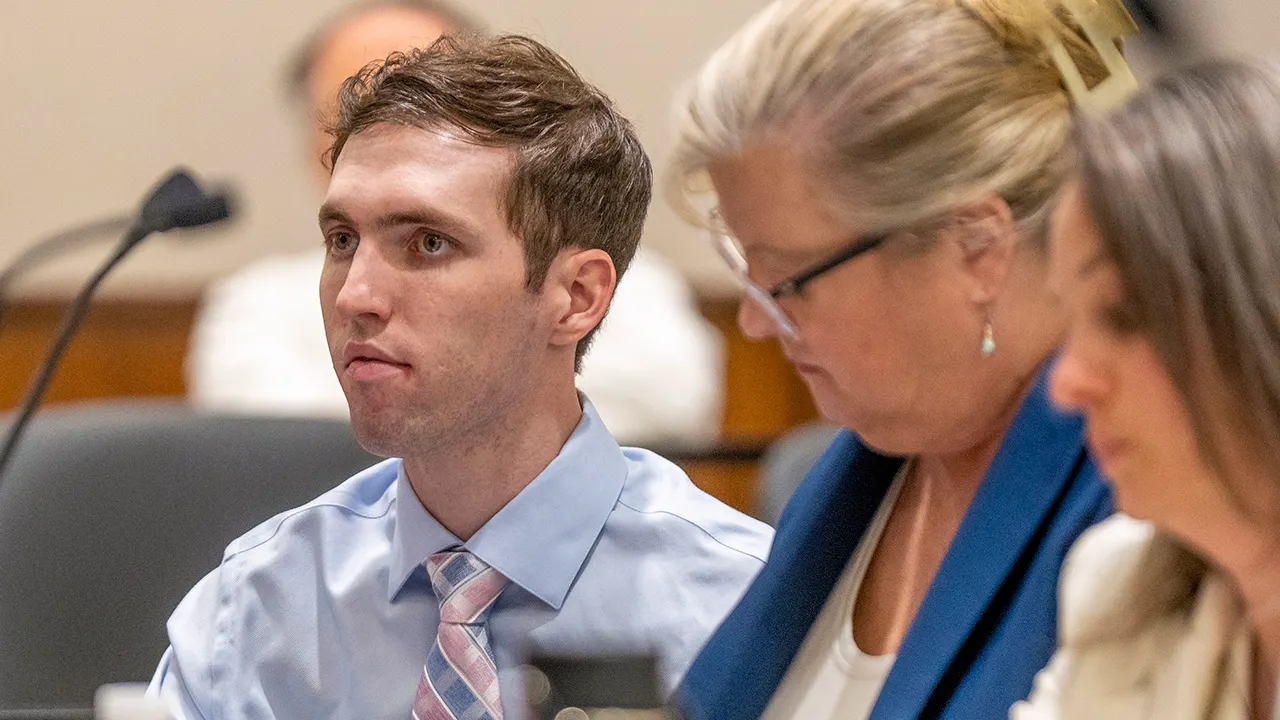
In the quiet, tense atmosphere of a Utah courtroom, the profound weight of a nation’s deepest anxieties sat heavily in the air as prosecutors took a decisive and aggressive step forward in the prosecution of twenty-three-year-old Tyler Robinson. Following a grueling and emotionally exhausting five-day preliminary hearing that exposed the raw, agonizing details of a public tragedy, state prosecutors filed a powerful, comprehensive written memorandum designed to leave no doubt in the mind of the court. Addressed directly to Judge Tony Graf, this legal brief represents the first of three scheduled filings, and its tone is one of absolute, unwavering conviction. Prosecutors did not merely request a trial; they argued with fierce urgency that the state has presented an avalanche of evidence that easily clears the legal threshold of probable cause. In their own words, they framed the situation as arguably the most straightforward bindover decision this particular court will ever encounter in its history. This is not a case built on fragile assumptions, weak circumstantial links, or speculative theories; instead, it is presented as a tragic, clear-cut sequence of events that began with a calculated act of violence and ended with the voluntary surrender of the accused. By breathing life into the dry language of criminal statutes, the prosecution has sought to transform the clinical mechanics of the legal system into a deeply human narrative of accountability, insisting that the memory of the victim, conservative activist Charlie Kirk, and the safety of the public demand a full, transparent trial on all counts.
At the heart of the prosecution’s compelling argument is a series of self-incriminating statements that paint a chilling picture of premeditation and confession, shattering any illusion of innocence that might have lingered during the initial stages of the investigation. According to the court filings, Robinson did not keep his devastating actions a secret; instead, he allegedly bared his soul to those closest to him, including his former roommate and romantic partner, Lance Twiggs, whose involvement has added another layer of personal drama to this tragic saga. In a series of raw, unfiltered communications, Robinson reportedly wrote the devastating admission, “I had the opportunity to take out Charlie Kirk, and I took it,” a phrase that prosecutors argue serves as a definitive, firsthand confession of the assassination. But the admissions did not stop there, demonstrating a cold consciousness of guilt that is difficult to ignore. The prosecution details how Robinson candidly discussed planning the assault for “a bit over a week,” detailing his internal calculations, his frantic efforts to figure out how to retrieve the high-powered rifle after the shooting, and eventually, his resignation to his fate when he messaged that he was going to turn himself in willingly to law enforcement. To hear such words spoken or read aloud in a courtroom is a deeply unsettling experience for everyone present, as it strips away the sterile distance of forensic science and forces the court to confront the conscious, deliberate choices of a young man who allegedly decided that violence was his only path. These deeply personal, written confessions form the emotional anchor of the state’s case, leaving a trail of digital breadcrumbs that prosecutors argue no jury could possibly ignore, transforming what might have been a mysterious whodunit into a heartbreakingly clear narrative of self-confessed guilt.
While the spoken and written admissions of the defendant are enough to send shivers down the spine of any observer, the prosecution argues that these confessions do not stand alone in a vacuum; rather, they are reinforced by an overwhelming mountain of physical, scientific, and digital forensic evidence that paints an incredibly damning picture. During the five-day preliminary hearing, investigators laid out a meticulous timeline supported by chilling surveillance footage that tracked Robinson’s precise movements across the Utah Valley University campus both before the fatal shots were fired and in the chaotic moments that followed. This visual trail is further fortified by advanced DNA testing, which allegedly recovered genetic material belonging to both Tyler Robinson and his associate, Lance Twiggs, on several critical pieces of evidence recovered by law enforcement. The murder weapon itself—a high-powered rifle left behind at the scene—along with a spent cartridge casing, a discarded towel, and a screwdriver used in the preparation of the shooting, all bear the silent, microscopic signatures of the accused. The inclusion of these mundane, everyday items like a towel and a screwdriver serves as a grim reminder of the deliberate, manual effort required to prepare for such an attack. Eyewitnesses who were present on that fateful September afternoon also took the stand, offering gripping, first-hand accounts of seeing a figure matching Robinson’s description positioned on the rooftop overlooking the crowded courtyard where the event was taking place. This combination of cutting-edge forensic science, undeniable digital tracking, and the old-fashioned, gut-wrenching testimony of regular people who looked up and saw a gunman creates an incredibly tight circle of evidence, one that prosecutors argue makes the finding of probable cause an absolute certainty.
The sheer scale of the incident on September 10, 2025, remains a scar on the collective memory of the Utah Valley University community and the nation at large, emphasizing the immense public danger inherent in the defendant’s alleged actions. On that warm, pleasant autumn day, approximately three thousand people, mostly young students, eager citizens, and curious bystanders, had gathered in the open air to hear Charlie Kirk speak, expecting a lively afternoon of political discourse, debate, and community engagement. Instead, the peaceful gathering was shattered by the deafening cracks of rifle fire echoing from a nearby rooftop, sending a wave of absolute terror through the unsuspecting crowd. Prosecutors have made it a central point of their filings to highlight not just the targeted assassination of Kirk, but the reckless, terrifying disregard for the lives of thousands of innocent people who found themselves directly in the line of fire. By discharging a high-powered rifle into a densely packed crowd, the shooter knowingly transformed a college campus into a combat zone, creating a stampede of frightened onlookers running for their lives and leaving deep emotional wounds that may never fully heal. The state argues that this element of the crime—the deliberate decision to unleash deadly violence in a space crowded with thousands of bystanders—elevates the case from a singular, isolated tragedy to a monumental act of public terror, justifying the severe, multi-count indictment that Robinson now faces as he awaits his day in court.
As the legal machinery slowly grinds forward, the defense team for twenty-three-year-old Tyler Robinson faces an incredibly steep uphill battle, navigating a high-stakes landscape where the life of their client literally hangs in the balance. Currently, Robinson has not yet entered a formal plea to the seven felony and misdemeanor charges leveled against him, including the primary count of aggravated murder, a charge for which the state of Utah is actively seeking the death penalty. The contemplation of capital punishment adds an immense layer of gravity to the proceedings, forcing everyone in the courtroom to recognize the ultimate stakes of this legal battle. In the coming weeks, the courtroom drama will transition from the spoken word to the written page as Robinson’s defense attorneys prepare their formal written opposition to the prosecution’s memorandum, attempting to find cracks in the state’s seemingly ironclad narrative and arguing against a trial. This will be followed by a final rebuttal from the state, setting the stage for highly anticipated oral arguments scheduled for September 1, where both sides will clash in front of Judge Graf one last time before he makes his crucial ruling. The defense’s task is monumental: they must find a way to counter the weight of the alleged DNA matches, explain away the devastating text messages, and humanize a young man who has been cast by the state as a cold, calculating assassin. Every filing, every objection, and every strategic decision made in these quiet summer weeks carries immense weight, as a single misstep could seal Robinson’s fate and pave the way for a trial that could ultimately end in his execution.
Ultimately, this case is about far more than just legal definitions of probable cause, forensic evidence, or courtroom procedures; it is a deeply human story about the fragility of peace in an era marked by intense political division and the lasting trauma inflicted upon a community. The tragic loss of Charlie Kirk, a prominent and highly polarizing figure, has reverberated far beyond the campus of Utah Valley University, forcing a painful national conversation about the rising tide of political violence and the safety of public discourse. As Judge Tony Graf takes the time to carefully deliberate, reviewing the mountain of evidence, witness testimonies, and written arguments before delivering his final bindover decision, the eyes of the community and the nation remain fixed on this Utah courthouse. People are searching for answers, trying to comprehend how a young man could allegedly plan an assassination for over a week and carry it out with such devastating public consequence. Whether Judge Graf decides to bind Robinson over for trial or not, the impact of that September afternoon has already left an indelible mark on the lives of the witnesses who ran for cover, the families affected by the tragedy, and a society struggling to find its footing amid ideological warfare. This legal battle represents a critical moment of reckoning, a pursuit of justice that seeks not only to hold a perpetrator accountable but also to restore some semblance of safety, order, and humanity to a world shaken by a sudden, violent act of terror.