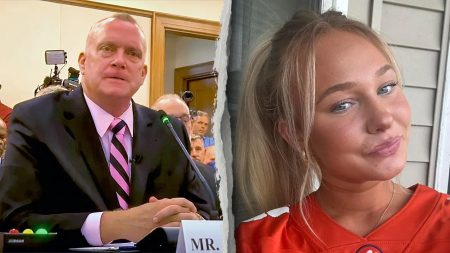



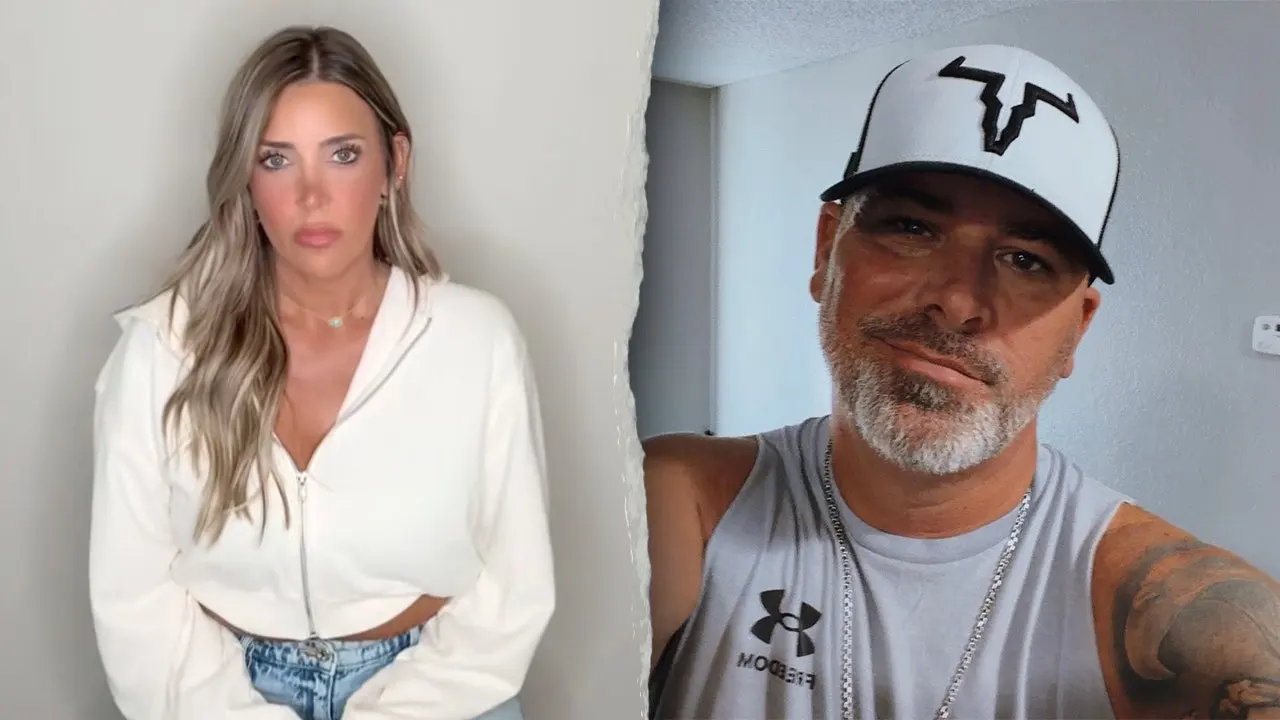
Behind the cold, analytical summaries of police reports lies a visceral, human terror that words can rarely fully salvage, a truth made painfully obvious in the final, desperate moments of Sara Gilson’s life. On a deeply fateful and dark July afternoon in Owasso, Oklahoma, the fragile line separating a safety call from a terminal tragedy dissolved in a matter of terrifying seconds, recorded only by the crackling, mechanical audio of a police dispatcher’s system. For those who bear absolute witness to humanity’s darkest hours, the emergency dispatch call on July 23rd was uniquely devastating, capturing a responder who was trying desperately to re-establish a phone connection with a residence rapidly descending into absolute chaos. As the dispatcher’s voice, tight with controlled panic, communicated with patrol units heading to the suburban address, she explained that she could hear a female in the background screaming and crying in sheer terror. This desperate noise was immediately followed by a sudden, ominous thud, a sharp sound that would later be identified as the definitive climax of a domestic nightmare that had been quietly building for several weeks. When the police eventually breached the home, they were met with a silent, heavy scene that confirmed their absolute worst anxieties: both Sara, who also went by her married name of Sara Duffey, and her husband, Jeremiah Shawn Duffey, were dead from gunshot wounds. This incredibly horrific and disturbing discovery forced state detectives to immediately classify the deaths as a tragic domestic murder-suicide, adding yet another statistic to a national epidemic of domestic violence. The dispatcher’s audio revealed that the dispatch team was already highly familiar with the suspect, noting a prior warning regarding a physical allegation made weeks earlier against the husband. This sudden realization of danger, however, arrived far too late to alter the catastrophic sequence of events that ended Sara’s life, showing how fragile the safe window of survival is when an unstable abuser suddenly feels completely cornered by the truth.
To the vast, interconnected world of social media, Sara Gilson was known as a vibrant, relatable TikTok influencer who used her online space to share her personality, her struggles, and her life with thousands of followers who valued her openness. However, beneath the carefully curated screens and virtual interactions, Sara was carrying a terrifying and increasingly dangerous personal secret, one that she eventually chose to expose to the public in a desperate bid to find safety through absolute, unyielding public honesty and digital transparency. Just days before her life was tragically cut short, Sara posted a raw TikTok video with a dark but telling caption, writing that she was preparing for the day Netflix inevitably produced a true-crime documentary about her soon-to-be ex-husband, whom she had recently and shockingly discovered was a suspected child predator. This public post was not merely a cry for attention; it was a calculated attempt to use her virtual community as a shield, believing that bringing her husband’s actions into the bright light of public scrutiny would force a slow-moving legal system to take immediate action. By courageously bringing these horrifying allegations into the light of social media, she sought to demolish the respectable social mask Jeremiah had worn for years, using her digital agency to raise an alarm for other families. Yet, this incredibly brave, public act of digital exposure also elevated her risk exponentially, stripping a desperate and volatile man of his social standing, his profession, and his perceived immunity in a highly public forum. In our modern age, social media platforms have emerged as powerful arenas for victims seeking validation and protection, but they can also act as triggers for severe escalation, pushing abusive partners to commit devastating acts of retaliatory violence when their carefully constructed public image is completely and utterly destroyed. Sara’s final posts stand as a haunting archive of a young mother’s courageous attempt to protect her family, demonstrating the absolute bravery it takes to speak out, even when the personal cost of doing so is unimaginably high.
For the many families and friends who loved Sara deeply, the terrifying culmination of her marriage was not a sudden revelation, but rather the agonizing end of a long, dark cycle of domestic abuse that they had desperately tried to dismantle for years. Lyle Landers, Sara’s deeply devastated former husband, spoke with immense grief and regret about the many years he spent begging her to walk away from Jeremiah, recognizing the highly manipulative, toxic patterns of psychological control that had slowly isolated her from her support networks. Landers described how Sara had become trapped in an environment where controlling, harmful behaviors and severe emotional abuse were gradually normalized, leaving her feeling powerless to escape. Despite his repeated and earnest offers to assist her financially, emotionally, and physically in separating from Jeremiah, the psychological hold her husband maintained over her remained incredibly difficult to break. This agonizing pattern highlights the invisible chains of domestic dominance, where abusers systematically dismantle a partner’s self-esteem and independence until the concept of leaving becomes a terrifying prospect. In her final weeks, however, the horrifying truth about her husband’s activities shattered that control, replacing her fear with a fierce, protective maternal instinct that ultimately drove her to seek a legal protective order. As Landers tearfully remembered, Sara was an exceptional, devoted mother who would have gladly laid down her life to protect children, and it was her brave refusal to compromise their safety that ultimately brought about her tragic demise. Her painful journey humanizes the deep-seated difficulties that survivors of domestic violence face, serving as a reminder that breaking free is absolutely never as simple as merely walking away from a relationship, especially when dealing with a dangerous, unstable partner who is prepared to commit the ultimate act of violence rather than surrender their control over their victims.
At the center of this darkness, Jeremiah Shawn Duffey actively and maliciously utilized his position as a youth sports mentor to gain access to vulnerable children. As a local youth basketball coach in Owasso, Jeremiah had cultivated an image of a supportive mentor, a role that allowed him to hide his predatory inclinations behind a highly respectable public facade of civic leadership and athletic coaching. However, this respectable facade began to disintegrate on June 9th, when a courageous parent and a young child came forward to local police, accusing him of inappropriately touching a female child during a school-related active sporting event. As detectives dug deeper into his background, they uncovered a dark, recurring pattern of predatory behavior, revealing that Jeremiah had faced similar serious allegations of lewd molestation in the past, leading state investigators to refer his case to the U.S. Attorney’s Office for federal criminal review. The full scale of his betrayal was further laid bare when a second protective order was filed against him by another mother, who alleged that Jeremiah had been witnessed kissing and fondling her fifteen-year-old daughter, a player on his youth basketball team. The court documents painted a disturbing picture of exploitation, revealing that Jeremiah had even attempted to pay the young girl cash in a desperate bid to buy her silence and evade legal exposure. When she was confronted with the undeniable, sickening evidence of her husband’s actions, Sara acted with swift moral clarity, immediately securing an emergency protective order to legally and permanently banish him from their family home and sever all contact. Her brave, decisive response was an effort to draw a hard line against abuse, but it also cornered a desperate, exposed predator who saw his entire life collapsing, turning him into a highly dangerous, explosive threat to anyone nearby him.
While the tragedy was recorded on tape by dispatchers, its most harrowing, immediate witness was an innocent child trapped inside the house as the violence exploded. In a deeply heartbreaking turn of events, it was Sara’s brave young child who was forced to dial 911, informing the dispatcher in a trembling voice that his stepfather had just shot his mother. The sheer psychological horror of a child bearing witness to such extreme domestic violence, and being forced to report the murder of his mother, is a devastating element of this story that goes far beyond any legal or criminal metric. For this young boy, his home was instantly transformed from a place of safety and warmth into a horrific physical crime scene, leaving a lifelong scar of grief and trauma. This detail highlights the innocent, forgotten victims of domestic homicides, demonstrating how children are frequently caught in the crossfire of an abuser’s desperate violence. Sara’s final actions in her life were guided by a fierce, maternal desire to purge her home of a dangerous, predatory man and provide a safe environment for her innocent kids, yet the state’s legal protective systems proved far too slow to shield her family from Jeremiah’s final, violent act of desperation. The raw, unfiltered pain of that child’s emergency call stands as a tragic calling card for the human cost of delayed systemic intervention, underlining the absolute necessity of prioritizing domestic safety when child sexual abuse allegations arise. The loss of Sara has left an empty space in her family’s life, serving as a reminder that the difficult path to leaving a domestic abuser is often paved with extreme peril, especially during the critical moment when a brave survivor attempts to reclaim her household.
In the highly unspeakable aftermath of this devastating loss, Sara Gilson’s legacy must be defined not by the terrible actions of her killer, but by her truly extraordinary, self-sacrificing bravery in her final days to protect the innocent. Her tragic story stands as a humanizing call for systemic reform, drawing crucial attention to the intersecting threats of domestic abuse, child exploitation, and the inadequate protection measures afforded to victims who seek legal help. While her TikTok posts will remain a digital testament to her courage, her death underscores the cold truth that a standard written protective order is often an insufficient shield against a highly volatile abuser who is ready to commit murder. Communities, legal organizations, and law enforcement agencies must work in tandem to treat domestic violence and predatory threats with immediate, physical urgency rather than administrative delay, ensuring that victims are actively shielded after stepping forward. Sara’s devastated ex-husband’s words echo as a poignant tribute to her character, reminding us all that she was a mother who loved her children completely, and that her attempts to protect young lives from a predator are what ultimately led to her death. As her friends, family, and followers continue to grieve, there remains a collective social responsibility to honor Sara as a courageous, protective hero who stood up against a monster, rather than seeing her as merely a tragic headline. By keeping her memory alive, we can demand better safety nets for whistleblowers, faster intervention methods for families in crisis, and a deeper societal commitment to actively listen to women when they warn us of danger. In honoring Sara, we validate the sacred bond of a mother’s protection, finding hope that her story can ignite the changes necessary to prevent other vulnerable families from suffering this devastating, empty silence.