


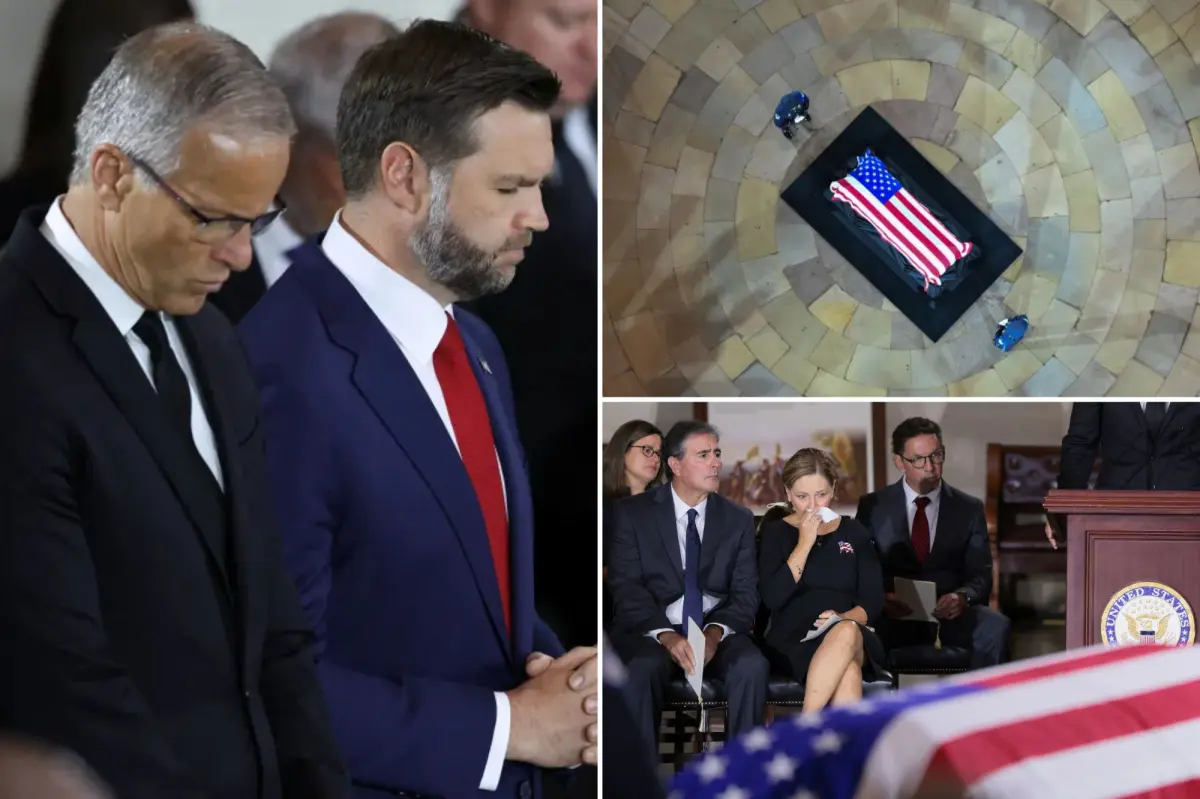
Under the great, towering dome of the United States Capitol Rotunda, where centuries of American history are etched into cold marble and captured in massive oil paintings, a rare and profound silence fell over Washington’s political elite on Tuesday afternoon. The Rotunda, which normally echoes with the brisk footsteps of tourists and the hurried whispers of congressional aides, became a warm sanctuary of collective reflection as current and former lawmakers gathered to mourn the passing and celebrate the vivacious life of Senator Lindsey Graham. In an era where political divisions often feel permanent, deeply personal, and bitterly hostile, this solemn gathering presented a poignant, humanizing contrast: men and women from across the ideological spectrum standing shoulder to shoulder, united not by a shared legislative agenda, but by their mutual grief and respect for a towering figure of the Senate. The atmosphere was thick with a heavy, palpable sense of transition; the departure of Graham represented not just the loss of a legislative vote or a powerful committee seat, but the quiet fading of an entire style of American statesmanship characterized by humor, persistence, and deep-seated personal relationships. As mourners filled the historic space, the soft murmur of shared memories and quiet laughter began to rise toward the vaulted ceiling, hinting at the colorful, larger-than-life personality of the man they had come to honor. Under the watchful eyes of the statues of Abraham Lincoln and George Washington, and surrounded by beautiful floral arrangements, the assembled crowd prepared to say their final goodbyes to a leader whose presence had defined the contours of American foreign and domestic policy for decades, leaving behind a profound void that many in the room feared would never truly be filled.
Taking his place at the speaker’s podium, Vice President JD Vance delivered a eulogy that was both remarkably personal and deeply revealing of the hidden, human dynamics of life in the United States Senate. Vance, who represents a younger, more populist generation of the conservative movement that frequently clashed with Graham’s traditional, interventionist foreign policy, did not speak with the detached, diplomatic formality of a standard politician. Instead, his voice carried the genuine warmth and vulnerability of a younger man who had been surprised, challenged, and ultimately charmed by the late South Carolinian senator. “May God rest the soul of Senator Lindsey Graham, a true American original,” Vance told the silent audience of lawmakers, congressional staffers, and longtime friends who had packed into the circular hall. In calling Graham an “American original,” Vance touched on a quality that transcended policy debates; Graham was a political force who refused to fit neatly into any predefined box, carrying himself with a distinctive mixture of Southern charm, sharp-tongued wit, and an unshakeable faith in his own convictions. Vance’s tribute sought to look past the political caricature from the television screens and instead honor the actual flesh-and-blood man who possessed a genuine curiosity about his peers, an enduring respect for the office he held, and a unique capacity to maintain personal affection even when locked in fierce philosophical combat.
To illustrate the rare, honorable character of the late senator, Vance shared a vivid, self-deprecating story from his early days in the Senate, offering a fascinating glimpse into the fierce intellectual battles and backroom negotiations that define congressional life. He recalled a time early in his tenure when he had engaged in a particularly ferocious, highly public debate with Graham regarding the deeply contentious issue of financial aid to Ukraine—a policy area where the two men held fiercely opposed, seemingly irreconcilable viewpoints. Vance admitted that, after their intense disagreement, he walked back to his office with the cynical assumption that standard political retribution would follow, believing their personal relationship was damaged and that Graham would punish him by withholding support for a crucial railway safety bill designed to help the residents of East Palestine, Ohio, following the catastrophic, toxic train derailment of February 2023. “I remember going back to my staff and saying, ‘Well, that’s probably the end of Lindsey’s vote on the railway bill,’” Vance confessed, earning a wave of knowing smiles and soft laughter from the audience who understood all too well the transactional, often vindictive nature of Washington. However, Vance revealed that he was stunned when, a few weeks later, another Senate colleague pulled him aside to let him know that the single most passionate, relentless, and effective advocate for that very railway safety bill behind closed doors was none other than Lindsey Graham. This story, Vance argued, captured the true heart of Graham’s legislative legacy: a politician who could fight you tooth and nail on the world stage, but would still work quietly and tirelessly behind the scenes to help you deliver meaningful results for your constituents at home because he believed in public service.
The emotional gravity of the service was further deepened by Senate Majority Leader John Thune, who stood before the gathering with a visibly heavy heart to speak of the profound emptiness that Graham’s passing has left in the daily rhythm of the Capitol. Thune, who worked closely with Graham on countless legislative campaigns, political strategy sessions, and intense policy maneuvers, did not attempt to hide the raw, deeply personal grief that he and his fellow senators have been carrying since Graham’s departure. “I feel his absence every day, and I know my colleagues do as well,” Thune shared, his voice trembling slightly with the weight of a loss that has fundamentally altered the emotional landscape of the Senate Republican conference. To Thune, Graham was not merely an influential legislative partner, but a constant source of light, humor, and emotional support in an environment that is too often characterized by cold calculation, relentless stress, and partisan hostility. In a particularly moving moment that brought tears to the eyes of several onlookers, Thune looked out over the crowd and expressed a simple, touching hope for the future, saying, “I look forward to the days when you make us laugh again.” This heartfelt sentiment spoke to the core of what made Graham so beloved by his peers: his legendary ability to disarm the most tense, high-stakes negotiations with a perfectly timed joke, a self-deprecating remark, or that distinctive, mischievous Southern chuckle that had a way of cutting through the bitterest of political standoffs.
The remarkable breadth of Graham’s influence and the deep affection he commanded were reflected in the diverse crowd of political figures who gathered in the Rotunda to pay their final respects, including former House Speaker Kevin McCarthy of California and former Senator Pat Toomey of Pennsylvania, alongside hundreds of other dignitaries, staffers, and friends. As they stood together in the historic space, the stories shared by the speakers painted a vivid picture of a man who lived his life with a sort of joyful, unbridled intensity that is increasingly rare in public service today. Vance fondly recalled Graham’s “swashbuckling, infectious laugh, that attitude, that passion that so many others have talked about,” capturing the unique charisma of a lawmaker who was genuinely impossible to dislike once you got to know him. Whether he was holding court in the Senate press gallery, negotiating complex bipartisan immigration reform, or traveling to dangerous war zones to visit American troops, Graham approached every aspect of his role with a relentless, infectious energy that made him one of the most recognizable and influential voices in modern American politics. He was a political fighter, to be sure, but he fought with a sense of joy and a deep love for the democratic process itself, refusing to treat his political opponents as mortal enemies and always leaving the door open for a joke, a drink, or a future compromise.
As the brief service concluded and the crowd slowly began to disperse back to the busy offices and legislative chambers of the Capitol, a lingering sense of reverence remained under the Rotunda’s dome, reminding all who attended of the fragile humanity that binds our leaders together behind the scenes. Lindsey Graham’s departure marks the end of an era—a quiet closing of a chapter on a style of politics where fierce policy debates did not preclude deep personal friendships, and where a sense of humor was valued as an essential tool for survival and governance. The tributes delivered by Vance, Thune, and others served as a powerful reminder that the true measure of a lawmaker’s legacy is found not only in the bills they passed or the offices they held, but in the warmth, laughter, and decency they left behind in the hearts of those they served with. In a political world that can often feel increasingly cold, polarized, and distant from the concerns of everyday human connection, the memory of Graham’s swashbuckling spirit, his infectious laugh, and his unexpected acts of bipartisan kindness will continue to echo through the historic corridors of the Capitol. For those who had the privilege of knowing him, the challenge now is to carry forward his unique blend of fierce conviction and personal warmth, ensuring that the light of his humor and the strength of his character are not forgotten in the ongoing, turbulent story of our nation.