



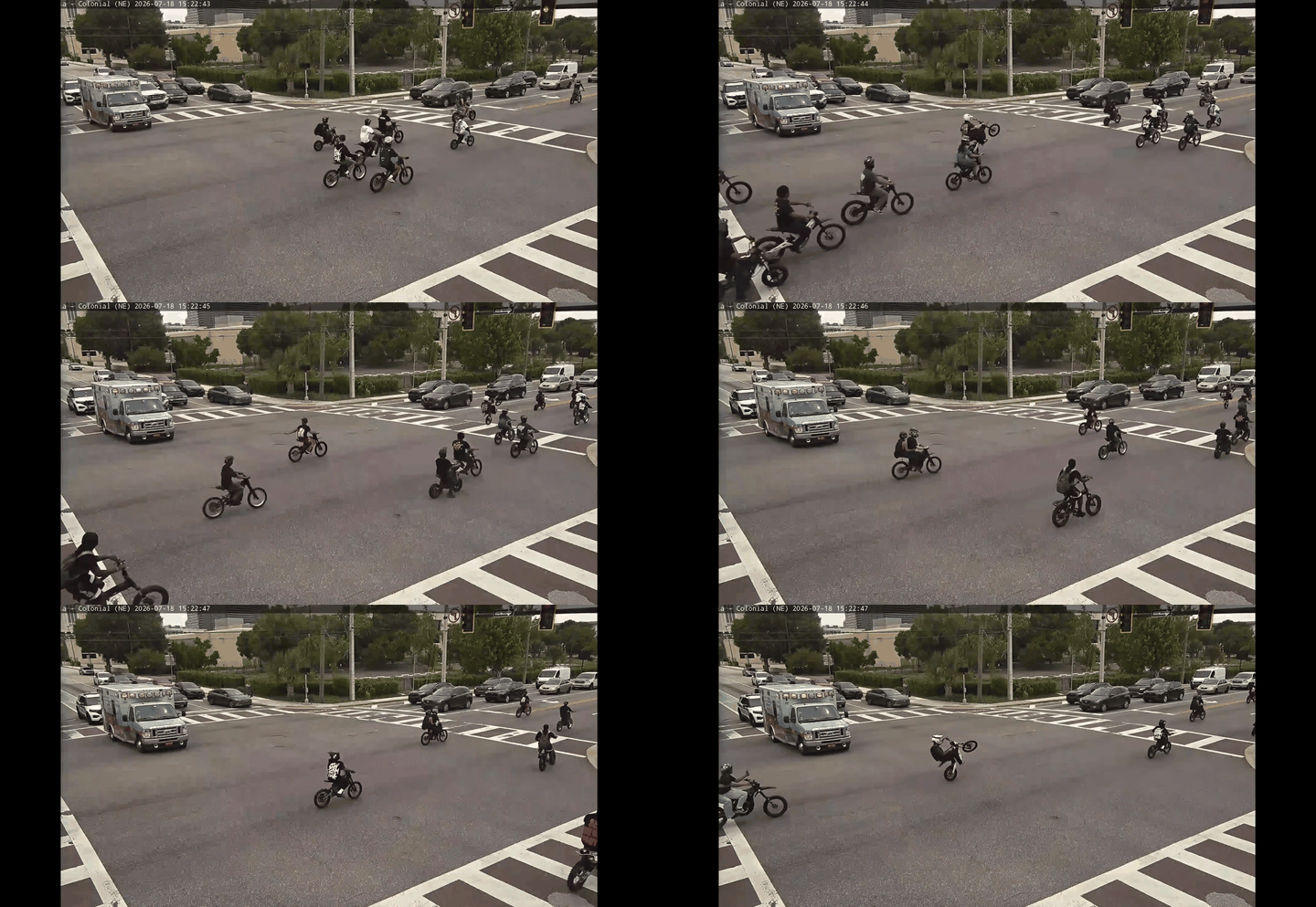
On a warm evening in downtown Orlando, Florida, the city’s vibrant nightlife was suddenly shattered by the collective, high-pitched whirr of electric motors, signaling a profound shift in modern youth culture. Hundreds of teenagers, mounted on sleek and highly mobile e-bikes, swarmed the busy metropolitan streets in a tightly coordinated display that quickly escalated from a spirited gathering into a chaotic urban takeover. In generations past, the milestones of adolescent freedom were characterized by the distinct scrape of skateboards on curbs, the rhythmic pedaling of analog bicycles, or the rumble of a hand-me-down car parked at the local diner. Today, however, a new generation has discovered a powerful, high-tech outlet for their restless energy in electric bicycles. These advanced machines, which exist in a regulatory gray area between traditional pedal bikes and high-powered motorcycles, grant young riders unprecedented speed and agility to navigate complex urban grids with ease. On this particular night, the massive influx of riders turned Orlando’s bustling commercial corridor into an overwhelming sea of flashing lights, spinning tires, and shouting voices. What was likely organized as an exciting, peer-driven meetup via viral social media platforms rapidly transformed into a public safety hazard, swallowing intersections whole and leaving local business owners, pedestrians, and motorists trapped in a state of sheer disbelief as the sheer volume of youth took control of the streets.
The atmosphere deteriorated rapidly as the massive convoy of young riders began to intentionally ignore basic traffic laws, bringing several busy downtown intersections to a grinding halt. Motorists, trapped inside their vehicles with no means of escape, could only watch in growing anxiety and frustration as waves of teenagers swarmed around their bumpers, performing dangerous stunts, popping wheelies, and weaving dangerously close to oncoming traffic. The true gravity of this reckless behavior crystallized when the flashing lights and wailing sirens of an oncoming ambulance pierced the heavy night air. The emergency vehicle, navigating a critical mission where every single second literally marked the difference between life and death for a patient in distress, found its path completely blocked by a dense, unyielding barricade of teenage riders on e-bikes. Instead of parting to let the emergency responders pass, the crowd remained tangled in the intersection, their attention divided between filming the disruption for social media clout and basking in the thrill of defying civic authority. This critical blockage highlighted a chilling disconnect within the community: in the desperate pursuit of viral validation, the basic, unspoken social contract of yielding to those in dire medical emergencies was discarded. For the paramedics trapped behind the steering wheel and the vulnerable patient waiting in agony, the playful mischief of youth evaporated instantly, replaced by a stark display of collective negligence that threatened human life and placed everyone on the road in immediate, unnecessary peril.
Faced with a rapidly escalating public safety crisis, the Orlando Police Department was forced to deploy a delicate, highly strategic response that was captured in vivid detail by both overhead surveillance cameras and officers’ body-worn cameras. The footage, later released to the public on social media, tells a tense story of tactical restraint in the face of widespread, fluid disorder. Police officers faced an incredibly complex operational dilemma: how do you safely disperse and apprehend a highly mobile, unpredictable crowd composed entirely of minors without causing a horrific physical tragedy? Executing traditional traffic stops or initiating high-speed pursuits on lightweight, open-air vehicles like e-bikes carries an extremely high risk of severe bodily injury to the teenagers, the officers, and innocent pedestrians. Understanding these high stakes, officers had to act with calculated precision, moving in to make arrests and issue charges only when it could be accomplished without triggering a dangerous, panicked stampede. The bodycam videos showcase the frantic, chaotic atmosphere of the night, capturing the split-second decisions of officers as they managed to safely intercept and detain several of the young riders. The Orlando Police Department later emphasized that while they could not immediately arrest every single participating teenager due to the sheer size and mobility of the group, their investigation remains active as they utilize digital footprints and traffic camera footage to identify and hold the reckless instigators accountable.
To truly understand the underlying currents of this disruptive incident, one must look closely at the rapid evolution of the e-bike itself and how it has filled a massive vacuum in modern teenage life. For parents, these high-tech bicycles initially seemed like a perfect, healthy compromise—an eco-friendly alternative to chauffeuring their children, offering teenagers a sense of freedom, fresh air, and real-world connection in an era dominated by isolating screens. However, the technology has rapidly outpaced both parental supervision and municipal regulation. Modern e-bikes can easily reach speeds of up to thirty miles per hour, yet they require no driver’s license, no formal safety training, and no registration, allowing young, inexperienced riders to navigate heavy city traffic with the speed of a motorcycle but the structural protection of a beach cruiser. When hundreds of these powerful machines are brought together through the amplifying power of social media algorithms, a dangerous herd mentality takes over, shedding individual responsibility in favor of collective defiance. Parents are often left completely unaware of the lethal potential of these devices, shockingly discovering only after a frantic phone call from the police department that their child’s innocent afternoon bicycle ride has transformed into a high-stakes, law-defying urban takeover. This disconnect underscores an urgent need for families to have difficult conversations about road safety and the serious legal, physical, and moral consequences of failing to respect the rules of the shared public square.
The fallout from this chaotic evening has rippled deeply through the local Orlando community, igniting intense debates among business owners, city planners, and long-time residents who call the downtown district home. For local merchants, who rely heavily on foot traffic and a welcoming, safe atmosphere to survive in a challenging economic landscape, the sudden surge of lawlessness was a devastating blow. Restaurants and shops watched in dismay as patrons retreated indoors, intimidated by the aggressive swarms of bikes dominating the sidewalks and roadways, while potential customers opted to avoid the downtown core altogether to escape the traffic gridlock. Residents expressed a profound sense of vulnerability, realizing that the streets they walk daily could be instantly compromised by a roaring flash mob of motorized youth. The incident has catalyzed a growing demand for the city commission to enact stricter local ordinances, ranging from youth curfews in high-traffic zones to specific registration and speed-limiting requirements for electric bicycles. There is an overarching feeling among community members that a failure to establish firm boundaries now will only embolden future, more dangerous gatherings. They argue that downtown should be a vibrant, inclusive space for everyone, but that inclusivity must never come at the expense of public safety, order, and the fundamental right of emergency personnel to navigate the city streets unhindered. This shared frustration has prompted calls for increased accountability, urging leaders to protect the physical security of Orlando’s neighborhoods.
Ultimately, the chaotic e-bike takeover in Orlando serves as a powerful, cautionary case study for cities across the United States as they grapple with the sudden rise of micro-mobility technology. The solution to this modern challenge cannot rely solely on active police enforcement, as officers simply do not have the resources to patrol every street corner; rather, it demands a holistic, multi-faceted approach that bridges the gap between youthful recreation and civic responsibility. Municipalities must invest in upgraded urban infrastructure, developing dedicated, protected lanes that separate slower-moving micro-mobility vehicles from both heavy highway traffic and vulnerable pedestrians. Simultaneously, educational institutions and local community centers need to step up, implementing comprehensive rider safety courses that teach teenagers the rules of the road and the critical importance of respecting emergency vehicles. Technology manufacturers must also play a role, perhaps by introducing geofencing capabilities that automatically limit e-bike speeds in crowded pedestrian zones or during certain hours of the night. By combining smart engineering, targeted legislation, proactive parenting, and consistent law enforcement, society can harness the positive, liberating potential of electric transportation while ensuring that our shared urban spaces remain safe, peaceful, and accessible to all. The streets of Orlando will undoubtedly recover, but the lessons learned from this chaotic night will echo for years to come as we strive to build a safer, more connected future where technology and community exist in harmony.