


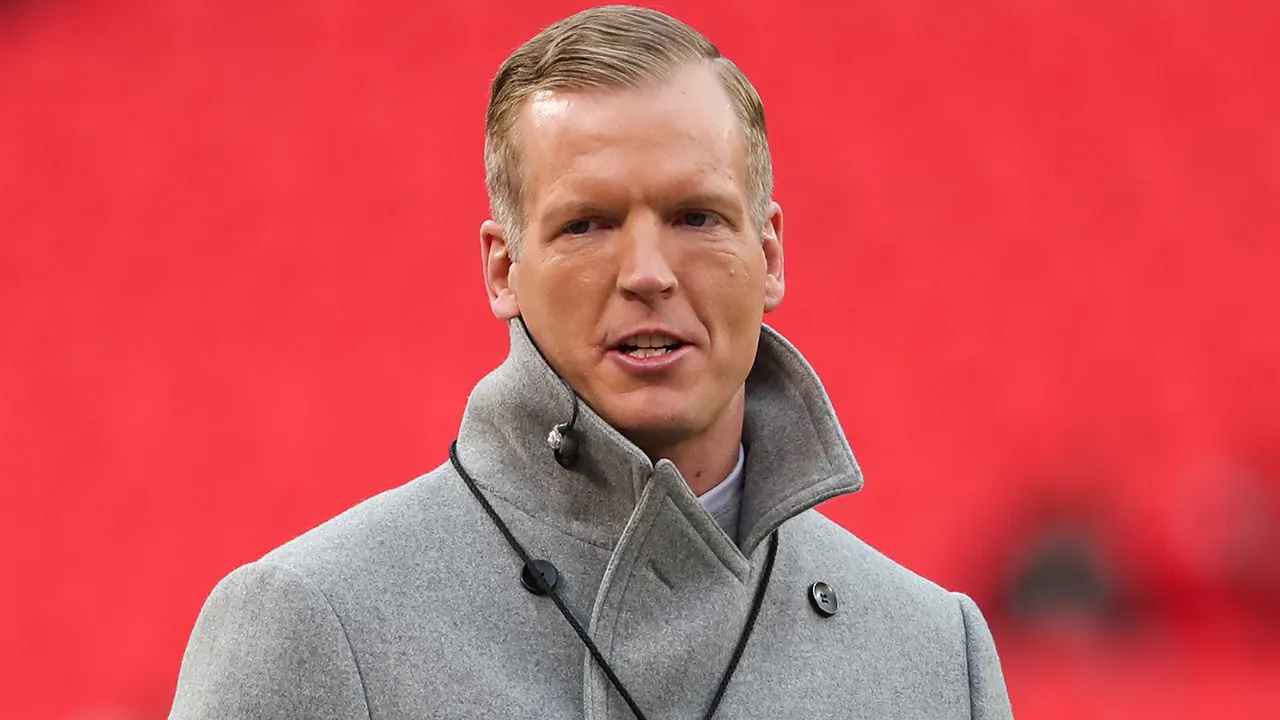
In the hyper-competitive, fast-paced, and notoriously tireless world of the National Football League, head coaches are often viewed as infallible, modern-day gladiatorial strategists who exist entirely within the high-tech confines of film rooms, practice fields, and press conferences. But a sudden, violent reminder of human vulnerability recently shattered this illusion for the entire San Francisco 49ers community when head coach Kyle Shanahan was involved in a devastating car accident on July 14, just outside his Northern California home. The terrifying collision, which occurred when Shanahan’s SUV impacted another vehicle, served as a stark wake-up call that transcended the frantic boundaries of sports, reminding everyone of how quickly a life can change in the blink of an eye. The seriousness of the event was brought to light not by cold corporate statements, but through the deeply personal and emotional lens of former NFL quarterback and current analyst Chris Simms, a long-time close friend of Shanahan. Simms’s public revelations on “PFT Live” transformed a routine injury report into a raw, humanizing narrative of survival, showing the football world a side of the stoic head coach that is rarely seen on the sidelines. Through Simms, fans and colleagues alike began to understand that behind the grueling schedules and strategic brilliance of one of the league’s brightest minds lies a husband, father, and friend who was incredibly fortunate to escape a life-altering tragedy with his life, let alone his coaching career, intact. As the news reverberated through the league, it underscored the reality that no amount of status or professional success can shield an individual from the chaotic unpredictability of everyday life, instantly shifting the focus from playbooks and player rosters to the sheer preservation of human life.
The sheer physical toll of the crash was nothing short of horrific, painting a vivid picture of a high-speed impact that could have easily turned fatal for the forty-four-year-old coach. According to details shared by Simms, Shanahan’s wife, Mandy, who was tasked with navigating the terrifying immediate aftermath of the crash, captured the gravity of the injuries in photos that Simms described as truly jarring. The sight of a loved one, usually strong and commanding, lying broken and bloodied is a nightmare no family expects to face. The medical assessment revealed a grueling laundry list of trauma: three broken ribs, a broken hand, a shattered nose, a severe concussion, and a grueling series of facial lacerations that required more than forty stitches to close. Most horrifyingly of all, Simms revealed that Shanahan was mere millimeters away from permanently losing his right eye, a catastrophic injury that would have permanently altered his life, his daily functioning, and his profession. Simms pointed to his own forehead on television to illustrate the massive scale of the scar, emphasizing that the physical trauma was so severe it shook even those accustomed to the violent impacts of professional football. The realization that a few inches of difference in the collision could have cost Shanahan his eyesight or his life cast a somber shadow over what should have been an exciting return to football, leaving those closest to him incredibly grateful that he is still here to heal.
Yet, as debilitating as the physical injuries are, it is the emotional and psychological weight of the accident that has truly tested Shanahan in the days following the crash. Simms noted that his friend has been incredibly emotional while processing the event, a natural reaction for anyone who has stared down their own mortality and realized how close they came to an utter, irreversible disaster. In the high-pressure vacuum of the NFL, coaches are trained to control every variable, to script the first fifteen plays, and to plan for every conceivable on-field scenario; however, a car crash is a stark lesson in the absolute lack of control that defines the human experience. Beyond his own physical recovery and the lingering trauma of the impact, Shanahan has reportedly carried a profound sense of concern and empathy for the other driver involved in the crash, a woman whose well-being has remained heavy on his mind throughout this ordeal. This deep-seated worry for a stranger highlights the core character of the coach, stripping away the competitive armor of a professional sports figure and revealing a deeply compassionate man who is navigating the complex emotional aftermath of a shared trauma. This vulnerability is rarely discussed in the hyper-masculine environment of professional sports, where showing weakness is often discouraged. But Shanahan’s willingness to express his emotions and openly worry about the other driver speaks to a level of maturity and humanity that transcends sports. He is not just trying to piece his body back together; he is trying to reconcile the suddenness with which everything he built could have been wiped away on a public highway.
This delicate balance of recovery and duty was on full display as San Francisco’s training camp officially got underway, with Shanahan making a quiet, guarded appearance that spoke volumes about his current state. Rather than his usual high-energy presence commanding the practice field, the coach was spotted observing from a distance, his face heavily shielded from the harsh summer sun and public scrutiny by a tightly pulled-down baseball cap and dark sunglasses. This physical concealment was not just for cosmetic reasons or to hide the freshly healing scars and forty stitches, but a necessary medical accommodation for the severe concussion he sustained during the crash, which has continued to cause him significant daily issues. General Manager John Lynch openly acknowledged the reality of the situation, stating that Shanahan is essentially operating under the team’s strict concussion protocol, a system designed to protect players from premature cognitive exertion but rarely applied to the coaching staff. Dealing with the lingering, unpredictable symptoms of a traumatic brain injury—such as light sensitivity, headaches, memory fog, and cognitive fatigue—is an incredibly frustrating process for an analytical thinker. A head coach’s job is an intellectual marathon, requiring constant communication, rapid decision-making, and long hours analyzing complex visual data. The bright, open-air environment of an NFL training camp, filled with whistle blows, shouting players, and clashing helmets, is a nightmare scenario for someone recovering from traumatic brain injury. Lynch’s confirmation that the coach is in the protocol indicates a wise, cautious approach by the 49ers’ medical staff, who recognize that intellectual rest is just as crucial as physical rest.
To accommodate this unprecedented situation, the 49ers organization has had to pivot quickly, showcasing the strength of their internal structure and professional culture. In Shanahan’s limited absence, assistant head coach and offensive line blueprint master Chris Foerster has stepped forward to manage the active, day-to-day coaching responsibilities, ensuring that the team’s preparation remains on track during the critical early days of training camp. This internal transition of power highlights the collaborative spirit of the coaching staff, who must now rally to carry the heavy load while their leader focuses on his physical rehabilitation. The timing of the accident could hardly have been more challenging, as the team is preparing for a highly anticipated and historically significant season opener against their division rivals, the Los Angeles Rams, on September 10. Adding to the logistical complexity and sheer physical demands of the upcoming campaign, this landmark game is scheduled to be played in Sydney, Australia, marking the first time an NFL regular-season game will be hosted in the Southern Hemisphere. Even before the accident, Shanahan had expressed logistical concerns about traveling such a massive distance, a worry that Commissioner Roger Goodell dismissed as simply part of the league’s long-term international expansion plan. Now, those travel concerns are magnified tenfold by Shanahan’s physical limitations. A flight across the Pacific Ocean is taxing for a healthy individual, but for someone with three broken ribs, a broken hand, and a healing brain, the journey sounds like an excruciating physical trial. Foerster’s steady presence at the helm provides a reassuring anchor for the players, allowing them to maintain their focus on football while their thoughts and wishes remain with the recovering Shanahan, illustrating how sports franchises must function as tight-knit families in times of crisis.
Ultimately, this frightening chapter in Kyle Shanahan’s life serves as a poignant reminder of the fragile thread that connects all human beings, regardless of their status, wealth, or professional achievements. When the 49ers released their official statement expressing profound gratitude to the first responders who rushed to the scene of the accident, it was a moment of genuine appreciation that cut through the typical corporate public relations noise. In a culture that often glorifies working through pain and sacrificing personal well-being for the sake of victory, Shanahan’s enforced pause is a humbled testament to the reality that some battles cannot be accelerated by sheer willpower. As he slowly heals under the brim of his baseball cap, supported by his wife Mandy, his devoted staff, and his close friends like Chris Simms, the focus remains firmly on the human being rather than the coach. The journey back to full health will not be measured in touchdowns or wins, but in the steady fading of physical pain and the gradual return of mental clarity. For Simms, witnessing his friend’s survival was a powerful reminder of how close they came to mourning a devastating loss, a sentiment shared by millions of football fans who have watched Shanahan’s career unfold. This crisis has stripped away the sterile facade of the NFL, humanizing a figure who is so often reduced to a headset and a profile on a screen. When Shanahan eventually steps back onto the field to call plays under the bright stadium lights, he will do so not just as a coach seeking a championship, but as a survivor who has been given a second chance at life. The perspective gained from the silent, terrifying moment of impact near his home will undoubtedly stay with him far longer than any trophy ever could, offering a profound lesson that in the grand stadium of life, our humanity is our most precious asset.