


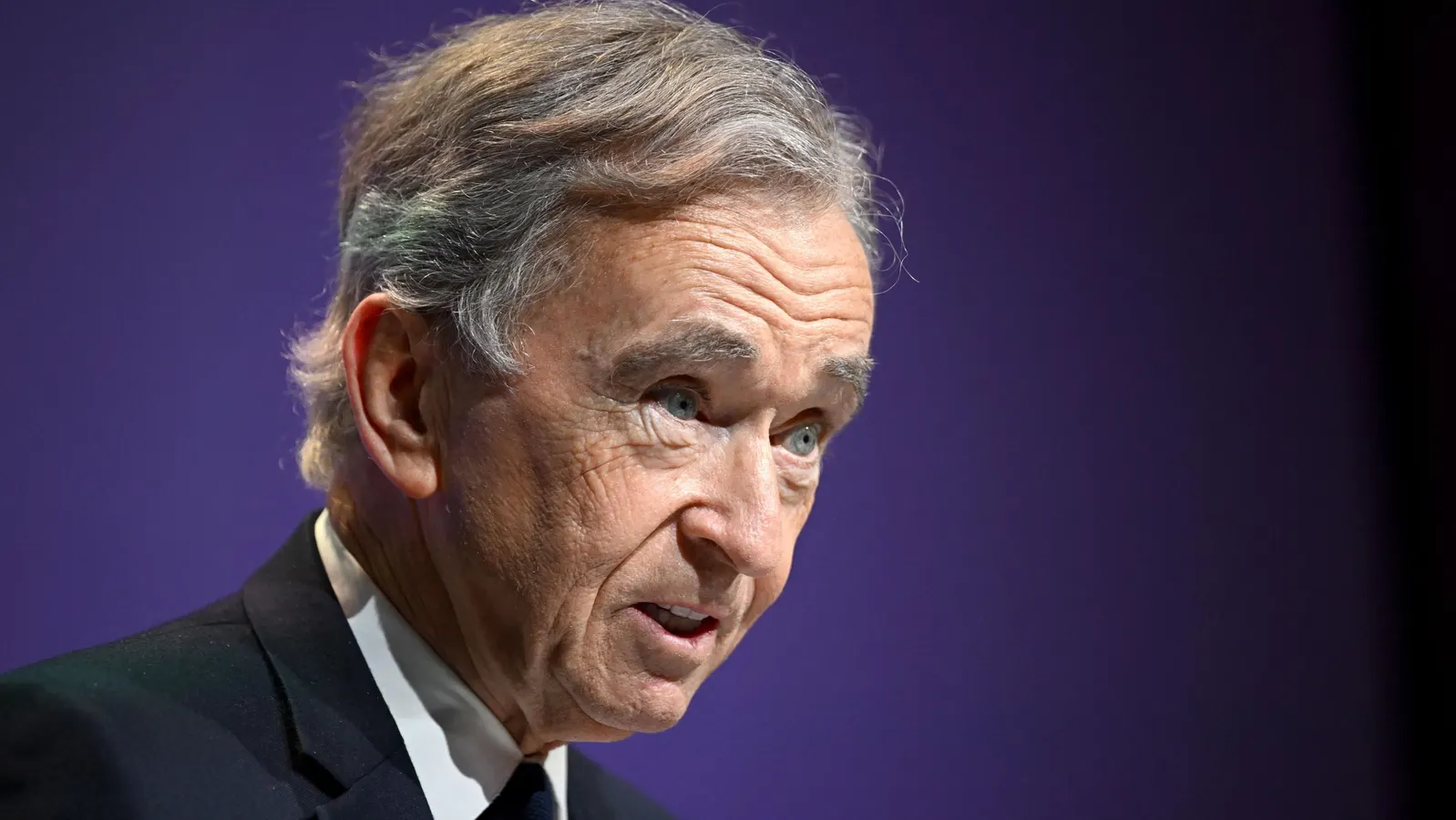
In the quiet, gilded corridors of Parisian high fashion and global commerce, where power is typically wielded through silent acquisitions and carefully curated silence, a singular digital event recently sent shockwaves through the financial and cultural worlds. Bernard Arnault, the 75-year-old patriarch of the luxury behemoth LVMH and the wealthiest man in France, made his historic debut on the social media platform X. For a man who has spent decades building a $142.4 billion empire from the shadows of boardrooms—overseeing a historic stable of prestige brands that includes Louis Vuitton, Christian Dior, Tiffany & Co., and Dom Pérignon—this abrupt entry into the noisy ecosystem of social media was anything but casual. It was a calculated, deeply personal preemptive strike. The catalyst for this sudden public emergence was a massive, six-part investigative exposé published over six consecutive days by Le Monde, France’s newspaper of record. The sweeping, meticulously researched series did not just examine the mechanics of the world’s largest luxury conglomerate; it laid bare the internal machinery of Arnault’s life, scrutinizing his vast political clout, his influence over the French media, his fiscal strategies, and, most shiftingly, the delicate human dynamics of his family. By stepping directly into the digital public square to amplify his three-page response letter, Arnault did something he has almost never done in his long career: he allowed the public to feel the pulse of a father and creator fiercely defending his life’s work against the ultimate threat of public dissection.
The drama underlying this confrontation is heightened by a tangled web of personal relationships that reads like a modern Shakespearean tragedy set against the backdrop of the Parisian elite. In a twist of rich irony, Le Monde is largely owned by Xavier Niel, a telecom billionaire worth an estimated $15.8 billion who happens to be the longtime romantic partner of Arnault’s eldest daughter, Delphine. Though Niel and Delphine have built a life together since 2010 and share a family, they remain unmarried, placing Niel in a unique position of being both an intimate member of Arnault’s extended domestic circle and the ultimate patron of the journalistic institution that launched this offensive. This deeply personal entanglement illustrates the insular, almost incestuous nature of French high society, where media ownership, technological wealth, and legacy luxury dynasties are perpetually bound together in a uneasy dance. By publishing an investigative series that targeted the very core of Arnault’s legacy, Le Monde essentially fired a shot from within the family gates, forcing the elder patriarch to balance the cold pragmatism of corporate damage control with the emotional fallout of navigating a betrayal that hit extraordinarily close to home. The public defense was not just about protecting brand equity; it was a patriarch asserting authority over a domestic sphere that had spilled onto the front pages.
In his three-page rebuttal, which was swiftly disseminated across LVMH’s corporate channels, Arnault bypassed standard corporate jargon in favor of a weapon far more devastating in the theater of French intellectual life: razor-sharp, elegant sarcasm. He began his letter by mockingly thanking Le Monde for dedicating half a year of reporting resources and six massive double-page spreads to his life, dryly poking fun at the newspaper’s grandiose description of his household as “the last royal family of France.” Arnault systematically dismantled the series’ allegations of backroom political dealing, aggressive tax strategies, and predatory business practices, arguing that the publication chose to demonize LVMH for standard corporate behaviors that are routinely celebrated in other French conglomerates. He pointedly accused the writers of treating rival luxury dynasties, specifically the extremely private Wertheimer family who owns Chanel, with a level of warmth and reverence that was conspicuously denied to his own family. Showing the cool, intellectual composure that enabled him to conquer the global fashion landscape, Arnault concluded his letter with a brilliant stroke of humanizing charm, writing that he would nevertheless continue to enjoy Le Monde’s crossword puzzles because they are, after all, “excellent.” This witty parting shot served to show that while he took the criticism seriously enough to respond, he remained entirely unfazed by the storm, keeping his dignity intact while offering a rare glimpse of his personal routines.
At the emotional heart of this public confrontation is the highly sensitive question of succession—an issue Le Monde bluntly and colorfully characterized as “the poison at the heart of LVMH.” For decades, Arnault has meticulously groomed all five of his children from two marriages for global leadership, positioning them at the pinnacles of his various luxury divisions. Delphine, 51, serves as the chief executive of Dior; Antoine, 49, manages LVMH’s image and environmental strategies; Alexandre, 34, oversees product and communications at Tiffany & Co.; Frédéric, 31, leads the watch division; and Jean, 27, directs the watch department at Louis Vuitton. The exposé painted a psychological portrait of a demanding father who has deliberately fostered a culture of intense internal rivalry, pitting his children against one another in a corporate arena where only the strongest will survive to inherit the ultimate crown. The newspaper asserted that these sibling rivalries have divided the children into competing factions based on their respective maternal lineages, creating a climate of anxiety among major institutional shareholders who crave a clear, singular successor. Arnault, however, flatly rejected this Machiavellian narrative of domestic discord, presenting his family not as a fractured house of ambitious rivals, but as a harmonious, deeply collaborative unit bound by mutual respect, shared work ethic, and a collective devotion to preserving the empire for decades to come.
This familial tension is playing out against the backdrop of a punishing downturn in the global luxury market, which has effectively ended the explosive, euphoric post-pandemic spending boom. LVMH has found itself highly vulnerable to a cooling global economy, particularly in China, where high-end consumers have significantly reined in their spending on designer goods due to shifting economic priorities and a growing preference for understated discretion over overt displays of wealth. This economic cold front was painfully apparent in LVMH’s recent financial disclosures, which revealed a full-year revenue drop of 5% to €80.8 billion, representing a significant slowdown in its vital fashion and leather goods divisions. Unlike competitors such as Richemont, which have managed to navigate the storm with greater resilience, LVMH’s massive footprint has made it highly exposed to broader geopolitical disruptions, including declining international tourism and ongoing conflicts in the Middle East that have dampened luxury shopping in historically lucrative hubs like Dubai. With first-quarter revenue plunging 6% to €19.1 billion and the company’s stock price suffering a nosedive of approximately 30% over the past year, the pressure on the board is immense. In such a volatile financial environment, any public insinuation of an unstable, crisis-ridden succession transition is no longer just harmless society gossip; it represents a major threat to investor confidence and the financial security of thousands of employees.
Ultimately, Bernard Arnault’s historic social media intervention reveals the profound vulnerability that often rests beneath even the most heavily fortified fortresses of extreme wealth. It serves as a compelling reminder that behind the global vanity of storefronts on the Champs-Élysées and Fifth Avenue lies a deeply human story of aging, legacy, and the agonizingly complex task of passing a life’s work down to the next generation. As the aging tycoon steps into the unsparing spotlight of the digital age to defend his family, he demonstrates that a father’s protective instinct and a founder’s profound pride cannot simply be outsourced to public relations professionals. With his five children fully integrated into the high-stakes machinery of LVMH and his legacy facing its most challenging economic climate in decades, Arnault must now steer his empire through both the volatile currents of global finance and the sensitive emotional landscape of his own bloodline. The coming years will inevitably reveal whether Arnault’s vision of a collaborative, harmonious family inheritance can successfully withstand the cold pressures of the global market, or if the skepticism of the press will prove prophetic; for now, the world watches a king protect his castle, crossword puzzle in hand, refusing to let the monument he built be dismantled by public doubt or private division.