


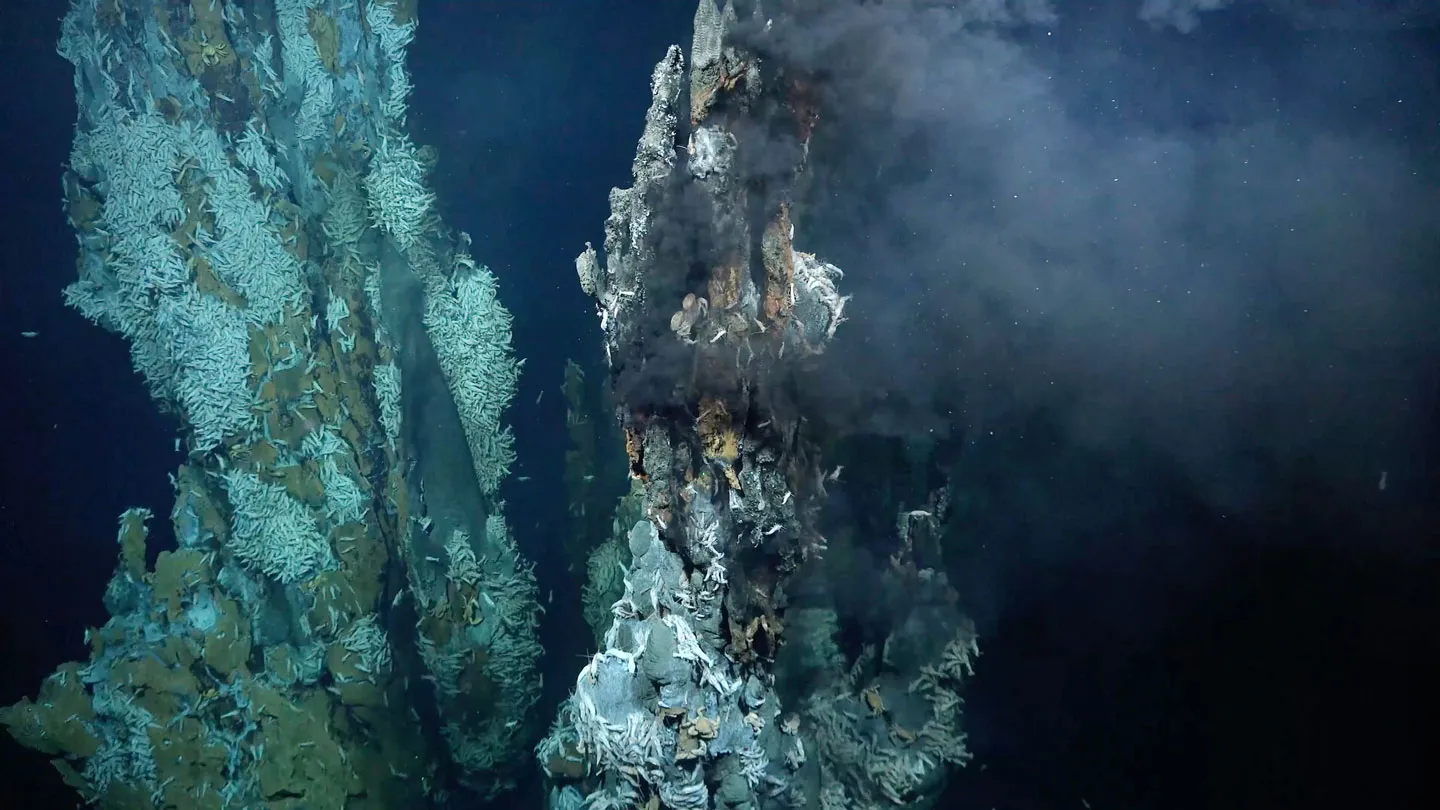
Deep within the ocean’s abyssal custody, thousands of meters below the reaches of solar warmth, lies an alien landscape defined by crushing hydrostatic pressures, near-freezing temperatures, and absolute darkness. In these seemingly inhospitable realms, hydrothermal vents act as geothermic oases, spewing superheated water laden with toxic minerals and heavy metals directly from the Earth’s crust. Despite these hostile conditions, these deep-sea chimneys foster vibrant, highly specialized ecosystems teeming with bizarre lifeforms that thrive on chemosynthesis rather than photosynthesis. For decades, marine biologists have struggled with a profound ecological paradox: how do populations of the exact same species manage to colonize and maintain genetic connections across far-flung, isolated hydrothermal vent fields, often separated by thousands of kilometers of barren, cold seafloor deserts? The prevailing hypothesis argued that the fragile larvae of these species must somehow traverse the vast, empty water column to disperse, but the mechanics of this journey remained shrouded in mystery. Now, an elegant study published in Science Advances on July 15 by a dedicated team of researchers at the University of Tokyo has unveiled an unexpected and breathtaking answer. Rather than drifting aimlessly through the cold, nutrient-starved depths of the ocean floor, the young larvae of these deep-sea dwellers embark on an epic, vertical pilgrimage toward the sunlit, bountiful surface of the sea before returning to the darkness to build their adult lives.
The main characters of this newly discovered deep-sea odyssey are three species of limpets, specialized marine snails endemic to these active hydrothermal vents. While adult limpets spend their lives anchored to the sulfide chimneys, perpetually bathing in the mineral-rich waters of the deep, their tiny larvae are born with an innate wanderlust that drives them upward. In their infantile forms, these minuscule snails swim upward through kilometers of vertical water columns, leaving behind the dark, chemosynthetically powered ecosystem of their parents. Their destination is the epipelagic zone—the ocean’s sunlit surface. Here, the larvae enter a beautiful marine nursery rich with light, warmth, and an abundant feast of microscopic, sun-loving phytoplankton. This surface journey allows the larvae to grow rapidly and gain the necessary energy reserves to survive the long journey back to the seafloor. As they float along with the ocean’s powerful surface currents, they are carried far away from their birthplace, effectively using the surface of the sea as a high-speed transit highway to locate new, untouched hydrothermal habitats. Once they have drifted across the open ocean, the larvae begin an equally perilous descent back down to the abyssal depths, where they undergo a physical metamorphosis, shed their nomadic lifestyle, and successfully colonize new, distant vent communities.
To uncover this hidden migration, the scientific team, led by marine biologist Takuya Yahagi, engaged in a remarkable piece of ecological sleuthing. The definitive proof of this journey was found locked inside the physical anatomy of the limpets themselves. When limpet larvae undergo their metamorphosis into sedentary adults, they retain a tiny, millimeter-sized larval shell, known as a protoconch, which often remains physically attached to the top of their newly formed adult shells like a childhood souvenir. These microscopic larval shells serve as a permanent biochemical diary, preserving the precise environmental conditions of the water in which the limpets spent their infancy. By analyzing the isotopic and chemical signatures of these tiny shells, the researchers discovered that the calcium carbonate had been deposited in waters that were significantly warmer than the ambient temperatures of the deep sea. Crucially, these larval shells were entirely devoid of heavy metals such as manganese and barium, which are highly concentrated in hydrothermal vent plumes but virtually absent in near-surface waters. This lack of heavy metals, combined with the chemical evidence of a warm, sun-kissed environment, provided undeniable documentation that the limpets had spent the entirety of their larval youth feeding and growing near the ocean’s surface.
The geographic scale of this study highlights just how widespread and essential this vertical migration is for the survival of deep-sea species. The research team examined a total of 39 adult limpets gathered from vastly different ocean depths and geographic regions. Six specimens were retrieved from the Tu’i Malila hydrothermal vents in the Southwest Pacific Ocean, situated at a crushing depth of 1,845 meters, while another 33 specimens were harvested from a much shallower vent field located 440 meters deep on the Kaikata Seamount in the Northwestern Pacific. Remarkably, despite the differences in depth, habitat, and thousands of miles of geographical separation, every single limpet analyzed displayed the identical, unmistakable chemical signatures of a shallow-water upbringing. According to Lisa Levin, a marine ecologist at the Scripps Institution of Oceanography at the University of California, San Diego, who was not involved in the study, this research provides incredibly convincing and rigorous documentation of this epic vertical journey. It resolves a long-standing debate in marine biology by demonstrating that this surface migration is not an accidental deviation or an isolated quirk of nature, but rather a highly coordinated, evolutionarily hardwired life cycle strategy that maintains the genetic health of these remote ecosystems.
Yet, this vertical pilgrimage is anything but a leisurely float through the sea; it is an incredibly dangerous gauntlet where the rules of survival are brutal, and the odds of success are astronomically low. The open ocean is filled with predatory fish, jellyfish, and shifting currents that can easily sweep the microscopic larvae far off course into the barren open ocean, where they will die of starvation or predation. Even for those lucky larvae that survive the surface nursery and successfully navigate the descent back to the dark seafloor, finding an active hydrothermal vent—which is essentially a needle in a vast, dark, oceanic haystack—is a matter of sheer chance. To compensate for these nearly impossible odds, vent animals have evolved a strategy of reproductive abundance. As Takuya Yahagi notes, these creatures survive the genetic lottery by producing enormous numbers of eggs, ensuring that even if 99.9% of their offspring perish along the way, a select few will successfully find a home and carry on the species. While this study focused specifically on limpets, scientists suspect that this daring vertical migration strategy is not unique to snails but is likely shared by many other iconic hydrothermal vent residents, including deep-sea crabs, mussels, and shrimp, who must also find ways to disperse their young across the vast ocean.
Ultimately, this ground-breaking discovery fundamentally reshapes our understanding of how our planet’s oceans function as a single, beautifully integrated system. For decades, hydrothermal vent communities have been romanticized as insular, self-sustaining pockets of life, fundamentally detached from the sunlit world and powered entirely by the geothermal energy of the Earth’s molten core. However, as marine biologist Yasunori Kano of the University of Tokyo beautifully points out, this study reveals that these seemingly independent worlds are actually profoundly connected to the sunlit surface through the life cycles of their smallest residents. The survival of creatures living in the deepest, most inaccessible trenches on Earth depends directly on the health of the phytoplankton blooming in the surface waters above. This realization comes at a critical time, as deep-sea ecosystems face emerging threats from climate change, ocean acidification, and the impending prospect of deep-sea mining. By revealing that the threads of life weave seamlessly from the ocean’s sunlit waves down to the cracks in the volcanic seafloor, this research underscores our profound responsibility to protect the entire water column, reminding us that in the natural world, no ecosystem—no matter how deep or dark—exists in isolation.