


Pavel Durov’s Bold Leap: Redefining Social Media through Global Web3 Integration
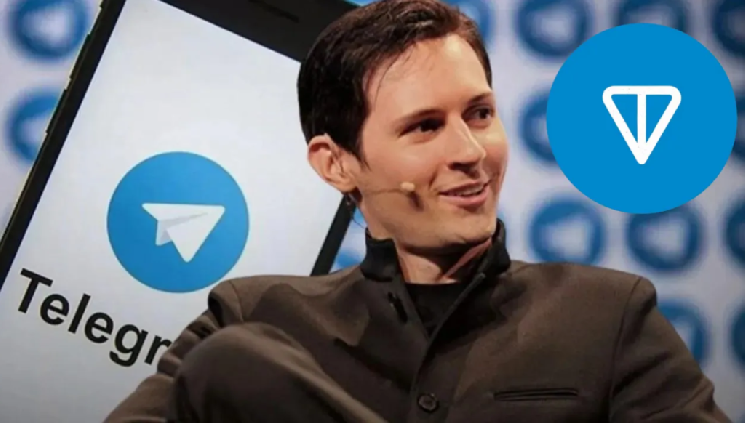
In an announcement that has sent shockwaves through both the technology and financial sectors, Telegram founder Pavel Durov has revealed plans to officially integrate an advanced, non-custodial cryptocurrency wallet directly into the messaging giant’s application interface this coming summer. Formally characterized by Durov on his personal Telegram channel as nothing less than “the largest non-custodial cryptocurrency wallet rollout in human history,” this ambitious initiative marks a watershed moment in the historical convergence of mainstream messaging platforms and decentralized financial ecosystems. By embedding this sophisticated Web3 infrastructure directly into a communication tool that boasts a global active user base exceeding one billion people, Telegram is positioned to fundamentally alter how digital assets are perceived, stored, and transacted on a global scale. This strategic migration toward integrated decentralized finance represents a major technological paradigm shift, seeking to democratize complex cryptocurrency transactions by stripping away the technical barriers that have historically kept everyday internet users from participating in the decentralized economy. Rather than operating as a mere external add-on or a detached third-party patch, the soon-to-be-released wallet will function as a native component of the Telegram ecosystem, presenting a highly cohesive interface where communication and value transfer can occur simultaneously, fluidly, and securely.
The Philosophy of True Financial Autonomy: Demystifying the Non-Custodial Architecture
At the absolute center of Durov’s technological vision is a steadfast commitment to absolute user sovereignty, a design philosophy reflected in the decision to implement a strictly non-custodial architecture. In stark contrast to traditional commercial banking apps or centralized cryptocurrency exchanges, which act as corporate custodians holding user assets under lock and key, Telegram’s new wallet will not offer a native storage or custody service on its centralized servers for the network’s asset, the $GRAM token. Instead, the technology has been meticulously engineered to leave users in complete, uninterrupted possession of their unique cryptographic private keys. By utilizing consumer device hardware to securely save these keys locally, Telegram effectively ensures that it has zero administrative capability to access, freeze, or confiscate user funds under any circumstances. This structural separation between platform operations and asset ownership represents a profound victory for the foundational principles of Web3, as it shifts the burden of trust away from corporate intermediaries and back to the individual. While this standard of self-custody imposes a higher degree of personal responsibility on users to safeguard their passphrases, it insulates them from the systemic failures of central authorities, counterparty insolvencies, and arbitrary account closures that have frequently plagued both standard banking systems and centralized cryptocurrency exchanges over the past decade.
Rising from the Regulatory Ashes: The Redemption of Telegram’s Blockchain Vision
To fully appreciate the gravity of Durov’s latest announcement, one must contextualize it within Telegram’s long and highly dramatic history with blockchain technology, characterized most famously by its bitter legal confrontation with Western regulators. In 2020, following an aggressive and highly publicized legal offensive by the United States Securities and Exchange Commission (SEC), Telegram was forced to abandon its official development of the Telegram Open Network (TON) and its prospective native Gram token, resulting in an $18.5 million settlement and a court-mandated return of more than $1.2 billion to early venture capital investors. Rather than allowing this regulatory defeat to permanently extinguish their ambitions, both the independent open-source developer community and Telegram itself pivoted, nurturing the core technical code in the shadows and gradually breathing life back into a resilient, parallel decentralized ecosystem. The impending summer release of this integrated wallet and the ongoing utility of the $GRAM token represent a spectacular, historic vindication for Durov’s long-term digital sovereignty project. By utilizing a decentralized, non-custodial structure that avoids direct company custody of digital assets, Telegram has created an elegant, compliant pathway through the modern regulatory minefield, bypassing the strict capital and registration requirements traditionally imposed on custodial institutions while still delivering robust transactional capabilities to hundreds of millions of users worldwide.
Market Dynamics and the Financial Resurgence of the $GRAM Token
The market’s response to Durov’s unexpected announcement was swift and highly volatile, serving as a vivid barometer of investor enthusiasm and speculative interest surrounding the future utility of the $GRAM token. Almost immediately following the publication of the news on Durov’s Telegram channel, buying pressure surged across decentralized exchanges and listing platforms, propelling the $GRAM price upward by over 8% in a rapid, high-momentum climb that peaked at approximately $1.56 per token. This explosive vertical movement clearly demonstrated the market’s acute sensitivity to major ecosystem developments, as traders and algorithmic bots raced to price in the massive influx of retail demand that an integrated, one-billion-user distribution network is expected to generate. Although profit-taking and technical consolidation inevitably pulled the token back from its daily highs, allowing it to settle into a stable trading range near the $1.525 level, the overall market structure remained overwhelmingly constructive, signaling deep-seated confidence in the asset’s long-term utility. Financial analysts point to this price action as clear evidence that the $GRAM token is transitioning from a speculative digital asset into a foundational utility coin backed by tangible utility, with its value directly tied to the burgeoning micro-economy and peer-to-peer commerce that will soon be native to the Telegram application.
Zero Fees, Absolute Speed: How the Summer Rollout Disrupts Global Remittances
Perhaps the most economically disruptive aspect of the upcoming Telegram wallet integration is its promise to facilitate instant, fee-free cryptocurrency transactions directly within the chat interface, a feature that challenges the multi-billion-dollar global remittance industry. By leveraging highly scalable blockchain protocols, the platform hopes to permanently eliminate the financial friction, lengthy settlement times, and exorbitant intermediary fees associated with international bank transfers and traditional digital payment platforms like PayPal, WeChat Pay, or Western Union. Users will be empowered to send $GRAM and other supported digital currencies to contacts halfway across the globe as easily and instantaneously as sending a text message, opening up unprecedented opportunities for global micro-transactions, content monetization, and freelance services. Digital creators, channel administrators, and independent merchants operating within the Telegram application will suddenly gain access to a frictionless, borderless payment rails system, allowing them to monetize their work directly through subscription fees, tips, and digital sales without losing a significant portion of their revenue to payment processors. This level of transactional efficiency is poised to establish a new gold standard for peer-to-peer micro-economies, laying down the groundwork for a highly integrated digital marketplace where value can circulate globally without boundaries.
Navigating the Geopolitical Front: A New Era of Decentralized Social Power
As the scheduled summer release window draws closer, the broader geopolitical and social implications of Telegram’s massive Web3 integration project are beginning to move into sharp focus, highlighting the platform’s unique position at the absolute vanguard of the digital sovereignty movement. By placing a secure, non-custodial financial tool into the pockets of more than one billion people—many of whom reside in regions plagued by hyperinflation, fragile banking infrastructure, and restrictive capital controls—Telegram is effectively deploying global financial infrastructure on an unprecedented scale. This integration goes far beyond a mere product update; it represents a major geopolitical event that empowers individuals to preserve their purchasing power, engage in global commerce, and protect their wealth independently of state interference or geographic limitations. As governments around the world continue to explore Central Bank Digital Currencies (CBDCs) and tighten their regulatory grip on digital platforms, Pavel Durov’s ongoing commitment to open-source protocols, end-to-end encryption, and personal financial autonomy stands as a profound testament to the liberating potential of decentralized technologies. Ultimately, the success of Telegram’s soon-to-be-launched non-custodial wallet could reshape the future landscape of the global internet, transforming social messaging apps from passive communication channels into powerful, self-sustaining engines of decentralized economic freedom.
*This article is provided for informational purposes only and does not constitute investment, financial, or legal advice.