

In the grand tapestry of scientific advancement, Kate Adamala holds a vision of a future where biology entirely replaces chemical manufacturing. A synthetic biologist at the University of Minnesota, Adamala and her team recently unveiled “SpudCells,” engineered synthetic structures capable of replicating their own DNA and dividing multiple times. While some observers have eagerly hailed this breakthrough as the creation of the first synthetic life, Adamala remains grounded and realistic. She emphasizes that SpudCells are fundamentally not alive; rather, they are highly sophisticated, non-living cell models designed to demonstrate what is biochemically possible.
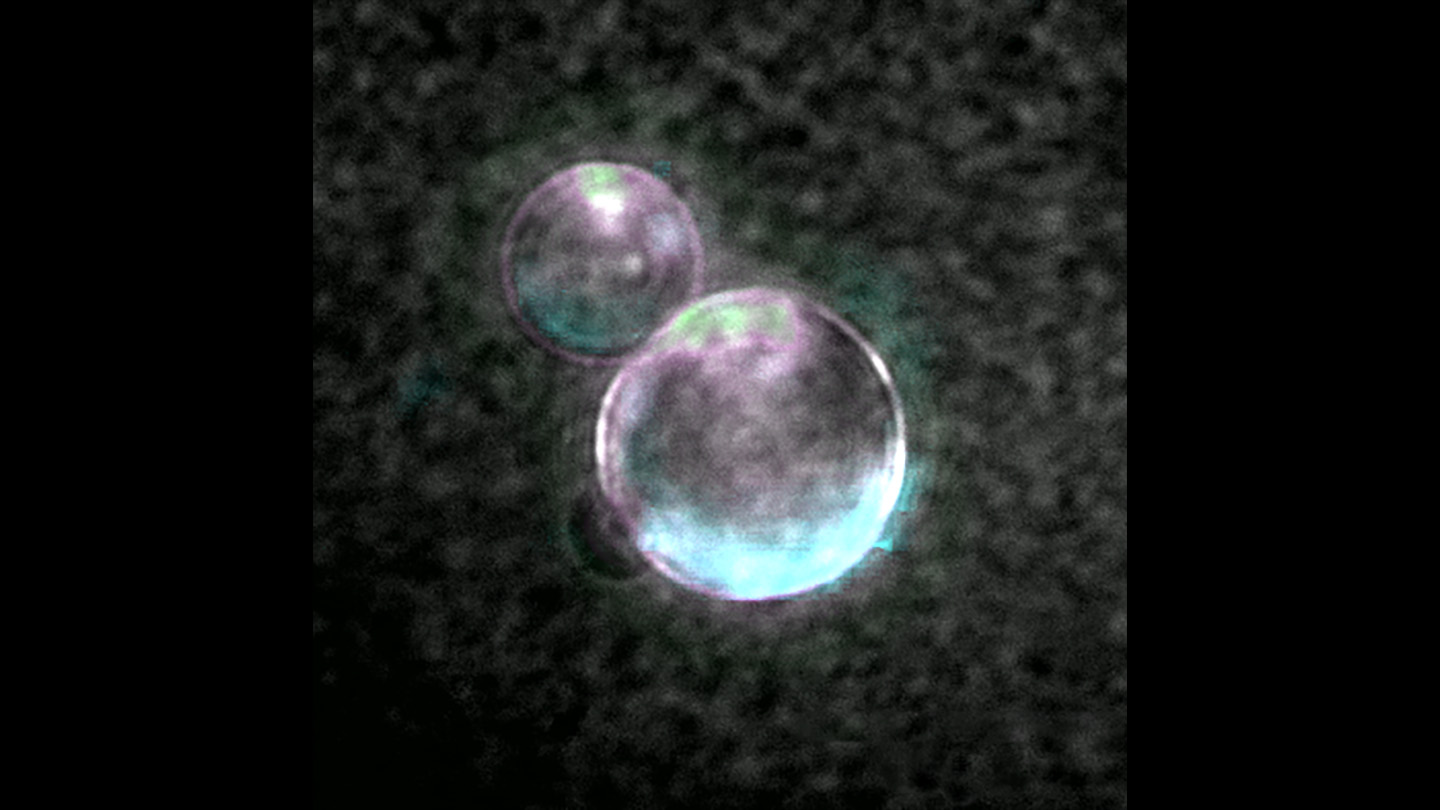
At their core, SpudCells are microscopic bubbles made of fatty membranes containing a carefully curated mixture of DNA and proteins sourced from various viruses and bacteria. Today, they are far from self-sufficient. Unlike natural cells, they cannot survive on their own and require researchers to actively “feed” them complementary lipid bubbles packed with raw materials and molecular machinery. Under the microscope, these synthetic units must be chemically coaxed to grow, absorb these feeder bubbles, and ultimately divide. Despite these limitations, the true innovation lies in the genetic control of this physical process; the cells’ division and cargo-taking are directly instructed by their own internal DNA.
This functional link between genetic coding, growth, and replication represents a massive leap forward for synthetic biology. While other scientific groups have successfully generated dividing empty lipid membranes or replicated DNA inside static artificial capsules, Adamala’s team is the first to choreograph these two complex processes to work in harmony. To transition from a delicate laboratory experiment to a robust, self-sustaining technology, Adamala and her peers have launched “Biotic” (Biology is Open Technology Inspiring Civilization, Inc.). This international nonprofit research coalition aims to consolidate global expertise, standardize protocols, and secure the funding necessary to transform SpudCells into fully independent entities.
The path to true cellular independence, however, is incredibly steep. The most prominent obstacle is the synthesis of ribosomes, the massive, intricate molecular factories that assemble proteins. Ribosomes are composed of dozens of specialized proteins and strands of RNA that must interact with absolute precision. In natural systems, cells dedicate an immense portion of their energy budget just to manufacturing and maintaining these machines. Recreating this dynamic translation system from scratch has never been accomplished in a synthetic cell. Without natural quality-control mechanisms to correct chemical errors, any minor metabolic glitch within a synthetic translation system can instantly lead to catastrophic failure.
Beyond protein synthesis, future generations of SpudCells must incorporate a structural scaffolding known as a cytoskeleton and an internal cleanup crew to dismantle worn-out proteins. Currently, SpudCells divide without an internal skeleton, which makes their inheritance messy and unreliable. Because their genome is split across seven distinct circles of DNA, the lack of an organized internal structure means that after five generations, only about 30 percent of the offspring successfully inherit the complete genetic blueprint. Furthermore, when the cells fuse with their nutrient bubbles, their internal components mix at random, creating a chaotic chemical soup that researchers are eager to organize into distinct, functional compartments.
Named to evoke the pioneering spirit of the Sputnik satellite, SpudCells represent a starting gun rather than a finish line. Over the next year and a half, Adamala and her global collaborators at Biotic intend to refine these early biological prototypes, bringing together diverse scientific minds from across the globe to solve the remaining puzzles of synthetic life. This breakthrough is not a declaration of final victory, but an open invitation to the scientific community. By showing that genetic material can successfully dictate the physical growth and division of basic artificial membranes, the team has illuminated a viable pathway toward a future green economy powered entirely by programmable, biological manufacturing.