


In a major leap forward for American-made public safety technology, Seattle-based drone manufacturer Brinc has secured $125 million in a fresh funding round spearheaded by communications giant Motorola Solutions. This massive influx of capital is designed to propel the company toward its audacious ultimate milestone: stationing an autonomous first-responder drone on the roof of every single police and fire station across the United States. Founded in 2019 by visionary tech prodigy Blake Resnick, who is now only 26 years old, the company migrated from Las Vegas to Seattle in 2021 and has quickly evolved into a dominant player in the emergency response space. This latest investment round, which also saw enthusiastic participation from early backers Index Ventures and Figma founder Dylan Field, brings Brinc’s total raised capital to more than $280 million. While the company has chosen not to disclose its exact current valuation, leadership confirmed that its market value has nearly doubled from the $480 million mark reported just last year, nudging the innovative startup incredibly close to coveted billion-dollar “unicorn” status.
This financial windfall arrives at a moment of dramatic geopolitical and regulatory transformation within the unmanned aerial vehicle industry, creating a perfect storm of opportunity for domestic manufacturers. As federal regulators aggressively clamp down on foreign-made technology, American public safety agencies are rapidly looking for domestic alternatives to replace their aging fleets. This shift was accelerated in December 2025 when the Federal Communications Commission effectively banned new foreign-manufactured models—most notably those from Chinese industry giant DJI—from obtaining U.S. equipment authorizations. Although legal challenges and minor exemptions persist, the legislative pressure has forced police departments, federal agencies, and search-and-rescue teams nationwide to look inward for compliant, secure, and locally sourced hardware. Because Brinc builds its entire fleet of hardware and writing its software directly on U.S. soil, the company has found itself uniquely positioned to capture massive market share as municipal agencies scramble to future-proof their operations with secure, American-made technology.
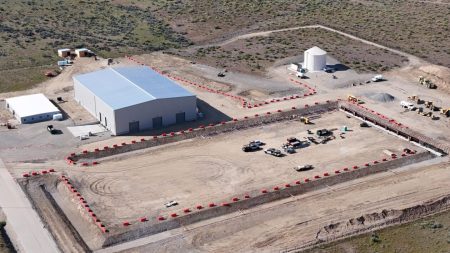
To meet this booming demand, Brinc is preparing to dramatically scale up its logistical and manufacturing capabilities with a move to a state-of-the-art corporate headquarters and factory by the end of this year. Located in Seattle’s historic Queen Anne neighborhood, the new facility is housed within a beautifully repurposed former fish cannery situated right on the bustling Lake Washington Ship Canal. This scenic new footprint will provide the company with three times the production floor space of its current factory, allowing for the rapid assembly lines required to fulfill a surging backlog of municipal contracts. To power this aggressive expansion, Brinc is on a major hiring spree; the company’s workforce has already swelled from 108 to 187 employees over the past year, with dozens of active job listings currently open. By the time the ribbon is cut on the new Seattle factory, the company expects its highly skilled local team to exceed 250 workers, cementing its status as a major employer in the Pacific Northwest’s aerospace and defense tech corridor.
The impressive roster of believers backing Resnick’s vision reads like a who’s who of Silicon Valley elite and national security heavyweights. Early and ongoing investors include OpenAI CEO Sam Altman, Scale AI founder Alexandr Wang, Palantir Chief Technology Officer Shyam Sankar, and former LinkedIn Chief Executive Officer Jeff Weiner. On the regulatory and defense front, the company boasts the support and guidance of former acting Defense Secretary Patrick Shanahan and former FCC Chairman Julius Genachowski. This formidable coalition of tech pioneers and policy experts recognizes that Brinc is not just building toys, but rather constructing a vital, highly integrated layer of modern civic infrastructure. By marrying cutting-edge robotics with deep mission-critical software, Brinc is successfully transitioning from a niche hardware startup into an essential national security asset capable of reshaping how cities manage emergencies in real-time.
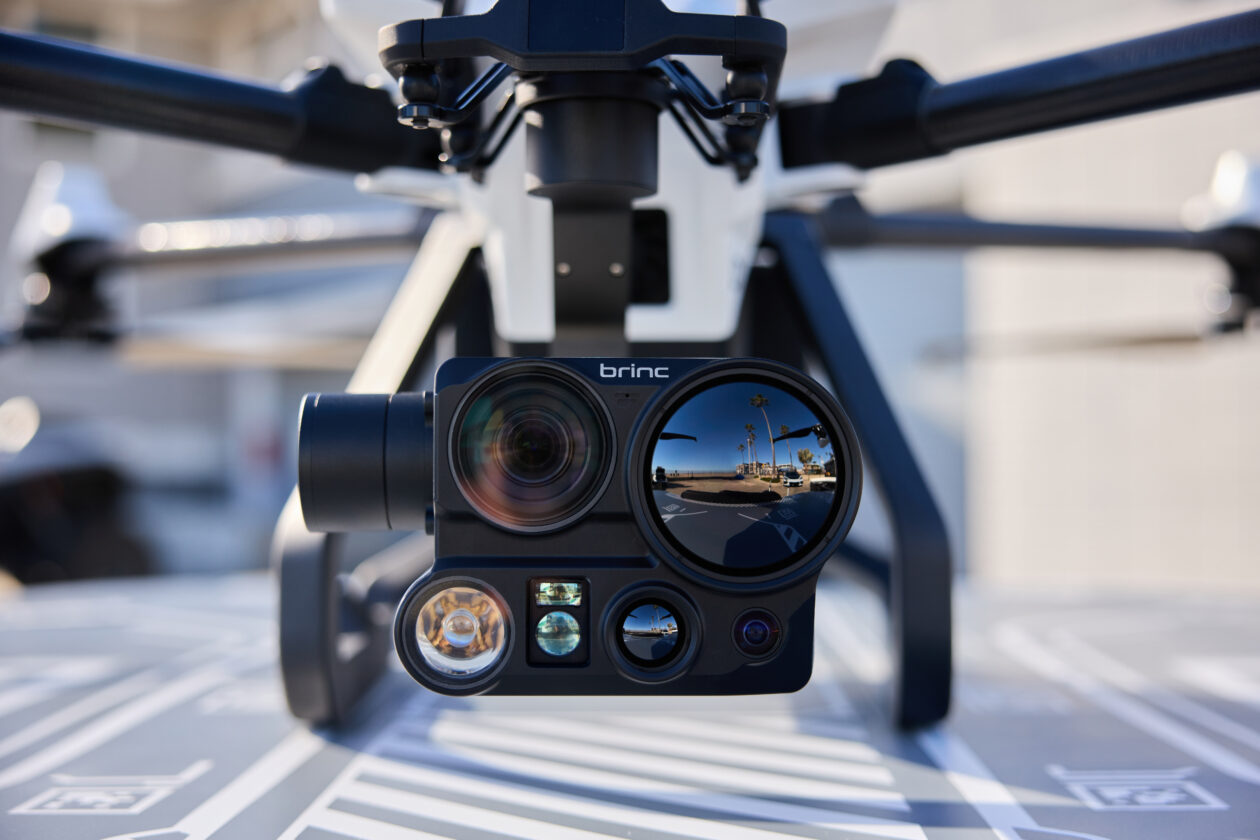
At the heart of Brinc’s rapid adoption is its seamless technological integration with Motorola Solutions’ ubiquitous public safety ecosystem, which has been co-developed since the two entities formed a strategic alliance in early 2025. Today, an emergency responder in the field can launch a Brinc drone simply by pressing a dedicated button on their standard-issue Motorola tactical radio, or have one automatically dispatched into the sky the absolute second a 911 dispatcher routes an emergency call. The company’s versatile product lineup is meticulously tailored for different high-stakes environments: the compact Lemur 2 is built to navigate confined indoor spaces during hostage negotiations or tactical breeches; the agile Responder is optimized for rapid-deployment 911 scenarios; and the massive, Starlink-connected Guardian drone—unveiled to high acclaim—is explicitly engineered to replace aging, expensive, and carbon-heavy police helicopters. These intelligence-gathering eyes-in-the-sky are already proving invaluable, arriving at chaotic scenes minutes before ground units to deliver live video feeds, de-escalate volatile crises, and even deliver life-saving medical supplies directly to victims.
The tangible real-world impact of these technologies has translated into explosive corporate growth, with Brinc more than tripling its year-over-year revenue in 2025. The momentum has only accelerated, with the company securing nearly four times as many active 911 response drone contracts in the early months of this year compared to the exact same period last year. Prestigious metropolitan departments like the Los Angeles Fire Department and the St. Louis Police Department have recently joined an elite user network that now spans over 900 public safety agencies nationwide, including more than 20% of all active U.S. SWAT teams. Yet, despite this rapid success, the young and ambitious team at Brinc views this as only the prologue of their journey. With roughly 80,000 police and fire stations operating across the United States, Blake Resnick and his team are laser-focused on scaling up production until their lifesaving aerial guardians are stationed on every municipal roof in the country, forever changing how we protect our communities.