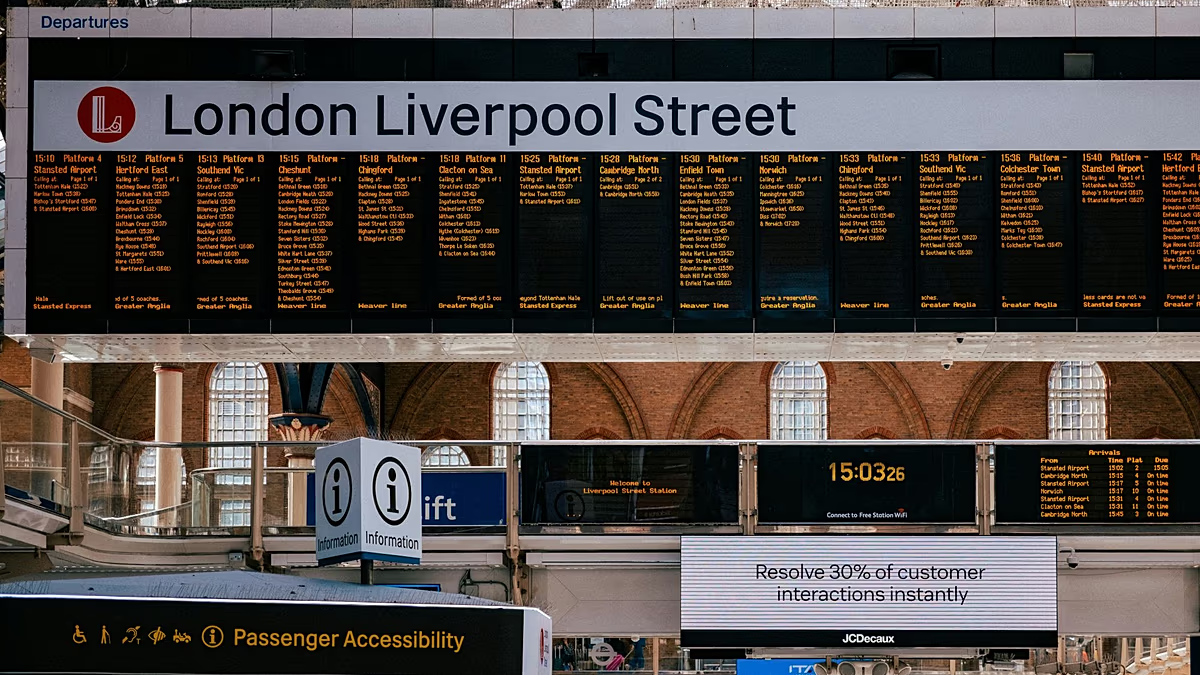



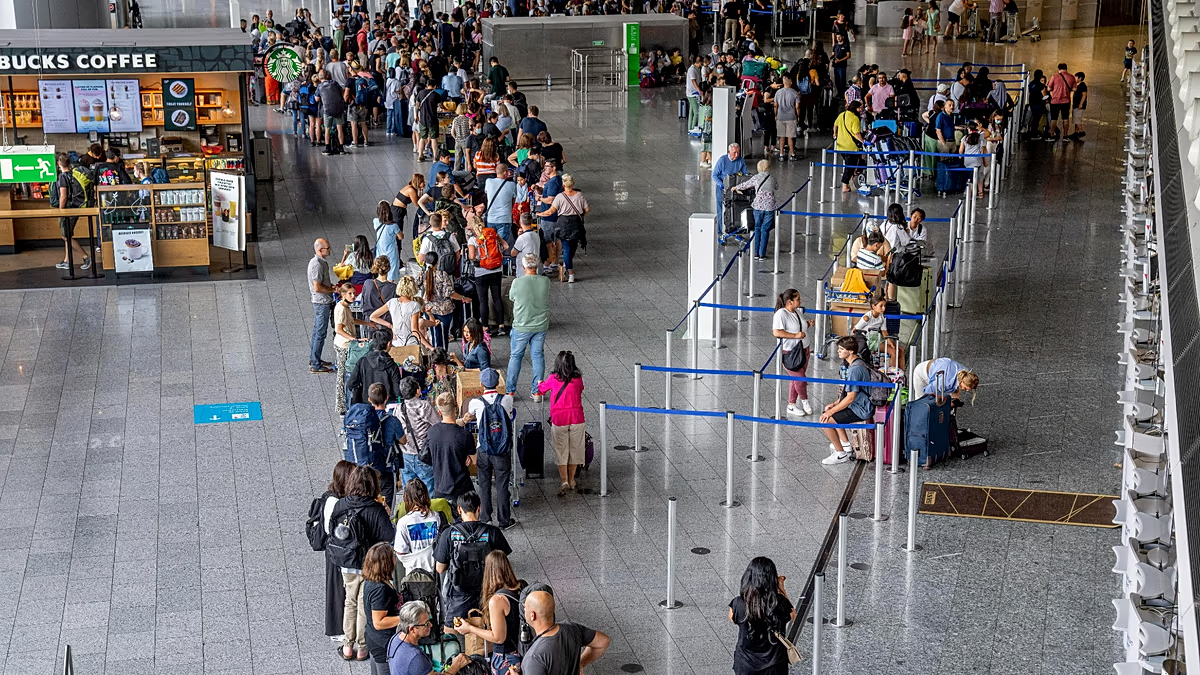
The impending full-scale launch of the European Union’s new Entry/Exit System (EES) has ignited a wave of anxiety across the continent, prompting nine European nations to collectively sound the alarm. Belgium, France, Germany, Greece, Italy, Malta, the Netherlands, Portugal, and Switzerland have co-signed a joint letter to Brussels, pleading for an extension of the current emergency safeguards beyond the critical September 6 deadline. Under the current rules, border authorities possess the administrative flexibility to temporarily bypass the time-consuming collection of biometric data, such as fingerprints and facial scans, when border crossings become unsustainably congested. The coalition of nations warns that stripping away this vital safety valve while the system is still plagued by foundational vulnerabilities could trigger unprecedented chaos at Europe’s gateways, transforming routine summer travel into an administrative nightmare.
This diplomatic pushback is not merely a bureaucratic disagreement; it is a direct response to the real-world operational friction that occurred during the initial trial phases of the rollout. In their joint petition, the ministers emphasized that the pilot periods exposed serious structural difficulties when the technological infrastructure was subjected to peak transit volumes. They argued that the looming expiration of the suspension mechanism represents a legitimate and deeply concerning threat to both national border security and the stability of the broader travel industry. While the participating nations reiterating their long-term commitment to the enhanced security goals of the EES, they maintain that forcing a rigid, full-scale implementation without adequate fallback options is a recipe for systemic failure.
The alarm raised by these governments is being loudly echoed by a frustrated aviation industry, which finds itself on the front lines of the unfolding disruption. Airlines and airport operators are witnessing their terminals buckle under the weight of the new requirements, leading to vocal demands for immediate intervention. Representatives from major transport sectors have pointed out that the current setup is simply not robust enough to handle the sheer velocity of modern holiday travel. For carriers like easyJet, whose business model relies heavily on rapid passenger processing and on-time departures, the prospect of permanent biometric bottlenecks without the option of temporary relief is a looming operational catastrophe.
In a sharp-tongued rebuke of the current border environment, easyJet’s Chief Executive, Kenton Jarvis, labeled recent airport passenger queues as absolutely unacceptable. Jarvis is demanding that border agencies aggressively utilize all available legal flexibilities to keep travelers moving, arguing that if these measures cannot be applied smoothly, the entire EES architecture must be thoroughly re-evaluated. His remarks follow a joint warning from a coalition of Europe’s leading aviation bodies, airports, and airlines, who recently informed the European Commission that incoming travelers are already enduring grueling border delays of up to five hours. These excessive wait times are not just an inconvenience; they are actively disrupting flight schedules, threatening tourism revenue, and souring the overall European vacation experience.
The human cost of these technological setbacks is perhaps most visible in Greece, where the reality of the bureaucratic bottleneck has taken on a physical form. Alexander Zinell, the chief executive of Fraport Greece—which oversees 14 of the nation’s key regional airports—has openly condemned what he views as dangerous, fundamental flaws in the design of the biometric checks. Zinell described a chaotic scene where airport staff have been forced to erect outdoor gazebos to protect sweltering, anxious passengers from the blistering Mediterranean sun while they wait in winding queues. Airport staff are now routinely fast-tracking vulnerable passengers just to ensure their basic physical safety, a patch-up measure that Zinell warns is unsustainable.
To prevent a complete breakdown of airport operations, industry leaders are arguing that the EES requires more than just temporary extensions—it needs a comprehensive structural redesign. Zinell insists that the current emergency suspension rules are merely band-aids on a gaping wound, and that the entire workflow must be updated to allow travelers to complete their biometric registration well before they step foot in an airport. While the European Commission, through spokesperson Markus Lammert, has welcomed the member states’ ultimate commitment to the security program and claims to be working closely with struggling nations, the aviation sector and European governments remain united in their warning: without extending the flexible rules past September, the system is headed for a turbulent landing.