



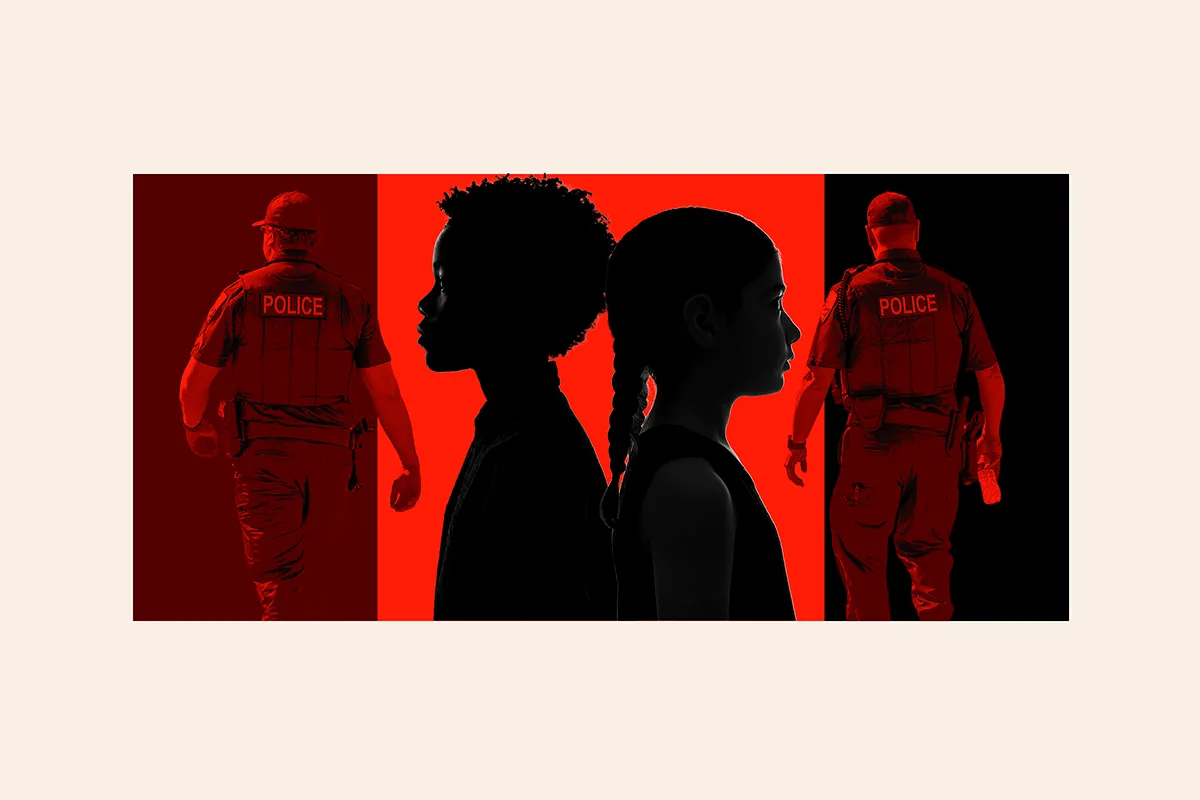
A groundbreaking new study led by Dr. Caroline Raymond-King of the Yale School of Medicine has exposed a devastating reality: the number of Americans dying at the hands of law enforcement has surged dramatically over the past two decades. Published in the medical journal JAMA, the research analyzed national mortality databases and death certificates spanning from 2003 to 2024. During this 21-year period, researchers identified 11,775 total fatalities, consisting of 11,505 adults and 270 children. While the loss of adult lives is staggering, the most alarming revelation is a quiet crisis involving our youth, with annual child deaths from police encounters quadrupling—skyrocketing by more than 362 percent over the course of the study. This sobering data adds crucial scientific weight to an ongoing, deeply emotional national debate about police accountability and the urgent need for systemic reform.
To understand the trajectory of this crisis, the research team examined data from the National Center for Health Statistics, revealing a steady and grim upward trend. In 2003, adult deaths caused by law enforcement stood at 363; by 2024, that number had more than doubled to 809. For children under the age of 18, the annual death toll rose from eight to 37 over the same period. Interestingly, the researchers noted that the acceleration of adult deaths peaked sharply between 2015 and 2020. These years represent a defining era in modern American history, bookended by the high-profile deaths of Michael Brown, Freddie Gray, and George Floyd. Despite the immense public outcry and widespread social justice movements that followed these tragedies, the numbers show that the fatal use of force by police only continued to climb, highlighting a persistent disconnect between public demands for change and actual outcomes on the street.
The study paints a vivid picture of who is dying and how. Unsurprisingly, firearms are the primary driver of these fatalities, accounting for over 87 percent of all recorded deaths—translating to more than 10,300 lives lost to gunshots. When look at the demographics of the victims, the disparities are stark and deeply troubling. Men and boys make up over 95 percent of the casualties. Furthermore, non-Hispanic Black males bore the heaviest burden of this violence, experiencing the highest mortality rates every single year of the study, with young Black men between the ages of 18 and 29 facing the absolute highest risk. The research confirms that Black and Hispanic Americans remain disproportionately vulnerable to fatal law enforcement encounters compared to their White citizens, a systemic inequality that has remained stubbornly unchanged for over twenty years.
While the total number of children killed by police is thankfully much lower than adults, the sheer velocity at which youth deaths are increasing is deeply concerning. Prior to 2015, the annual rate of child casualties remained relatively flat and stable. However, in the nine years following 2015, the rate of children dying during police encounters began to climb continuously. This shift suggests that the policy changes and increased public scrutiny of the last decade have failed to protect the most vulnerable members of society. By shifting the focus of this issue from a purely political debate to a quantifiable public health crisis, the study forces us to confront the reality that our current policing methods are increasingly claiming the lives of children.
However, the study’s reliance on death certificates has drawn criticism from those within the law enforcement community who argue the data lacks vital context. Lance LoRusso, a former police officer turned attorney who represents officers in shooting cases, argues that looking strictly at mortality data paints an incomplete picture. According to LoRusso, death certificates cannot capture what a suspect was doing in their final moments, which is essential to determining whether an officer’s use of deadly force was a legally justified response to a threat. He points to the case of Michael Brown as a prime example, noting that while Brown’s death was classified as a homicide on his death certificate, the officer’s actions were ultimately ruled lawful. From this perspective, analyzing these tragedies without accounting for officer exonerations or citizen actions can be misleading.
Despite these criticisms, Dr. Raymond-King and her co-authors argue that their findings represent a conservative estimate of the true crisis. Previous research suggests that traditional death certificates may actually fail to capture up to 55 percent of law enforcement-related deaths due to misclassification or clerical errors. Ultimately, the Yale research team hopes this study serves as a wake-up call for policymakers to build more transparent, accurate national tracking databases. They emphasize that reducing these preventable deaths—especially those involving firearms—requires treating police violence not just as a legal issue, but as a critical public health emergency that demands immediate, evidence-based intervention to protect all communities.