


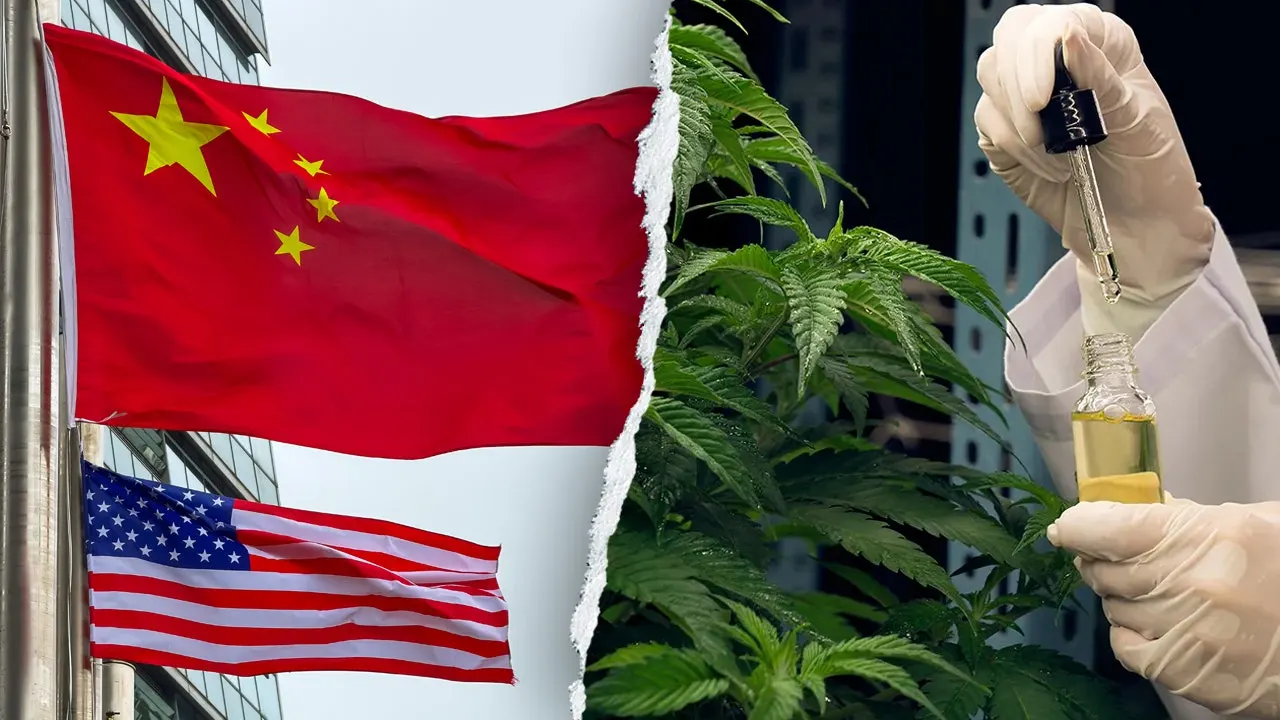
The commercial shift from simple, industrial hemp to a highly potent, unregulated market for hemp-derived THC products has rapidly crossed the line from a public health worry into a major national security threat. This is the central warning of a letter sent to the House Select Committee on the Chinese Communist Party by former acting Homeland Security Secretary Chad Wolf. Addressed to Chairman John Moolenaar, R-Mich., and Ranking Member Ro Khanna, D-Calif., the letter calls for an immediate, thorough congressional investigation. What started as a bipartisan effort to legalize non-intoxicating CBD and industrial hemp has instead opened a backdoor for foreign adversaries to exploit American regulatory loopholes, flooding local communities with dangerous substances.
At the heart of this crisis is the unsettling reality that these high-potency THC products—often sold as colorful gummies, sweet candies, fizzy beverages, and appealing vapes—are being designed and marketed in ways that directly attract youngsters. Because this shadowy market operates with virtually no federal oversight, these products are distributed without crucial safety standards, age verification, or accurate ingredient labeling. This regulatory vacuum has left ordinary families and children exposed to highly potent, unpredictable substances with zero guardrails, creating an urgent public health risk that is unfolding in real-time in neighborhoods across the country.
The scale of this issue goes far beyond localized, low-level drug dealing; it has evolved into a highly industrialized, sophisticated empire run by transnational criminal networks. Wolf pointed to the White House’s own 2026 National Drug Control Strategy, which explicitly rings the alarm on how organized crime syndicates, particularly those with deep-rooted connections to China, have co-opted the American marijuana trade. These foreign-linked organizations are systematically targeting and embedding themselves in states with legalized cannabis frameworks. They exploit lax state oversight and legal discrepancies to establish massive, unlicensed cultivation plants right under the noses of local authorities.
A striking and deeply troubling example of this geographic takeover is occurring in Oklahoma. According to state law enforcement data cited in the federal drug strategy report, Chinese criminal organizations are estimated to control and operate more than 80 percent of the state’s thousands of licensed and unlicensed marijuana and hemp farms. These massive properties are not merely rural agricultural operations. Instead, they function as dangerous, off-the-grid criminal hubs. Authorities have linked these sites to severe poly-crime activities, including the human trafficking of vulnerable, exploited laborers, highly sophisticated international money laundering schemes, and the widespread use of illegal, toxic pesticides that pose immediate threats to local water tables and public health.
The emergence of this illicit THC pipeline mirrors the predatory tactics already used by Chinese networks in the devastating fentanyl epidemic. For years, China-linked actors have been tied to the manufacturing and export of synthetic narcotics, precursor chemicals, and supply chain materials that have ravaged countless American communities. Wolf warns that the booming, unregulated intoxicating hemp market is rapidly becoming the next profitable avenue for these foreign actors to exploit. By leveraging weak enforcement and legal gray areas, these criminal networks are successfully funneling their illicit profits back overseas, actively funding broader criminal enterprises at the direct expense of American safety.
While Congress previously took bipartisan steps to close these critical legal loopholes and defend public health, Wolf warns that active lobbying efforts are now underway to weaken, delay, or entirely roll back these hard-won protections before they can be fully implemented. Doing so, he cautions, would not only compromise law enforcement efforts but would also embolden hostile foreign actors to tighten their grip on the American marketplace. To prevent further harm to American families, Wolf urges the House Select Committee to swiftly investigate the financial backing, chemical manufacturing, illegal farming, and money laundering operations tying these foreign networks to the illicit THC supply chain.