

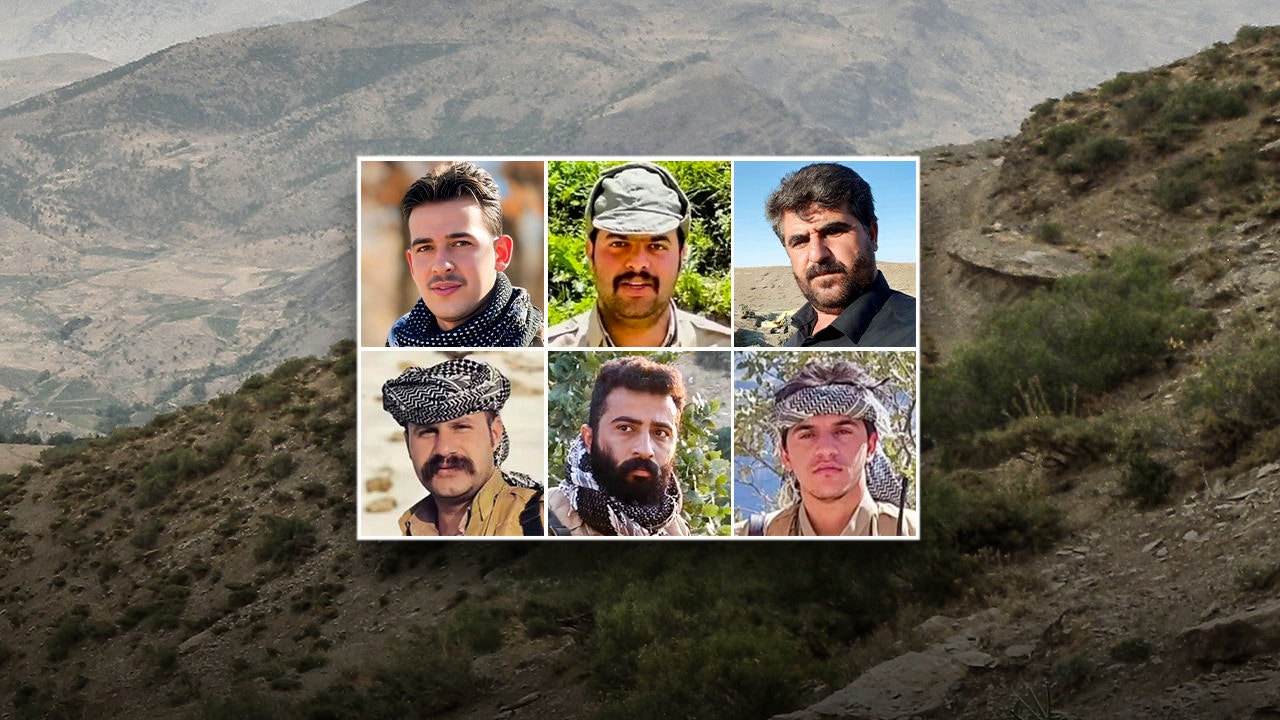
In the rugged mountain passes of northwestern Iran, near the village of Qizqapan, the enduring struggle of the Kurdish people recently claimed six more lives. Karo Hormuziari, Fardin Changizi, Mohammad Khaki, Abdullah Mohammadpour, Twana Osmani, and Mohammad Amin Bayezidi—all fighters for the Democratic Party of Iranian Kurdistan (PDKI)—were killed in a devastating ambush by Iran’s Islamic Revolutionary Guard Corps (IRGC). While state media in Tehran routinely dismissed the casualties as eliminated “separatists” and “terrorists,” the Kurdish community mourned them as Peshmerga, those who face death for the survival of their people. This tragic clash is not an isolated incident of border friction; it is a painful reminder of a deeply personal and systemic conflict that has simmered for decades in the shadows of larger Middle Eastern power struggles.
Kurdish representatives and analysts emphasize that this latest wave of violence represents a significant and dangerous escalation rather than routine border skirmishes. According to Majeed Gly, president of the American Kurdish Committee, the constant barrage of over 850 Iranian attacks since February—which have claimed civilian lives and struck opposition camps even in neighboring Iraq—has pushed the community’s patience to a breaking point. The Iranian regime fears the Kurds not because they are chaotic insurgents, but because they represent one of the most organized, historically rooted, and democratic opposition forces inside Iran. By launching deep military incursions and severe crackdowns, Tehran hopes to dismantle the Kurdish identity and break the spirit of a stateless nation of millions who have long endured forced assimilation, execution, and marginalization.
On the global stage, the Kurdish tragedy is often compounded by the shifting winds of international realpolitik. Not long ago, American and Israeli officials quietly discussed utilizing Iranian Kurdish opposition groups as military pressure points to destabilize Tehran during periods of acute regional tension. Yet, when geopolitical conflicts flared, the promised support evaporated into a mist of mixed signals, leaving Kurdish forces high and dry. Pressed heavily by direct Iranian threats and stalled by Turkish President Recep Tayyip Erdogan—who actively urged the United States to block any Kurdish ground operations—the Peshmerga ultimately remained on the sidelines. This painful pattern of being enticed as potential allies only to be abandoned when regional alliances shift has left Kurdish commanders deeply frustrated by Western inconsistency.
Adding insult to injury is the ongoing diplomatic dance between Washington and Tehran, particularly regarding the U.S.-Iran memorandum of understanding. The draft agreement allegedly includes language where the United States promises not to interfere in Iran’s internal affairs—a clause that Kurdish advocates view as a direct betrayal of their democratic aspirations. Activists argue that even during complex diplomatic negotiations, the U.S. should never compromise its moral obligation to support freedom movements. They point to historical precedents, like Ronald Reagan’s unyielding rhetorical support for dissidents in the Soviet Union, as proof that diplomacy does not require abandoning those who risk their lives for human rights and self-determination.
Despite the lack of reliable international allies or massive influxes of modern weaponry, a profound psychological shift is taking place among the Kurdish resistance. Local observers note that the fear that once guarded the IRGC’s authority is visibly eroding, replaced by a growing perception of Tehran’s vulnerability. The brutal crackdowns on the historic 2022–2023 protest movements did not permanently silence the population; instead, they sowed the seeds of a fierce, retaliatory anger. Newly formed armed groups are now striking back directly at security forces to avenge fallen protesters, indicating that the Iranian regime’s domestic grip is far more fragile than its outward posturing suggests.
Ultimately, the Kurdish struggle goes far beyond military skirmishes or serving as a proxy for foreign governments. As PDKI representatives assert, the goal has never been to sow chaos, but to build a democratic, pluralistic, secular, and federal Iran where all ethnic communities can live with dignity, equality, and peace. No international negotiation or backroom security deal will ever bring true stability to the region if it continues to ignore the fundamental human rights of the Kurdish people. Until the international community and Tehran acknowledge this basic reality, the mountains of Iranian Kurdistan will continue to echo with the gunfire of a people who refuse to let their identity, or their hope for a free future, be erased.