


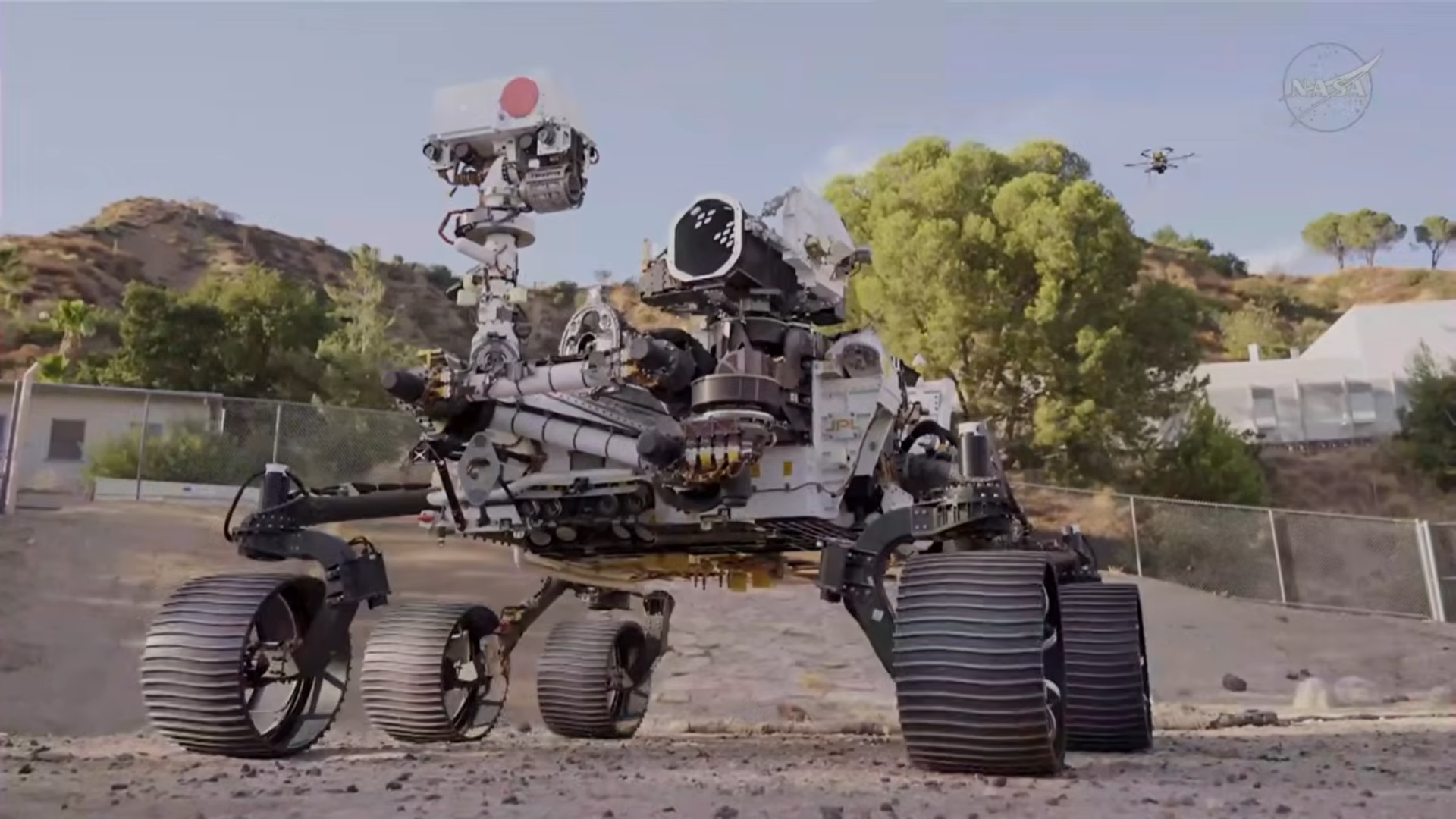
Deep within the pristine, climate-controlled cleanrooms of NASA’s Jet Propulsion Laboratory in Pasadena, California, sits a silent, highly sophisticated machine that has spent its life as a mechanical safety net. This rover, an exact engineering twin of the nuclear-powered behemoths currently traversing the dusty, wind-swept plains of Mars, was built to spend its existence indoors, serving as an earthbound surrogate to test tricky maneuvers and troubleshoot technical glitches from millions of miles away. But instead of living out its remaining days under the fluorescent lights of a southern California laboratory, this heavy-duty double is being eyed for an extraordinary promotion. Space agency planners are actively designing a mission to remodel this stationary testbed into a daring lunar pioneer named PROMISE, which stands for the Polar Rover for Observation, Mapping and In-Situ Exploration. Rather than navigating artificial sandboxes on Earth, this seasoned rover may soon feel the genuine, abrasive crunch of lunar soil beneath its wheels at the Moon’s rugged south pole. During a comprehensive public briefing detailing the agency’s long-range blueprint to establish a permanent human outpost on the lunar surface during the 2030s, NASA Administrator Jared Isaacman expressed immense optimism about the PROMISE initiative. While acknowledging that the mission is still in its collaborative definition phase, Isaacman highlighted the sheer common sense of repurposing such high-quality, existing hardware, noting that very few technical obstacles stand in the way of adapting this robust Martian chassis for the barren, airless environments of our closest celestial neighbor. By breathing new life into a machine originally constructed to withstand the alien environments of Mars, NASA is demonstrating a remarkable streak of engineering resourcefulness, transforming a loyal laboratory placeholder into a primary catalyst for the next great era of human space exploration.
The scientific urgency driving the PROMISE initiative highlights a fascinating technological tension between solar and nuclear power in the hostile, deeply shadowed regions of the lunar south pole. NASA is already preparing to launch a solar-powered scout known as VIPER—the Volatiles Investigating Polar Exploration Rover—by the end of next year to hunt for resources. However, as program managers look toward the permanently shadowed craters of the Moon’s southern extremity, the inherent limitations of solar-dependent explorers become painfully obvious. Carlos García-Galán, NASA’s program manager for the Moon Base effort, pointed out that because VIPER relies entirely on daylight to charge its batteries, its movements are strictly bound to flat, sunlit terrain and governed by the unforgiving cycle of lunar nights, which plunge the landscape into freezing darkness for two weeks at a time. This reliance on solar energy effectively prevents VIPER from venturing deep into the black, billions-of-years-old abysses where precious water ice is believed to be locked away. In stark contrast, the PROMISE rover features a nuclear heart powered by decaying plutonium, a formidable energy source that bypasses the need for sunlight entirely and generates constant, life-preserving warmth. This radioactive power system is the secret behind the legendary longevity of the Curiosity and Perseverance rovers, which have spent fourteen and five years respectively thriving in the freezing Martian environment. Freed from the tyrannical constraints of the lunar night, a nuclear-powered PROMISE rover could descend into the darkest, coldest craters on the Moon and remain there for extended periods, methodically mapping ice deposits that will eventually provide drinking water and rocket fuel for future human pioneers.
This grand quest to conquer the lunar shadows and build a permanent base by the 2030s is not a solitary government voyage, but rather a bustling, highly collaborative arena of public-private cooperation. Central to this new space ecosystem is the progress of commercial aerospace heavyweights, most notably Jeff Bezos’ Blue Origin, whose massive robotic lander, the Blue Moon Mark 1, is currently nearing completion in its manufacturing facilities. Christened “Endurance,” this colossal cargo vessel is designed to deliver heavy machinery directly to the lunar surface, serving as the literal flatbed truck upon which human survival infrastructure will be built. Despite a recent, highly publicized setback where an explosion during testing of Blue Origin’s New Glenn rocket raised urgent questions about launch schedules, NASA leadership remains remarkably steady in their support. Administrator Isaacman confirmed that launching the Endurance lander on the New Glenn rocket remains the agency’s “Plan A,” demonstrating a resilient understanding of the inevitable fiery trials associated with modern rocketry. However, NASA’s modern exploration strategy is built on flexibility, and García-Galán emphasized that if logistical delays push the New Glenn launch beyond mid-2027, the agency is fully prepared to pivot to other active commercial launch vehicles. This pragmatic flexibility highlights a profound cultural shift in space exploration, where mechanical anomalies are no longer viewed as project-ending disasters, but as momentary, character-building challenges on our relentless path back to the stars.
Beyond the high-profile efforts of Blue Origin, the first critical phase of the Moon Base program is fueled by an ambitious group of commercial partners who are actively building a reliable cosmic delivery network. Prominent among these companies is Astrobotic, whose Griffin 1 lunar lander is currently on track for a highly anticipated launch later this year, alongside Intuitive Machines’ sleek Nova-C lander, which continues to hit its major development milestones. Showing absolute confidence in this budding market, NASA recently announced an injection of nearly $600 million into Phase 1 of the program, which runs through 2029, to fund four additional robotic delivery missions. Specifically, Astrobotic has been awarded an impressive $297.9 million to orchestrate two subsequent lunar deliveries, while Firefly Aerospace and Intuitive Machines have secured $144.2 million and $148.3 million respectively to execute one mission each. Far from simple cargo runs, these future voyages will carry a highly specialized suite of scientific instruments designed to study the physical chaos of landing on an airless world. Each commercial lander will be equipped with multiple high-definition cameras to capture the precise, violent ways in which rocket engine plumes blast and displace the fine, glass-like lunar soil during descent. Additionally, they will deposit precise retroreflective location markers to map out safe landing corridors and continuously monitor the invisible, hazard-filled radiation environment of the Moon, ensuring that when human boots finally step out onto the surface, they do so with the protection of rigorous, real-world data.
Yet, for all the complex mathematics, multi-million dollar budgets, and advanced nuclear physics that dominate the narrative of lunar exploration, the human element of play, national pride, and lightheartedness remains delightfully intact. During the latest program update, an entertaining exchange between Administrator Isaacman and Program Manager García-Galán captured the imagination of space enthusiasts worldwide, proving that the human spirit of fun is never left behind on Earth. Isaacman playfully challenged the NASA engineering team to promise that one of the upcoming robotic landers would carry a soccer ball to the lunar surface, provided the United States men’s national team secures a historic victory in the World Cup. Rather than dismissing the suggestion as frivolous extra weight, García-Galán enthusiastically embraced the challenge, promising that NASA would absolutely find a dedicated slot in the payload manifest to accommodate the cultural cargo as a form of cosmic motivation. This playful bet is more than just a public relations stunt; it directly honors a legendary moment from Apollo 14 when astronaut Alan Shepard took a modified six-iron and famously hit golf balls across the dusty plain of Fra Mauro. By aiming to “one-up” Shepard’s historic lunar drive with a soccer ball, today’s space leaders are reminding us that we do not venture into the great void merely to collect cold rock samples and deploy sensor arrays. We go to carry our stories, our games, our joy, and our collective humanity into the vast unknown, ensuring that our future celestial outposts feel less like sterile scientific laboratories and more like genuine homes.
As we stand on the precipice of this new lunar renaissance, the clever transformation of a Mars rover twin into the PROMISE explorer beautifully symbolizes the broader evolution of our relationship with the cosmos. We are transitioning away from the fleeting “flags and footprints” style of exploration that characterized the mid-twentieth century, moving steadily toward a model of persistent, sustainable cohabitation with the universe. By adapting Mars-tested nuclear technology to survive the eternal darkness of polar lunar craters, and by creating a lively economic playground where commercial partners launch everything from life-support habitats to symbolic soccer balls, humanity is weaving a new space age that is remarkably resilient. The efforts detailed by NASA today prove that the road to the Moon, and eventually to Mars, will be paved by a unique blend of scientific pragmatism, technological recycling, and an unyielding sense of human curiosity. As these various commercial landers prepare to lift off from Earth’s gravity well over the coming years, they carry with them the collective hopes of a species determined to expand its horizon. In doing so, we are transforming our pale companion in the night sky from a cold, distant symbol of romantic longing into a bustling, active springboard for humanity’s inevitable journey deeper into the infinite stars.