


Every single morning, as the sun begins to crest over the silhouette of the Manhattan skyline, a silent, anxious ritual plays out for hundreds of thousands of commuters huddled on train platforms across New Jersey. For these teachers, nurses, office workers, and students, the daily journey into New York City is not merely a routine commute; it is a high-stakes gamble dependent on a pair of century-old, crumbling rail tunnels buried deep beneath the silt of the Hudson River. Built originally by the Pennsylvania Railroad in 1910 and severely damaged by the corrosive saltwater left behind by Hurricane Sandy in 2012, these ancient arteries are far past their prime. When a single electrical wire fails or an ancient signal system glitches, the entire regional economy grinds to a devastating halt, leaving parents stranded away from their children and workers facing disciplinary actions for arriving late to their jobs. The promised savior to this daily misery is the Gateway Hudson Tunnel Project—a monumental, $16 billion infrastructure endeavor designed to construct a state-of-the-art dual-tunnel system that would double rail capacity and breathe new life into the aging Northeast Corridor. This project is much more than a massive collection of concrete, steel, and complex engineering diagrams; it represents the shared dreams of millions of working-class families who yearn for a reliable, safe, and dignified route to their livelihoods. It is a symbol of regional survival, designed to ensure that the economic engine of the metropolitan area does not succumb to obsolescence. Yet, for years, this vital lifeline has been treated not as a crucial public necessity, but as a high-stakes political football, leaving those who depend on it caught in a state of perpetual anxiety, wondering if the promised relief would ever truly arrive.
The political theater surrounding the Gateway project reached a boiling point when the federal government, under the Trump administration, attempted to systematically choke off the financial lifeblood of this massive enterprise. This past September, federal authorities made a sudden, aggressive move to withhold key federal funds that had been painstakingly secured through years of bipartisan negotiation. This funding freeze was not merely an administrative delay; it was a calculated maneuver that sent shockwaves through the halls of state government in both New York and New Jersey. For local leaders and transportation advocates, the move felt like a direct assault on the economic viability of the entire tri-state region. The decision to withhold money meant for such a critical safety and transit project highlighted a profound disconnect between federal political maneuvering and the ground-level realities of working-class citizens. While politicians debated policy in the comfortable offices of Washington, D.C., construction companies, local laborers, and transit authority officials were left scrambling to figure out how to keep the project afloat without the promised federal backing. The sudden drying up of funds injected a paralyzing dose of uncertainty into the local economy, threatening to undo years of environmental reviews, engineering plans, and inter-state agreements that had been forged in good faith. It made it painfully clear that the daily commutes of ordinary citizens were being used as leverage in a broader political struggle, turning an essential public works project into a battleground over executive power and state autonomy.
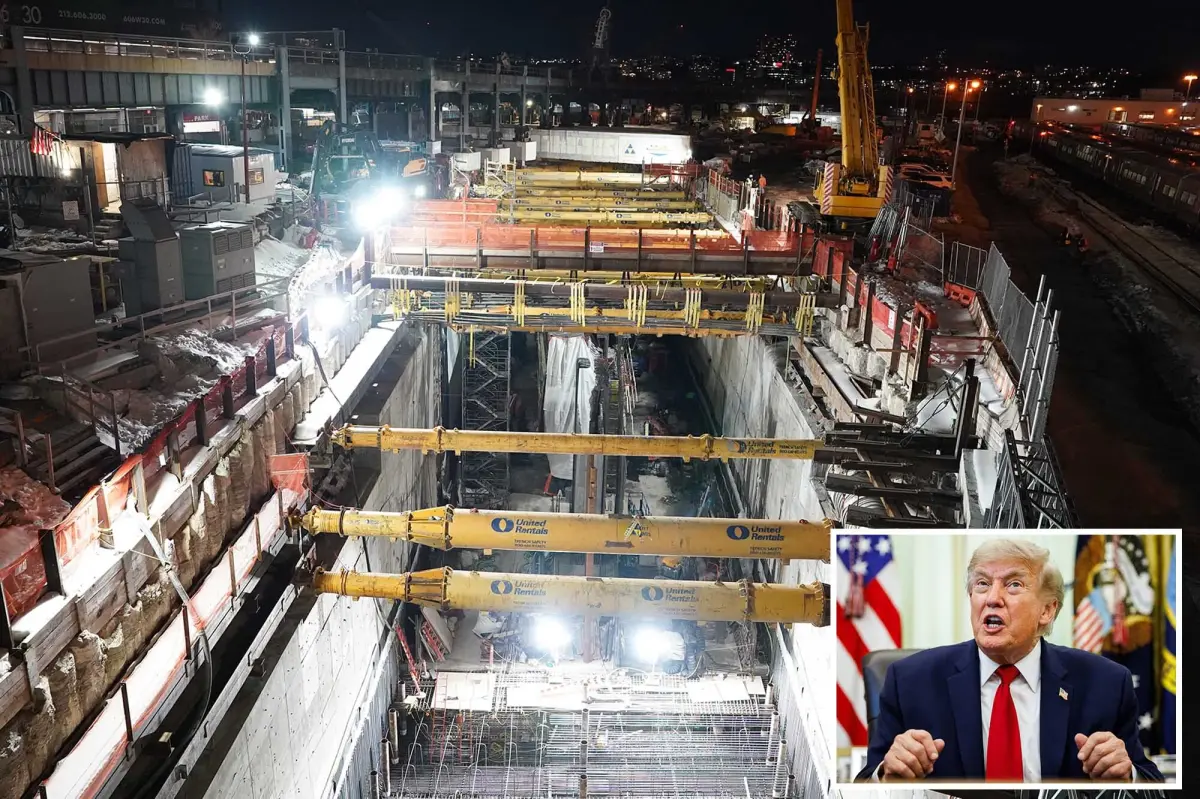
The consequences of this federal funding blockade materialized in their most devastating form on February 6, a day that construction workers and transit advocates in the region will not soon forget. On that chilly winter morning, the heavy machinery that had been laboring tirelessly to prepare the riverbanks for excavation fell completely silent. The deafening roar of diesel engines, the rhythmic clanging of steel, and the spirited shouts of construction crews were replaced by a haunting, stagnant quiet as work came to a screeching, heartbreaking halt due to the sudden lack of money. This three-week work stoppage was not just a pause on a financial spreadsheet; it was a deeply human crisis for the hundreds of laborers, engineers, and contractors whose livelihoods suddenly hung in the balance. Workers who had planned their family budgets around the steady hours of this historic project were suddenly faced with the terrifying prospect of layoffs and lost wages during an already difficult economic season. Project managers stood on idle, muddy construction sites, staring at millions of dollars worth of specialized equipment sitting frozen in time, gathering frost. Each passing day of silence represented not only lost time and wasted taxpayer money but a painful blow to the collective morale of a region that had put its faith in the promise of progress. The sudden halt served as a stark, physical reminder of how quickly political games in Washington could disrupt the lives of ordinary people who simply wanted to do their jobs and build a better future for their communities.
As the silence dragged on at the construction sites, a parallel battle raged inside a Manhattan federal courtroom, where the Trump administration’s legal team mounted a defense that struck many as both audacious and profoundly dismissive of the public interest. Government lawyers argued aggressively that the states of New York and New Jersey did not even have the legal “standing” to challenge the federal freeze on Gateway funding. In the cold, dry language of administrative law, the federal government asserted that these sovereign states—and by extension, the millions of citizens they represented—did not suffer a sufficiently direct or legally cognizable injury to warrant the intervention of a federal judge. To the legal teams representing the states, and to the millions of frustrated commuters watching from the headlines, this argument was almost insulting. It suggested that those who would suffer the most from a catastrophic tunnel failure, those who endured daily delays, and those who had already invested billions of their own state tax dollars into the project were mere bystanders without a voice in the fate of their own infrastructure. The administration’s defense attempted to lock the doors of the courthouse to the very people whose daily survival depended on the construction of the new tunnels, turning a massive regional crisis into a bloodless debate over legal technicalities and bureaucratic definitions. This strategy threatened to set a dangerous precedent, implying that federal agencies could unilaterally withhold promised funding for vital public safety projects without ever having to answer to the citizens affected by their decisions.
The turning point in this high-stakes struggle arrived on Monday, when US District Judge Jeanette Vargas, a jurist appointed by President Joe Biden, issued a blistering, 59-page court order that permanently dismantled the federal government’s efforts to starve the Gateway project. Judge Vargas did not mince words in her ruling, characterizing the administration’s September attempt to withhold the $16 billion project’s funds as “flagrantly” illegal. The decision brought a decisive and permanent end to the temporary restraining order she had initially granted back on February 6, which had allowed construction to tentatively resume after those three agonizing weeks of silence. In her comprehensive written opinion, Judge Vargas thoroughly rejected the federal government’s arguments regarding the states’ lack of standing, asserting that New York and New Jersey indeed possessed a deep, indisputable stake in the physical and economic well-being of their transit corridors. For the legal teams who had worked around the clock to draft the challenges, and for the public officials who had championed the project through years of political headwinds, the ruling was a moment of profound vindication. It was a powerful reminder that even in an era of deep political polarization, the rule of law could still step in to protect the public interest from arbitrary executive overreach. The judge’s sharp, unequivocal language served as a shield for the project, ensuring that the federal money promised for the Hudson River tunnels could no longer be held hostage by political whims or administrative maneuvers.
With the legal cloud finally lifted and the federal funds permanently secured, a renewed sense of hope and determination has settled over the muddy banks of the Hudson River. On the construction sites where workers once stood in silent anxiety, the air is now filled with the energetic symphony of progress: the rumble of excavators, the spark of welding torches, and the steady, reassuring thrum of heavy machinery hard at work. This monumental court victory represents far more than just a successful legal defense of a $16 billion transit project; it is a historic triumph for the human spirit of the Northeast, proving that the collective will of working-class people can overcome the most daunting political obstacles. For the tired commuters boarding trains in Newark, Secaucus, and Penn Station, the ruling offers a tangible promise that their daily struggles are finally being addressed with the urgency they deserve. It establishes a powerful, lasting national precedent that essential public infrastructure—the bridges, tunnels, roads, and rail lines that bind our society together—cannot be treated as bargaining chips or political collateral. As the giant boring machines prepare to dig deep into the earth beneath the Hudson River, they carry with them the aspirations of millions, carving out a path toward a safer, more connected, and more sustainable future where the simple act of traveling to work is no longer an act of courage, but a seamless part of a thriving, human-centered society.