


The great seasonal exodus, an annual rite of passage marked by suitcases packed to the brim, children vibrating with holiday anticipation, and the collective yearning of millions to escape the humdrum of daily schedules, has collided head-on with a sudden, suffocating silence. Rail terminals that should be humming with the rhythmic click-clack of rolling luggage and the mechanical symphony of departures are instead transformed into echoing caverns of frustration and disbelief, all due to a sweeping 24-hour strike that has shuttered high-speed, regional, and suburban networks alike. It is a masterclass in terrible timing, or perhaps, from the perspective of the striking workers, a display of ultimate leverage, designed to maximize visibility at the precise moment the public’s reliance on public transit reaches its absolute peak. Under the soaring steel and glass canopies of major central stations, the electronic departure boards tell a grim story, illuminated by a monotonous, relentless sea of bright red “Cancelled” notices that offer no hope of reprieve or compromise. For those standing beneath them, the realization of what a total shutdown truly means begins to sink in, turning the joy of a long-awaited getaway into a logistical obstacle course that threatens to consume both their sanity and their holiday budgets. Security guards wander past empty platforms where sleek, high-speed locomotives sit cold and dormant, their aerodynamic noses pointing toward destinations they will not reach today, while regional commuter trains remain locked in distant yards, idle monuments to a system at an absolute and exhausting standstill. The vibrant, chaotic energy associated with the beginning of a holiday season—usually filled with excited chatter, the rich aroma of freshly baked pastries, and the hurried footsteps of eager travelers—has been replaced by a tense, nervous energy as thousands of stranded passengers process the reality of their derailed plans in real time.
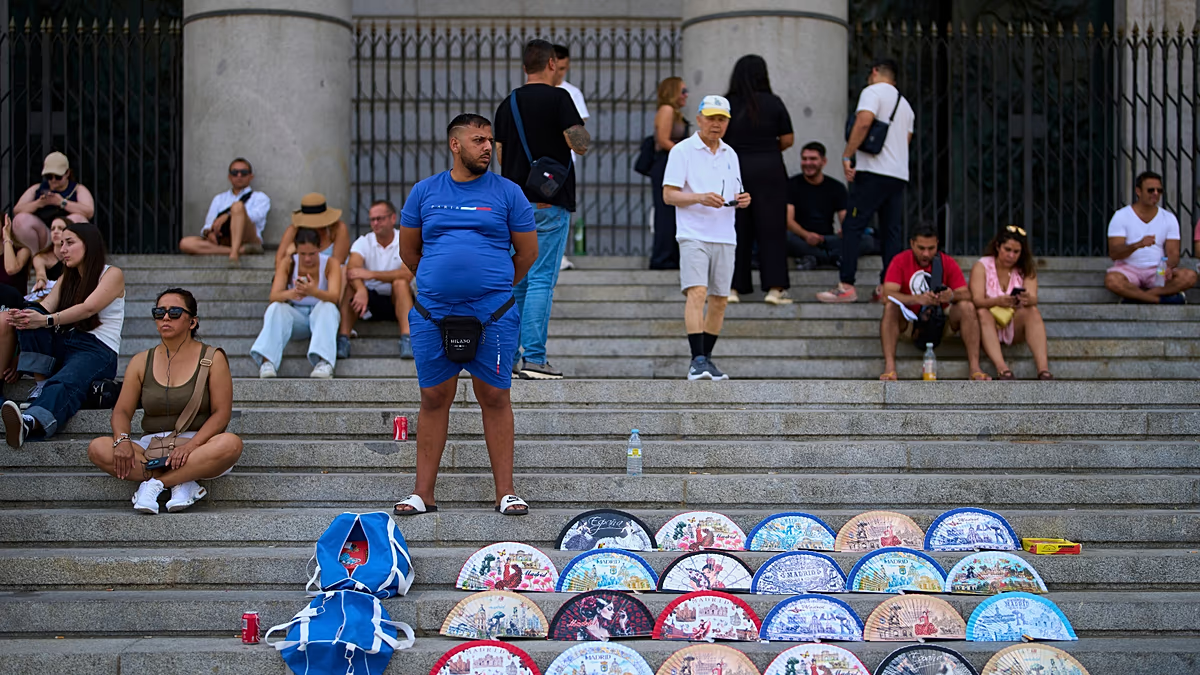
To truly understand the weight of this transport paralysis, one must look past the dry statistics of canceled routes and gaze into the faces of the people leaning heavily against concrete pillars, their holiday dreams temporarily crushed under the weight of systemic labor disputes. Here, a mother of three sits on an upturned suitcase, desperately scrolling through her smartphone in a frantic, exhausting search for rental cars or exorbitant bus journeys, her young children already tired, fussy, and deeply confused by the sudden halt to an adventure they had been promised for months on end. Nearby, an elderly couple clutches paper tickets bought nearly a year in advance, their hopes of spending a rare, precious holiday with their young grandchildren in a distant province fading with every passing hour of corporate and union inaction. There are young university students, carrying overstuffed backpacks filled with heavy textbooks and laundry, stranded halfway between their university towns and their family homes, forced to make uncomfortable calculations about whether their meager bank balances can survive an unexpected night in a budget hotel. The sheer, beautiful diversity of humanity that relies on these tracks is on full display in the station lobbies: business travelers whose crucial deals have vaporized overnight, international tourists whose meticulously planned itineraries have been thrown into total disarray, and ordinary workers who simply wanted to return to their small hometowns to rest their weary bones. The collective sigh of disappointment is almost tangible, a shared emotional tax levied on a public that feels increasingly caught in the crossfire of industrial warfare, where their personal milestones, family reunions, and hard-earned vacations are used as bargaining chips in a high-stakes game of economic poker.
Yet, on the other side of this dramatic divide, standing in the biting morning air outside the depot gates, are the striking workers themselves, whose perspective is forged in a crucible of rising living costs, grueling shift patterns, and a feeling of profound systemic neglect. To them, this strike is not an act of malice aimed at spoiling the holidays of their fellow citizens, but a desperate, final cry for help from a workforce that feels increasingly invisible, overworked, and severely undervalued in a rapidly changing economy. These are the locomotive engineers, conductors, maintenance crews, and signal operators who kept the country moving through times of global crisis, working long, unsociable hours in all weather conditions to ensure that millions of passengers reached their destinations safely every single day. They speak of a grinding, multi-year erosion of their purchasing power in the face of runaway global inflation, of pension plans being chipped away by corporate restructuring, and of safety margins sliced dangerously thin by administrative cost-cutting measures that prioritize profit over human lives. The decision to strike on the cusp of a major holiday is not made lightly; indeed, it is accompanied by dense feelings of guilt and anxiety, but with the grim understanding that minor disruptions during quiet mid-week periods are easily ignored by executives and policymakers who do not ride the trains themselves. For these laborers, the physical act of walking off the job and holding picket signs in the cold is an assertion of basic human dignity, a stark reminder to society that the gleaming miracles of high-speed transit and the quiet reliability of suburban commuter lines do not run on automated algorithms, but on the sweat, dedication, and expertise of human beings who demand a living wage.
While the high-speed rail lines grab the national headlines with their dramatic cancellations of intercity transport, the quiet tragedy of this strike unfolds in the suburban and regional networks that serve as the vascular system of the nation’s smaller communities. These commuter arteries, often overlooked in grand national infrastructure debates, are the daily lifelines for millions of regional residents who depend on them for essential travel, linking far-flung towns to the economic, educational, and medical hearts of metropolitan centers. When these regional trains cease to run, the isolation of smaller, outlying communities quickly becomes acute, stranding those who do not own personal vehicles or who cannot afford the steep cost of alternative forms of private transportation. Local shops, independent cafes, and small family businesses located near suburban transit hubs see their daily foot traffic vanish in an instant, highlighting the deep and delicate interdependence between public transit accessibility and the financial survival of the local economy. In these quieter suburban stations, there are no news crews or major customer service centers to offer assistance; there are only empty, wind-swept platforms, locked ticketing booths, and the quiet, heavy realization of residents that they are effectively cut off from the rest of the country. The strike exposes the stark, systemic vulnerability of modern suburban life, wherein families have moved away from expensive, overcrowded city centers on the promise of reliable, rapid transit, only to find themselves utterly paralyzed when that public promise is rescinded for twenty-four hours.
As the railway network remains completely frozen, the stress of the travel surge immediately cascades onto alternative modes of transportation, exposing the fragile, easily broken limits of the country’s broader mobility infrastructure. Major highways, already anticipated to be busy with typical holiday traffic, quickly choke under an unprecedented influx of sudden private vehicles as desperate commuters take to their cars, turning major freeways into slow-moving parking lots and causing travel times to double, triple, or quadruple. Ride-sharing applications experience unprecedented, automated surges, with prices skyrocketing to astronomical levels that price out all but the most affluent travelers, while regional bus terminals find themselves utterly overwhelmed by chaotic crowds of people trying to buy any ticket that moves in the general direction of their destinations. Behind the scenes, local car rental agencies report that their entire fleets have been booked out within mere minutes of the strike announcement, leaving latecomers with zero options but to abandon their travel plans entirely and return home on foot. Amidst this chaotic scramble, a specialized group of workers bears the brunt of the public’s immediate, white-hot anger: the platform concierges, customer service representatives, and ticketing agents who, despite not participating in the strike, must face the exhausting tide of tearful, angry, and exhausted passengers. Armed only with apologetic scripts and overloaded, antiquated rebooking systems that crash under the weight of millions of simultaneous corporate inquiries, these frontline service workers endure hours of verbal abuse, performing emotional labor of the most grueling kind as they try to mend the broken spirits of a traveling public with nowhere left to turn.
Ultimately, this 24-hour freeze on rail movement serves as a stark, dramatic mirror held up to a modern society that takes its invisible systems of connection entirely for granted until they suddenly cease to function. It forces a collective, uncomfortable pause in our hyper-accelerated lives, raising profound questions about how we value our public infrastructure, how we negotiate the rights of essential workers against the needs of the collective, and how we build resilient societies that do not crumble at the first sign of structural friction. When the twenty-four hours have finally elapsed, the picket signs will be packed away, the giant engines will be roared back to life, and the heavy iron wheels will begin to turn once more, carrying passengers toward their belated holiday destinations and slowly clearing the massive backlog of stranded lives. Yet, the memory of the empty stations, the silent tracks, and the ultimate fragility of our daily routines will linger long after the trains have reached their final stops, serving as a reminder that the tracks connecting us are not built merely of steel and concrete, but of an unspoken, delicate social contract between those who run the trains and those who ride them. In the end, as travelers slowly find alternative routes, share car rides with perfect strangers, or patiently wait out the storm, a testament to human resilience and cooperation emerges from the logistical chaos, proving that while a strike can temporarily pause the trains, it can never entirely halt our fundamental human desire to move forward, to explore, and, above all, to return to those we love.