


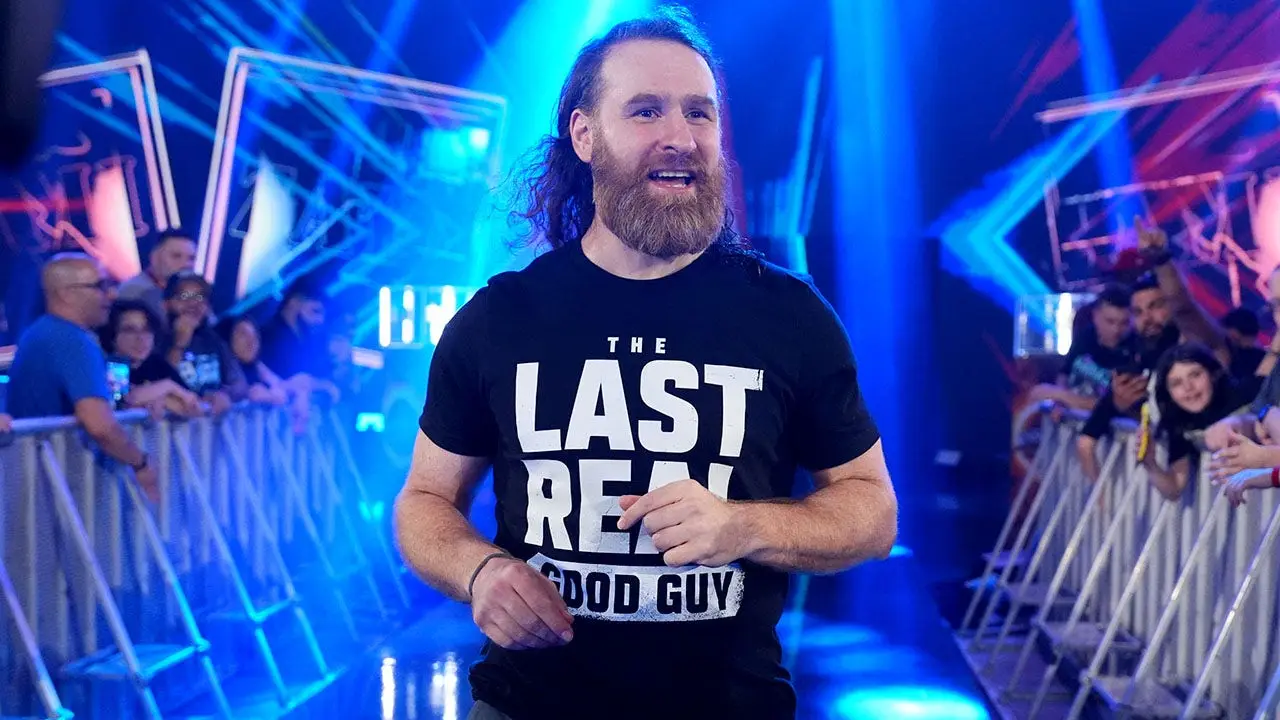
The grand tapestry of professional wrestling has always been woven with the threads of public perception, a truth that WWE superstar Sami Zayn understands perhaps better than anyone else in the industry today. As he prepares to step into the ring for a monumental triple threat match against Cody Rhodes and the formidable Gunther for the Undisputed WWE Championship at Night of Champions, Zayn finds himself standing at a fascinating psychological crossroads. Since the calendar turned over to 2026, a noticeable shift has occurred in how the WWE universe perceives him. The echoes of adoration that once followed him everywhere have begun to curdle, replaced by a growing chorus of boos that have intensified with each passing week. This hostility has been fueled by Zayn’s increasingly vocal frustrations regarding a perceived lack of respect and the feeling that his hard-earned opportunities are being gatekept. To some, this shift represents a traditional heel turn; to others, it is a deeply relatable human struggle. Anyone who has ever dedicated years of their life to an organization, only to watch colleagues bypass them to chase the direct spotlight of a shiny new toy or the overnight rockstar, can easily empathize with the simmering resentment brewing within Zayn. It is this emotional complexity that turns a standard athletic contest into a deeply compelling human drama, as Zayn attempts to reclaim his throne while wrestling with both his opponents and the fickle loyalty of the audience.
In a candid conversation reflecting on this transition, Sami Zayn described his current character work not as a rigid narrative of good versus evil, but rather as an intellectual “choose your own adventure” book for the audience. He acknowledges that the modern wrestling fan is highly sophisticated, meaning his actions will inevitably resonate differently depending on who is watching. For the “ride or die” fans—those who have stood by him through years of trials, tribulations, and near-misses in pursuit of the ultimate prize—his current complaints are justified outcries of an overlooked genius. These loyalists remain steadfastly in his corner, seeing no true departure from the man they have always supported. However, for the more casual or impatient segments of the crowd, his behavior can easily be interpreted as tiresome whining. Zayn pointed directly to a recent program with the rising star Trick Williams to illustrate this exact phenomenon. He observed a stark reality: when pitted against a fresh, exciting novelty, the audience quickly treated Zayn like a comfortable but ultimately discarded pair of worn-out jeans. Recognizing this paradigm shift, Zayn did not fight against the tide. Instead, he took note of the crowd’s appetite for the new and began utilizing that organic rejection to his advantage, crafting a nuanced layer of psychological warfare that invites viewers to actively participate in defining who he is based on their own personal values and loyalties.
To successfully pull off such a complex, double-sided dynamic, Zayn has spent considerable time analyzing the careers of professional wrestling’s most polarizing icons, specifically drawing inspiration from John Cena and Roman Reigns. He notes that during Cena’s decade-long run at the top and Reigns’ highly criticized tenure as “The Big Dog,” both performers faced immense, split-crowd reactions on a nightly basis without fundamentally shifting their core personalities. They did not panhandle for cheers or completely reinvent their moral compass to appease the detractors; they simply remained authentic to who they were and allowed the emotional storm of the arena to swirl around them. Zayn seeks to evolve this concept by adding a reactive element to his own presentation. Rather than remaining completely stoic regardless of the feedback, he intends to let his active behavior morph in response to how a specific crowd treats him. This creates a fascinating, fluid dialogue between performer and spectator, where the character’s level of aggression, arrogance, or humility is directly dictated by the energy vibrating from the bleachers. By refusing to play a traditional, static role, Zayn transforms his performances into an interactive experiment where the audience is not just watching a show, but actively co-authoring the behavioral traits of the man in the ring.
This fluid approach to performance art makes the geographic diversity of the WWE calendar incredibly exciting for Zayn. Professional wrestling crowds are notoriously regional, with cultural nuances drastically changing how stories are received. Zayn eagerly anticipates how this experiment will translate across the globe, wondering whether the passionate fans of Saudi Arabia will embrace him with the same fervor they always have, or if they will mirror the cynical, demanding reactions typical of smart-world hotbeds like Boston and New York. The energetic landscapes of Montreal and Toronto, where Zayn holds deep, historic roots, offer yet another variable, as do the highly vocal and theatrical audiences of European capitals like London and Paris. For a veteran performer who has experienced nearly every standard reaction in the book, this geographical unpredictability is not a source of anxiety, but rather a profound source of creative rejuvenation. It keeps the grueling travel schedule and the constant physical toll of the squared circle feeling vital and alive. By allowing national boundaries and regional histories to dictate the emotional tenor of his matches, Zayn ensures that no two performances are ever identical, elevating the simple athletic display of professional wrestling into a truly living, breathing global theater.
This current experimental phase is a drastic departure from the universal adoration Zayn enjoyed just a few short years ago. His popularity reached an absolute zenith during his legendary run as the “Honorary Uce” within Roman Reigns’ dominant faction, The Bloodline. That masterclass in long-term storytelling constructed an immense reservoir of goodwill, culminating in a thunderous pop when Zayn finally betrayed the oppressive stable to stand on his own two feet. Even years after that historic night at Elimination Chamber 2023, the residual cheers continued to echo, solidifying him as one of the most beloved babyfaces of his generation. When asked if stepping into a more antagonistic role and feeling the heat of the crowd was a refreshing change of pace, Zayn offered a nuanced perspective on the psychology of crowd control. He admitted that while he still holds some old-school sensibilities—believing a performer should generally work toward the explicit goal of being either clearly cheered or clearly booed—his current avant-garde approach allows him to enjoy a different kind of professional satisfaction. Rather than being victimized by a fickle crowd’s sudden rejection, Zayn has stepped into the role of the master manipulator. By anticipating their desires and subtly nudging their reactions in either direction depending on the needs of the story, he maintains total agency, turning the crowd’s fluctuating emotions into a tool of his own design.
Ultimately, Sami Zayn’s journey toward the Undisputed WWE Championship at Night of Champions is about far more than just gold belts and athletic prestige; it is a profound testament to the power of human connection and psychological storytelling in modern entertainment. As the global audience prepares to tune in to the high-stakes broadcast, they are not just looking forward to a physical collision between three of the industry’s absolute best, but also the continuation of a groundbreaking character study. Zayn has successfully bridged the gap between the rigid, old-school values of the past and the self-aware, experimental performance art of the future. Whether he walks out of the arena bathed in triumphant cheers or drowned out by a deafening symphony of boos, he will have succeeded in his primary objective: making the audience feel something deeply visceral. In a modern landscape where fans are constantly searching for authenticity amidst the spectacle, Zayn’s “choose your own adventure” philosophy offers a refreshing, humanizing reminder that the most compelling stories are not the ones told to us, but the ones we build together with the performer. When the bell rings and the lights shine bright this Saturday at 1 p.m. ET on ESPN, the true victory for Sami Zayn will not merely be defined by a three-count, but by his unmatched ability to hold the entire world in the palm of his hand.