


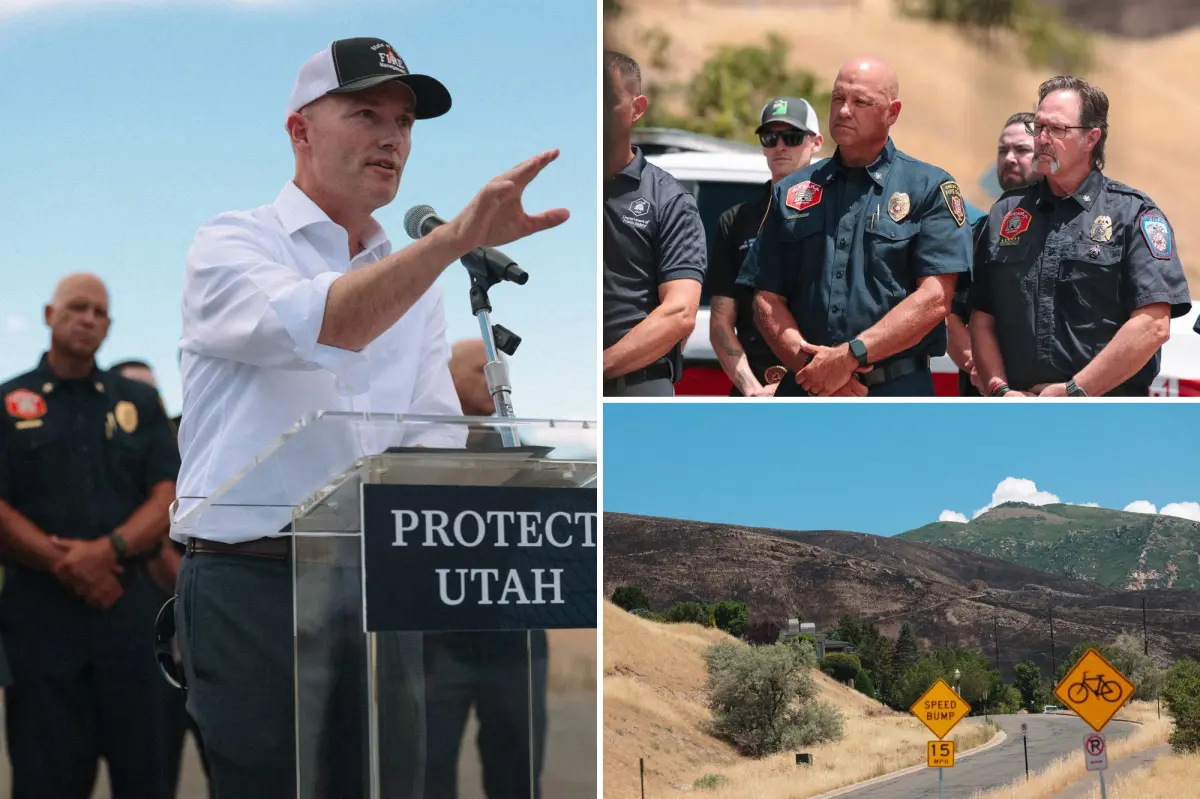
July in Utah has long been defined by an evocative, sensory symphony: the mouthwatering scent of backyard barbecues, the collective laughter of multigenerational families gathered on manicured lawns, and the thunderous, colorful crackle of fireworks painting brilliant, brief masterpieces across the dark mountain canopy. These summer displays are vastly more than simple entertainment; they represent a deeply personal, cherished tradition through which Utahns connect, celebrate, and honor their hard-won heritage in the American West. Yet, as the nation moves ever closer to its historic milestones, a quiet, invisible, and terrifying crisis has cast a long, suffocating shadow over these beloved festive preparations. Recognizing the imminent, catastrophic peril facing his state, Utah Governor Spencer Cox made the agonizing but necessary decision to issue a temporary, statewide restriction on fireworks for the critical window surrounding the Independence Day holiday. Citing “historic” and “extraordinary” wildfire conditions that have transformed the state’s picturesque backdrops into a vulnerable tinderbox, the Republican leader stepped directly into a complex cultural minefield. He chose the physical preservation of human lives, local businesses, and wild ecosystems over the uninterrupted continuation of pyrotechnic rituals. This bold regulatory intervention, authorized through a formal executive order declaring a state of emergency, temporarily bypassed standard state statutes to empower forestry officials. In doing so, it forced a profound, collective reckoning across the state’s tight-knit communities. For average citizens, this unprecedented mandate served as a deeply sobering reminder of the fragile relationship between humanity and the natural world, prompting a vital conversation about the true meaning of civic responsibility. It challenged the entire populace to reconsider how they express their love for country and community, suggesting that real patriotism in this dry, difficult summer might not be found in the explosive flash of gunpowder, but rather in the quiet, communal commitment to keeping neighborly structures standing, intact, and safe from preventable ruin.
To truly appreciate the gravity of Governor Cox’s sweeping executive intervention, one must look closely at the staggeringly grim ecological data currently defining Utah’s climate reality. At this very moment, a jaw-dropping 94 percent of the state is locked in the suffocating, relentless grip of severe or extreme drought, a slow-moving natural disaster that has steadily drained vital mountain reservoirs, parched vital agricultural lands, and sucked virtually every last molecule of moisture from the expansive, golden valleys and densely forested mountain slopes. The historical statistics from the current fire season paint an incredibly alarming, urgent picture: even before the highest-risk late-summer months had fully arrived, local emergency crews had already battled a staggering 354 distinct wildfires across the state. These fast-moving blazes have mercilessly scorched nearly 142,000 acres of once-vibrant public and private lands, leaving behind a heavily scarred, blackened landscape of ash, soot, and ecological devastation. Yet, perhaps the most agonizing and frustrating aspect of this ongoing environmental crisis is the deeply human element involved; official state analysis reveals that more than 75 percent of these highly destructive wildfires were entirely preventable, sparked not by dry lightning strikes or erratic natural phenomena, but rather by human negligence, recreational carelessness, or simple ignorance. Every single ignored warning, poorly extinguished campfire, or errant spark represents a potential catastrophe that places brave first responders in harm’s way and threatens to erase entire residential neighborhoods from the map in a matter of mere minutes. This incredibly high percentage of human-caused ignitions underscores a profound structural vulnerability, demonstrating that while the prolonged drought provides the dry, deadly fuel, it is ultimately human behavior that acts as the destructive catalyst. Against this terrifying backdrop of parched soil, skeletal scrub oak, and soaring summer temperatures, continuing with unrestricted fireworks during the hottest week of July would have been a gamble of catastrophic proportions for the Beehive State.
The executive order signed by Governor Cox acts as a powerful legal and administrative shield, temporarily suspending specific provisions of state statutory law in order to grant Utah State Forester Jamie Barnes the primary luxury to prohibit fireworks within municipal boundaries between the critical holiday dates of July 2 and July 5. Historically, local control and individual liberty have been fiercely protected and defended within Utah’s political landscape, meaning that statewide mandates which override municipal authority are frequently met with significant resistance and public skepticism. Recognizing this deep-seated, systemic desire for local autonomy, the governor’s mandate was designed not as a simple, unilateral iron curtain, but rather as a highly structured, cooperative compromise intended to honor the unique conditions of individual communities. Under the flexible parameters of this emergency declaration, local municipal leaders—working in direct, daily coordination with their experienced fire chiefs—are granted the crucial authority to designate specific, well-irrigated, and controlled “safe areas” where residents can still gather to light off personal fireworks safely. This administrative compromise effectively shifts the burden of responsibility to the local officials who understand their specific terrains, wind patterns, and community resources best. However, the system contains a strict, built-in fail-safe: if a town’s leadership chooses not to proactively establish these localized zones, or if the local fire chief determines that the surrounding wildfire risk is simply too extreme to justify any pyrotechnical activity, the state forester’s blanket ban remains in full, uncompromising effect. This collaborative framework thoughtfully respects the immense geographic diversity of the state, realizing that a heavily wooded mountain valley demands vastly different safety protocols than a desert development or a concrete-dense suburban park. By sharing this heavy decision-making burden, the state successfully transforms a potentially polarizing executive directive into a cooperative, localized mission aimed at ensuring survival without completely stripping away community joy.
The true emotional weight of this unprecedented executive decision is perhaps best understood through the weary, anxious voices of the brave men and women who stand on the front lines of Utah’s wildland fire suppression efforts. In his candid public statements following the announcement, Governor Cox made no effort to hide how incredibly difficult this decision was for him both personally and politically, freely acknowledging that Utahns view backyard pyrotechnics as an essential, beautiful staple of their annual summer celebrations. “Nothing about this decision was easy,” Cox wrote with characteristic, quiet sincerity, before explaining that this summer is radically, terrifyingly different from any season the state has faced in recent history. He passed along the deeply unsettling warnings of rescue crews, noting that the state is currently witnessing fire behavior so aggressive and unpredictable that even the most seasoned, battle-hardened wildland firefighters admit they have never witnessed anything like it in their cumulative decades of service. State Forester Jamie Barnes echoed these grim assessments, issuing a stark warning that the combination of multi-year drought, critically parched mountain brush, and erratic mountain winds is causing modern blazes to spread with explosive, uncontrollable speed. These blazes are behaving in chaotic, dangerous ways that completely defy historical mathematical models, turning routine containment operations into life-threatening battles in a matter of heartbeats. In a poignant, humanizing message shared across social media networks, Governor Cox stripped away all dry, corporate government phrasing to deliver a simple, urgent plea directly from his heart: “Our goal is to make sure our neighborhoods and communities are still standing on July 5.” This raw, emotional framing of the issue reminds Utahns that these temporary restrictions are not designed to punish them, but rather to ensure that their families and homes survive to tell the tale.
To ensure that these life-saving restrictions are taken seriously across every corner of the state, Utah officials are pairing their educational appeals with a robust, highly visible enforcement strategy that emphasizes real, personal accountability. The Utah Department of Public Safety is proactively ramping up law enforcement patrols, deploying state troopers, county deputies, and forestry officers to high-risk areas, wilderness boundaries, and community fringes where illegal firework activities are most likely to occur. Authorities have made it abundantly clear that anyone responsible for sparking an illegal wildfire will face swift, severe consequences that extend far beyond a simple administrative ticket. In Utah, causing a wildfire through reckless or negligent behavior—such as igniting prohibited pyrotechnics in restricted zones during a declared state of emergency—carries devastating civil and criminal penalties. Violators can face substantial fines, potential jail time, and the terrifying prospect of being held civilly liable for the astronomical financial costs associated with suppressing the resulting fire, a bill that can easily reach into hundreds of thousands of dollars. Yet, while the threat of legal prosecution and financial ruin serves as a highly powerful deterrent, state leaders are placing their ultimate trust in the shared civic pride and neighborly love of the Utah populace. Emergency management agencies are actively urging residents to become vigilant partners in their own protection by checking local municipal restriction maps, self-registering for county emergency notification alerts, and promptly reporting suspicious or reckless pyrotechnic behavior to non-emergency dispatchers. This focus on community vigilance is not designed to foster a culture of division, but rather to cultivate a resilient network of mutual defense where every citizen acts as a custodian of their neighbor’s safety, recognizing that in a season of dry winds and parched earth, vigilance is the ultimate shield.
As the intense summer heat of July continues to build across the western landscape, state leaders and meteorologists are already looking past the immediate horizon of the Independence Day weekend toward another deeply significant monument on the Utah cultural calendar: Pioneer Day. Celebrated annually with immense pride on July 24th, Pioneer Day commemorates the historic 1847 entry of Brigham Young and the early Mormon pioneers into the Salt Lake Valley, a milestone that is arguably celebrated across the state with even greater local fervor, massive parades, and widespread neighborhood block parties than the Fourth of July itself. Because of the profound cultural weight and historical significance of this late-July holiday, state officials view the current Independence Day restrictions as a crucial, highly informative trial run. The Utah Department of Public Safety, alongside wildland forestry experts and climatologists, plan to meticulously re-evaluate the shifting wildfire threat levels immediately following the Fourth of July weekend to determine if identical, sweeping firework restrictions will be strictly necessary for the vital Pioneer Day holiday window stretching from July 22 to July 25. This long-term, step-by-step planning demonstrates a highly mature, adaptive approach to environmental governance, recognizing that dangerous climate conditions do not respect cultural calendars, historical sentiments, or beloved public holidays. Ultimately, the lessons learned and the public cooperation demonstrated during the early weeks of July will set a vital, enduring precedent for the remainder of a grueling, unpredictable summer fire season. By asking citizens to temporarily set aside their traditional matches and sparklers, Governor Cox is inviting all Utahns to write a new, historic chapter of community resilience—one defined not by the fleeting, explosive noise of fireworks, but by a quiet, powerful display of civic stewardship, environmental defense, and deep, abiding respect for the beautiful but fragile desert landscape they call home.