



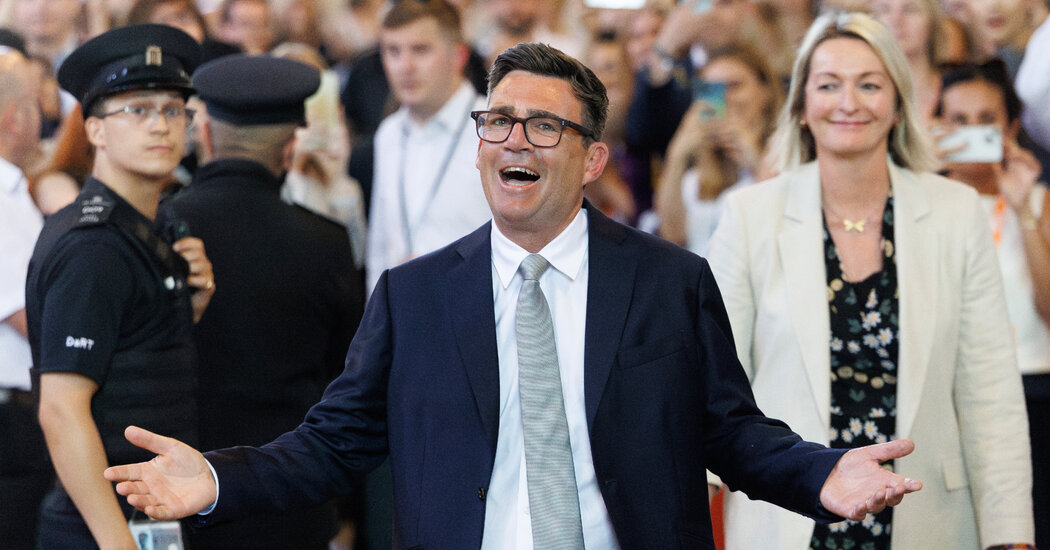
When Andy Burnham swept into the halls of Parliament on Monday, the atmosphere in Westminster shifted with a sudden, electric surge of hope that felt almost foreign to a political establishment battered by years of crisis. To his fatigued Labour colleagues, who have watched their party navigate a relentless cycle of electoral volatility and ideological gridlock, Burnham’s arrival carried the dramatic weight of a savior arriving on a white steed to rescue a kingdom from the brink of collapse. The physical contrast between his cinematic entrance and the grim, administrative grayness that defined his predecessor, Keir Starmer, was palpable; Burnham immediately broke the stiff, traditional decorum of the chamber by hoisting his phone to capture a sprawling selfie with hundreds of beaming, newly elected MPs crowding into the frame behind him. This single, shared moment of warmth and digital intimacy was more than just a public relations triumph; it was a collective sigh of relief from a political family desperate to believe that real, transformative change is still possible. Following a swift succession of endorsements after his potential rivals gracefully stepped aside to prevent a divisive internal war, Burnham’s transition from the beloved, championing “King of the North” as Mayor of Greater Manchester to the undisputed Prime Minister apparent has occurred with breathtaking speed. Yet, even as he stands on the precipice of supreme political power with the adoration of his party acting as a tailwind, he is acutely aware that the theatrical glory of his arrival will quickly dissolve into the cold, unyielding reality of governing a nation that has grown deeply cynical, exhausted, and structurally fractured.
Behind the bright smiles and the congratulatory embraces in the legislative chamber lies a landscape of economic ruin and social neglect that has already claimed the careers of six prime ministers in a single, turbulent decade. This grueling inheritance is framed by a poetic and painful irony, as Starmer’s sudden resignation occurred on the eve of the ten-year anniversary of the historic 2016 Brexit referendum—a watershed moment that fractured Britain’s social fabric and initiated a decade of economic isolation from which the country has never truly recovered. For everyday citizens living in communities like Makerfield, a traditional northern industrial heartland that helped propel Burnham to national prominence, the academic debates of Westminster feel entirely detached from the daily struggle to survive. People like Paul Kirkwood, a retired operations manager whose life is defined by a lifetime of hard work, express a profound and aching sense of betrayal as they watch their taxes rise while local libraries close, roads crumble, and hospitals struggle to provide basic care. The economic sluggishness that has paralyzed the United Kingdom under Starmer’s brief, agonizing tenure has left millions of ordinary Britons feeling that the implicit social contract—the promise that hard work will yield a stable, dignified life—has been utterly broken. Burnham does not merely inherit a set of difficult policy files; he inherits a national psyche wounded by persistent inflation, declining real wages, and a pervasive, quiet despair that has left citizens wondering if any leader, no matter how charismatic, can truly fix what has been broken.
Perhaps the most immediate and dangerous crucible Burnham must face is the paralyzing dilemma of national defense and global security in an era of unprecedented international instability. Under the previous administration, Starmer sought to project strength by committing to a dramatic increase in Britain’s military spending, a goal made even more urgent by the looming threat of an isolationist United States under Donald Trump, which threatens to withdraw its security umbrella from Europe. Yet, in a glaring demonstration of the administrative paralysis that doomed his premiership, Starmer spent over a year failing to produce a concrete plan detailing how the government would actually fund this massive military buildup without further decimating the country’s social safety net. This policy gridlock culminated in the explosive, high-profile resignation of Defense Minister John Healey, who publicly accused Starmer of cowardice for refusing to make the tough decisions required to protect the realm, choosing instead to protect his own political survival. As Burnham steps into this leadership vacuum, he is trapped in a devastating zero-sum calculation: he must either tell an already impoverished public that they must endure even steeper cuts to healthcare and social services to pay for missiles and warships, or he must risk leaving the nation vulnerable in a dangerous world, alienating the military establishment and fracturing his own cabinet. This is a choice devoid of political mercy or easy compromises, illustrating how the idealistic promises of a campaign are instantly crushed when forced to confront the harsh, mathematical realities of global statecraft.
The financial straightjacket limiting Burnham’s freedom of movement is made even tighter by a mountain of national debt that has swelled to historic proportions following the global financial crisis, the public health emergency of the pandemic, and the economic shocks of the war in Ukraine. In a desperate bid to calm jumpy international bond markets and avoid the catastrophic fiscal meltdowns that ruined previous administrations, Starmer and his shadow chancellor, Rachel Reeves, bound themselves to extraordinarily strict, self-imposed fiscal rules that effectively outlawed any major public investments. This rigid, defensive posture turned Starmer’s government into an administrator of managed decline rather than an agent of progress, a tragedy best illustrated when he attempted to save five billion dollars by slashing crucial welfare benefits for the nation’s poorest families, only to retreat in humiliation after a bitter rebellion within his own party. Burnham enters Downing Street without the reputation for weak-willed backsliding that plagued Starmer, but he is still bound by the same ruthless economic laws that offer no simple escape routes or financial magic tricks. Humanizing this fiscal crisis means recognizing that behind every spreadsheet of government spending are real human beings—impoverished children, struggling families, and neglected pensioners—whose daily survival depends on a government that is currently too broke to help them without triggering a crisis in the financial markets.
This pervasive economic anxiety has turned the volatile issue of immigration into a highly charged cultural battleground, fueling a dangerous rise in right-wing populism that threatens to tear the traditional political system apart. Nigel Farage’s insurgent Reform UK party has successfully capitalized on the anger of working-class voters by framing migration not just as a labor issue, but as an existential threat to British identity, resources, and public services. In a reactive attempt to disarm this populist threat, Starmer adopted an increasingly aggressive, militaristic approach to immigration, dramatically accelerating deportations and pushing forward draconian measures to seal Britain’s borders, a strategy that deeply horrified human rights advocates without ever satisfying the demands of nationalist voters. Burnham, whose political identity has long been anchored in a compassionate, community-focused brand of social justice, now finds himself walking a razor-sharp tightrope on an issue that has destroyed many of his predecessors. While he has publicly championed policies that would allow asylum seekers and migrants to integrate into local communities and find employment more rapidly, he has simultaneously felt compelled to support the previous administration’s tough border security rhetoric, creating a delicate, agonizing compromise that risks satisfying no one while exposing him to relentless attacks from both the humanitarian left and the populist right.
Ultimately, Burnham’s survival as Britain’s seventh prime minister in a decade will depend on his ability to navigate a highly volatile relationship with a foreign leader who barely knows he exists: United States President Donald Trump. Starmer’s previous attempts to manage the American president alternated between submissive, high-stakes flattery—such as organizing an elaborate state dinner with the King—and public diplomatic clashes that left the United Kingdom isolated, mocked, and marginalized on the global stage. Burnham possesses virtually no foreign policy credentials, having spent his career focusing on local housing initiatives, regional transit infrastructure, and the daily concerns of ordinary northern families, meaning he must learn the high-stakes art of international diplomacy under the most intense global scrutiny. Yet, where Starmer failed as an awkward, purely administrative politician who struggled to articulate a compelling vision, political scientists and commentators emphasize that Burnham’s greatest strength is his rare talent for authentic human communication and narrative storytelling. He possesses an innate ability to translate complex, painful national dilemmas into simple, empathetic language that makes ordinary people feel heard and valued in a way no leader has managed since the Brexit vote. In a country that has grown sour, exhausted, and politically alienated, Burnham’s ultimate task is not merely to balance a broken budget or patrol a contested border; it is to use his unique voice to rebuild a fractured nation’s shattered self-belief, proving that empathy and authentic connection can still triumph over division, panic, and decay.