


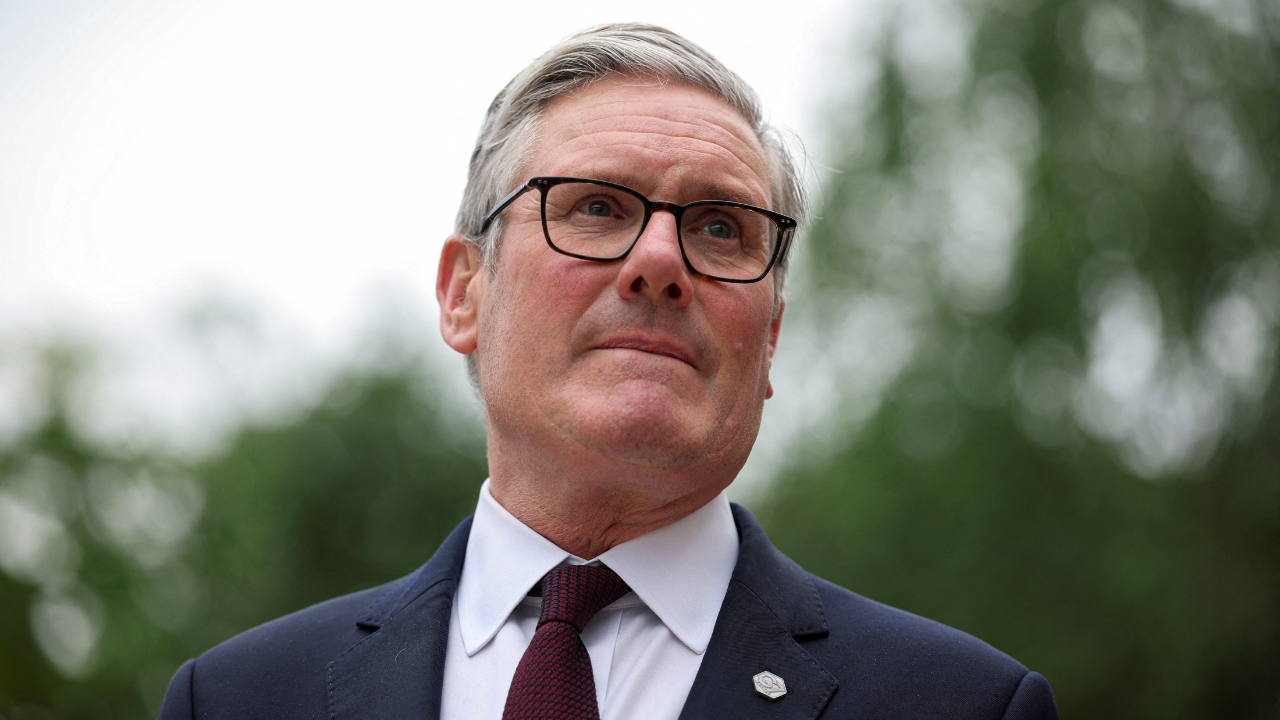
The rolling hills of Buckinghamshire, home to the British Prime Minister’s historic country retreat of Chequers, have long served as the backdrop for some of the most critical and emotionally fraught turning points in modern political history. This weekend, however, the sixteenth-century manor house feels less like a tranquil sanctuary and more like a high-stakes pressure cooker, as Keir Starmer is reportedly huddled with his wife, Victoria, contemplating the sudden and premature end of his premiership. According to a dramatic report published by Britain’s Observer newspaper, Starmer is actively deliberating his future in Downing Street and could announce a definitive timetable for his resignation as early as Monday. For a leader who only assumed the mantle of Prime Minister in 2024, the speed at which his political capital has evaporated is nothing short of breathtaking, painting a vivid picture of the brutal, unforgiving nature of modern Westminster politics. What was supposed to be a quiet weekend of domestic respite has instead transformed into a somber family summit, with senior Labour Party figures openly whispering that a public statement addressing his departure is imminent. Outwardly, Downing Street is trying to project an aura of business-as-usual resilience, with official government sources insisting to outlets like Reuters that Starmer remains deeply focused on the daily business of governing and has no intention of abandoning his post. Yet, behind the heavy doors of Chequers, the reality appears far more fragile, as the sheer weight of a relentless mutiny from within his own party ranks forces the Prime Minister to weigh the personal and political cost of attempting to cling to power versus orchestrating a dignified, self-directed exit before his colleagues make the decision for him. It is a lonely, highly personal moment for Starmer, who must reconcile his lifelong ambition with the cold, hard reality of his current political isolation.
The immediate catalyst for this weekend’s existential crisis is a perfect storm of internal rebellion and strategic maneuvering by his political rivals, most notably the charismatic Metro Mayor of Greater Manchester, Andy Burnham. Burnham’s dramatic victory in a recent parliamentary by-election has instantly altered the chemistry of Westminster, positioning the popular northern figure as the undisputed leader-in-waiting and giving Starmer’s detractors a viable, high-profile alternative to rally behind. The threat is not merely theoretical; a mutinous Labour Member of Parliament went so far as to put the entire Cabinet “on notice,” explicitly threatening to trigger a formal leadership challenge against Starmer by Monday if he does not voluntarily set out a timeline for his departure. This threat represents a stunning escalation from the quiet grumbling of previous months, transforming a generalized sense of dissatisfaction into an organized, ticking-clock ultimatum. Inside the halls of Parliament, the atmosphere is described by insiders as electric and deeply anxious, with more than one hundred Labour lawmakers having already publicly or privately urged Starmer to step aside to save the party’s electoral prospects. The resignation of several key parliamentary private secretaries and aides in protest has further gutted the Prime Minister’s operational support network, leaving him increasingly isolated in a hostile political landscape. As Starmer publicly attempts to congratulate Burnham on his victory, spinning the win on social media as a triumph of “hope and optimism over division and hate,” the hollow nature of the gesture is obvious to everyone in Westminster; the very man he is congratulating represents the greatest threat to his political survival, and the countdown to Monday has forced the Prime Minister into a corner from which there may be no easy escape.
To understand how Starmer arrived at this desperate juncture, one must look beyond the immediate palace coup to the deep-seated socioeconomic misery and self-inflicted ethical wounds that have plagued his administration since its inception. The British public, already exhausted by years of post-Brexit volatility, public service decay, and pandemic-era scandals, had hoped Starmer’s 2024 victory would usher in an era of stable, competent, and clean governance. Instead, his tenure has been marked by a grinding, persistent cost-of-living crisis that has left millions of ordinary citizens struggling to pay their energy bills and put food on the table, while national economic growth remains stubbornly stagnant. Against this backdrop of widespread public hardship, Starmer’s personal popularity plummeted following revelations that he had accepted thousands of pounds worth of luxury clothing, designer eyeglasses, and high-profile concert tickets from wealthy aristocratic donors, most notably medieval-historian-turned-peer Lord Alli. This “freebie” scandal deeply damaged Starmer’s carefully cultivated image as a self-made, rules-based prosecutor of high integrity, making him appear hopelessly out of touch with the daily struggles of everyday Britons. Compounding this irritation was a fierce public backlash over a highly controversial, Epstein-linked advisory appointment, which sparked a furious outcry from both opposition parties and ordinary citizens who felt the administration was failing its own moral standards. Together, these economic failures and ethical lapses created a toxic narrative of hypocrisy and incompetence, convincing a growing segment of the Labour Party that Starmer had become an electoral liability who was simply incapable of connecting with the working-class voters he needed to retain.
This rapid decline is particularly shocking given the historic journey Starmer took to reach the pinnacle of British power, a path that once looked like a masterclass in political pragmatism. Taking the reins of a shattered Labour Party in 2020 following its worst electoral defeat in modern history under Jeremy Corbyn, Starmer spent four grueling years systematically purging the party’s hard-left faction, modernizing its policy platform, and presenting a reassuringly moderate face to a skeptical electorate. His efforts culminated in the landslide general election victory of 2024, which brought Labour back to power after fourteen years in the political wilderness and seemed to cement Starmer’s legacy as a transformational political savior. However, the foundations of that victory were far shallower than they initially appeared, built more on a desperate public desire to punish the incumbent Conservatives than on any genuine enthusiasm for Starmer’s cautious, technocratic, and often uninspiring vision. The fragility of his mandate became painfully clear during recent local elections, where Labour suffered devastating defeats, bleeding hundreds of council seats across England to rival parties, surrendering historically secure territory in Wales, and falling catastrophically behind in Scotland. These bleeding margins sent shockwaves through the parliamentary party, signaling to backbenchers that their own seats would be in mortal danger at the next general election if Starmer remained at the helm. The realization that their leader’s electoral magic had vanished overnight transformed the initial skepticism of Labour MPs into an urgent, self-preservationist panic, laying the groundwork for the coordinated rebellion that is now reaching its crescendo.
Even as the walls close in, Starmer and his remaining loyalists are attempting to project a posture of defiance, arguing that the nation cannot afford a period of paralyzing leadership chaos at a time of supreme global instability. Confronted by reporters about Burnham’s obvious leadership ambitions and the growing chorus of resignation calls, Starmer has repeatedly insisted that he will not walk away from the mandate given to him by the British electorate, asserting his determination to steer the country through its current turbulent waters. This domestic defiance is mirrored on the international stage, where Starmer has spent significant energy trying to walk a delicate geopolitical tightrope, particularly in navigating the UK’s vital but highly sensitive relationship with a resurrected Donald Trump administration in the United States. Loyalists argue that removing a Prime Minister now would severely damage Britain’s international standing, project weakness to foreign adversaries, and disrupt critical diplomatic and security strategies at a moment when Europe faces profound security challenges. However, this argument of “national stability” is increasingly ringing hollow to a domestic audience that sees only stagnation at home and a leader who is too distracted by internal party warfare to effectively govern. The political reality is that a leader’s authority on the world stage is directly tied to their strength at home; as foreign leaders observe the open revolt within the Labour ranks and the humiliating spectacle of a Prime Minister fighting for his political life over a weekend at Chequers, Starmer’s ability to speak authoritatively for Great Britain on the global arena is being rapidly and irreversibly compromised.
Ultimately, the tragedy of Keir Starmer’s current predicament lies in the profound human cost of high office, where the line between a triumphant career capstone and a humiliating public rejection is devastatingly thin. As he sits in the quiet library of Chequers, staring out at the manicured lawns that have hosted centuries of prime ministerial triumphs and heartbreaks, Starmer must confront the brutal truth that in modern politics, loyalty is a highly transactional currency. The very colleagues who cheered his historic victory in 2024 are now the ones sharpening their knives, convinced that his departure is the only way to save their own political futures. For Starmer, a man who prides himself on his methodical, analytical, and deeply disciplined approach to problem-solving, this is a crisis that cannot be resolved through policy papers or prosecutorial cross-examinations; it is a raw, emotional test of survival. Whether he chooses to fight on through Monday and risk a chaotic, public humiliation that could tear his party apart, or decides to negotiate a graceful exit that preserves his dignity and a semblance of his legacy, the illusion of his absolute control has been permanently shattered. The coming hours will not only determine the future of Keir Starmer’s premiership but will also write the next chapter of a restless, deeply divided Britain that is still desperately searching for a leader who can guide it out of the shadows of economic hardship and political disillusionment. As the sun sets on this fateful weekend, the nation watches and waits, knowing that the decision made within those historic walls will reshape the political landscape for years to come.