


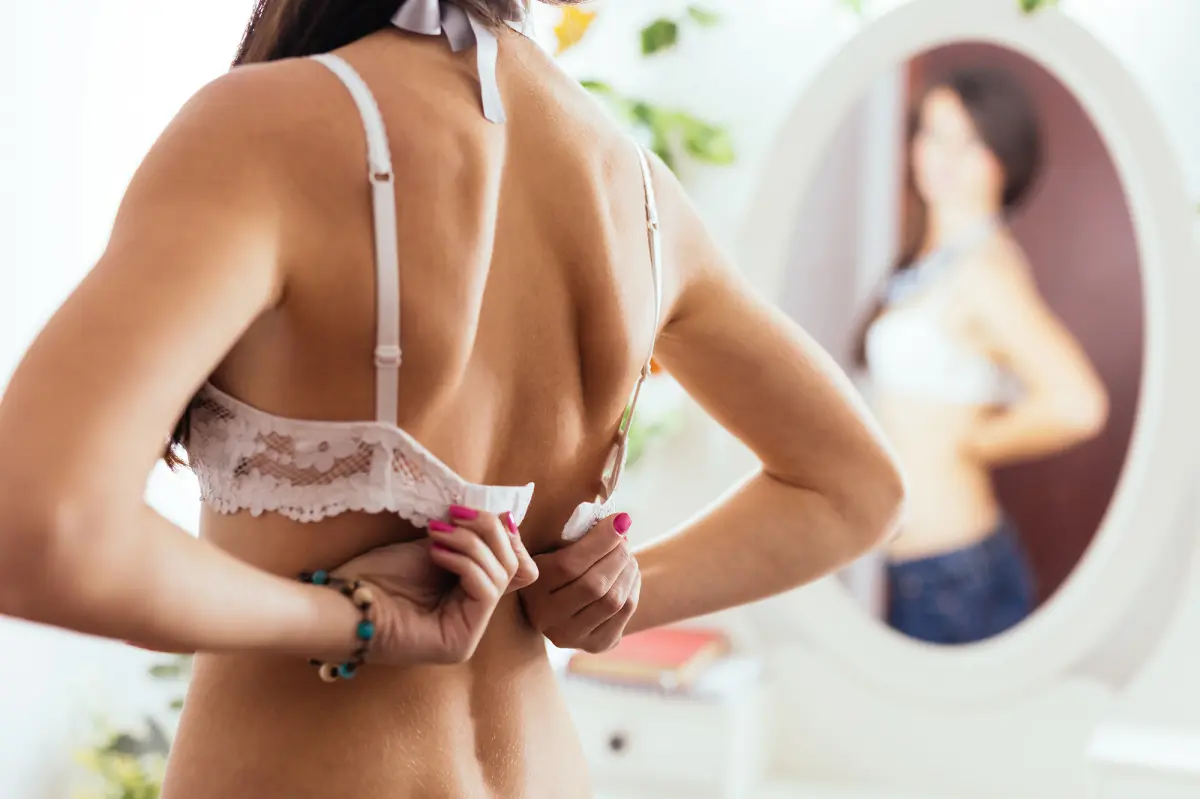
For nearly a decade, the global fashion landscape was governed by a quiet, almost dogmatic devotion to the seamless, wireless bralette. This was a direct reaction to the highly structured, often restrictive fashion of the blockbusting early 2000s, championing an ultra-minimalist, comfort-first aesthetic that valued invisible undergarments, natural shapes, and flat silhouettes above all else. Back in 2016, professional style bibles like British Vogue famously went so far as to declare that cleavage was officially “dead,” a proclamation that seemed to seal the final fate of heavily padded, structured underwires for a generation of consumers who preferred to feel as though they were wearing nothing at all. Yet, as with all things in the highly cyclical and rebellious world of fashion, the pendulum has swung back with spectacular, unapologetic force. Today, Gen Z has officially said a definitive goodbye to the flat, understated look of the late 2010s, ushering in a massive, global resurgence of the push-up bra. This shift is not merely a minor stylistic tweak but a full-scale cultural rebellion against the beige, sexless uniformity of the pandemic era. Driven by an intense international obsession with early-2000s Y2K nostalgia, younger consumers are actively seeking out structured, curve-enhancing undergarments that demand to be seen. The rise of hyper-femininity as a dominant internet subculture has transformed the humble push-up bra from a dusty, outdated relic of the past into a vital, modern instrument of self-expression. By rejecting the quiet-comfort philosophy of their predecessors, young women around the world are rewriting the rules of daily dressing, proving that the desire to highlight, celebrate, and structurally elevate one’s physical form is stronger than ever. This dramatic turnaround highlights how quickly cultural priorities can pivot when a new generation decides to reclaim control over their own wardrobes, trading the safe and sensible for the bold, dramatic, and beautifully expressive.
This dramatic resurgence did not happen in a vacuum; it has been fueled by a series of high-profile, highly viral pop culture moments that have placed the push-up bra front and center on the global stage. At the absolute epicenter of this shift are music festivals and international runways, serving as the ultimate trend incubators for a highly visible, maximalist aesthetic. During recent iterations of the Coachella Valley Music and Arts Festival, the world watched as influential young icons proudly integrated highly structured, padded lingerie directly into their headline performances. Multi-hyphenate star Addison Rae turned heads in a high-gloss, ultra-reflective vinyl push-up bra designed by luxury brand Agent Provocateur, while British songstress PinkPantheress took the stage in a nostalgic, tartan-patterned iteration trimmed with delicate blue lace. Meanwhile, pop princess Olivia Rodrigo opted for a raw, punk-infused look, performing in a pale pink leather padded bra that perfectly bridged the gap between sweet and subversive. Beyond the festival grounds, the high-fashion world has enthusiastically validated this return to overt sex appeal and structural drama. Gucci’s Fall/Winter 2026 runway show in Milan was a masterclass in this revived aesthetic, showcasing slinky mini dresses, form-fitting silhouettes, and heavily styled push-up detailing that felt like a direct homage to the glamorous, high-octane fashion of the early aughts. However, the movement is not just limited to celebrity performances and elite runway models. The sensory overload of modern television has also played an instrumental role, particularly the massive hit teen drama series Off Campus. The show’s costume design has triggered a colossal storm of online excitement, specifically centering on the intimate apparel worn by characters Hannah and Allie. Social media platforms have been flooded with desperate inquiries from viewers hunting down the exact, cleavage-boosting styles featured on screen, with the virtual consensus of “I need Hannah’s bras” transforming a simple television wardrobe into a major retail phenomenon.
The cultural momentum of the push-up revival is actively reshaping the global intimate apparel market, a highly lucrative industry valued at an estimated $40 billion annually. Major players and entrepreneurial celebrities are quickly capitalizing on this structural shift, realizing that modern consumers are hungry for glamour, support, and drama in their top drawers. Leading this charge is acclaimed actress Sydney Sweeney, who has become a prominent poster child for the modern push-up movement. Her newly launched lingerie line, SYRN, places heavy emphasis on structural support, dramatic padding, and bold, curve-highlighting silhouettes, successfully bridging the gap between functional comfort and unapologetic allure. Simultaneously, the industry’s ultimate titan, Victoria’s Secret, has staged a grand comeback, reviving its iconic fashion show after a six-year hiatus. This return marks a significant pivot for the brand, which had previously attempted to distance itself from its legacy of overt sexuality in favor of a more sanitized, minimalist stance. By leaning back into theatrical glamour, wings, and high-impact cleavage, Victoria’s Secret is signaling to the global marketplace that the era of self-effacing minimalism is officially over. For smaller, independent brands and legacy retailers alike, this represents a golden opportunity. The commercial viability of the push-up bra lies in its ability to offer something that wireless bralettes simply cannot: a highly visible, structural transformation. In a retail climate that often feels saturated with identical beige coordinates, the structured bra offers drama, shape, and a sense of occasion. As a result, supply chains are rapidly pivoting away from sheer, unlined mesh toward molded cups, underwires, and creative gel padding, proving that the financial landscape of fashion is deeply intertwined with the shifting desires of the human body.
Down Under, Australian underwear brands are feeling the ripple waves of this global shift, adapting to a retail market where consumer preferences have rapidly evolved. For years, domestic retailers prioritized low-impact, wireless designs suitable for the relaxed, sun-drenched Australian lifestyle. However, local brands have recently reported a surprising and highly profitable rebound in padded bra sales. Georgia Gazal, the founder of the popular Australian underwear brand First Thing, launched her business in 2022 with a firm commitment to prioritizing everyday comfort. Yet, she soon realized that the local definition of comfort was undergoing a radical evolution. In response to this shifting demand, First Thing introduced its innovative AirShape collection, featuring a modern, padded design that managed to combine the brand’s signature comfort with a flattering, structured lift. The collection became an instant phenomenon, marking the most successful product launch in the company’s history and currently maintaining a spectacular sales rate of one bra sold every thirty minutes. High-profile Australian media personalities, including Abbie Chatfield and Steph Claire Smith, have been spotted out and about sporting pieces from the collection, further cementing its status as a must-have wardrobe staple. As Gazal notes, there is a fresh, vibrant energy defining the way women approach undergarments today. After years of embracing flat, invisible minimalism, younger women are rediscovering the pure joy of getting dressed, starting from the very first layer. This newfound enthusiasm extends beyond private wear; a key element of the modern push-up trend is the integration of lingerie into public-facing outfits. Bold colors, intricate lace accents, and structured satin cups are no longer hidden beneath baggy t-shirts but are styled deliberately as outer layers, allowing women to celebrate their femininity openly and joyfully.
To truly understand the significance of this revival, it is essential to trace the complex social history of the push-up bra, which represents a complete departure from its original 1990s heyday. During that era, the push-up was popularized by massive, highly provocative marketing campaigns, most notably Eva Herzigová’s iconic 1994 “Hello Boys” billboard for Wonderbra. That campaign, which showed a model gazing down at her own cleavage, was widely criticized for catering primarily to the male gaze and reducing female empowerment to sexual availability. By the mid-2010s, a strong cultural backlash had taken hold. Outlets like The Guardian reported that the “hoicked-up presentation of bosoms” had vanished from high-fashion circles, replaced by the natural, unbothered look of the 1970s. Critics at the time argued that visible cleavage functioned as a barrier to being taken seriously in professional settings, mockingly comparing breasts piled close together to “cream buns” that made an overly aggressive, unsubtle statement. This historical perspective makes the current 2026 revival all the more remarkable, as it represents a complete subversion of those outdated narratives. Today’s push-up bra is not about seeking external validation or presenting oneself as an object for male consumption. Instead, the modern consumer is reclaiming the silhouette under the banner of personal autonomy and self-indulgence. The rigid social binary that once forced women to choose between comfort and sexiness, or between intellectual credibility and overt femininity, has been thoroughly dismantled. Women are choosing to wear padded, structured bras simply because it makes them feel powerful, confident, and physically grounded in their own bodies, effectively transforming what was once a symbol of patriarchal retail into a potent tool of self-expression.
Ultimately, the return of the push-up bra is a vivid reminder that fashion is never just about fabric and form; it is a direct reflection of our collective psychological state and societal progress. As Sydney-based celebrity and fashion stylist Tamarra McNaught, founder of TITO STYLE, highlights, the deep-seated motivation driving this trend is not merely a superficial desire for cleavage, but rather a profound craving for freedom. McNaught explains that today’s women are increasingly rejecting the rigid dictates of both historical patriarchies and modern corporate minimalism, opting instead for whatever garments genuinely make them feel confident and self-assured. The realization that overt femininity and true empowerment can happily coexist is a liberating breakthrough for a generation that has grown tired of being told how to dress, act, and feel. In this new era, there are no strict rules or patronizing warnings about what is deemed “appropriate” or “professional.” Whether a woman chooses a completely flat, wire-free bralette for absolute ease, or a heavily padded, vibrant push-up bra to make a bold personal statement, the choice belongs entirely to her. This shift marks the death of the monolithic, one-size-fits-all fashion trend, replaced instead by a diverse landscape of styling choices where absolute comfort and high-octane glamour can comfortably occupy the same closet. By embracing the structured, dramatic lift of the push-up, modern women are not backsliding into the restrictive beauty standards of the past; rather, they are moving forward into a future where they hold all the power, redefining what it means to be sexy, confident, and free on their own terms.