


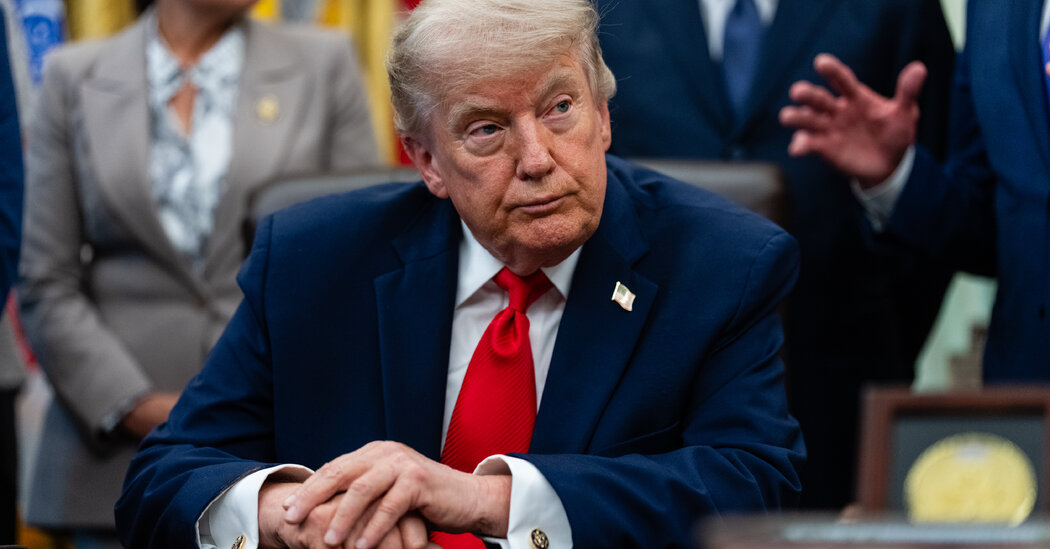
When Donald Trump touched down on French soil, he brought with him the dust and adrenaline of a highly public weekend spent ringside at a series of raw, visceral cage fights just outside the White House. This transition—from the unvarnished violence of physical combat to the manicured, manicured-lawn diplomacy of the annual Group of 7 summit—perfectly captures the frantic anxiety currently gripping America’s traditional allies. For years, European leaders have walked an intellectual tightrope when dealing with Trump, constantly forced to guess whether he will approach these gatherings as an opportunity for genuine global collaboration or simply as another public arena in which to execute a political beatdown. This year, the stakes are painfully high; the world is no longer just navigating theoretical disagreements over tariffs or treaty obligations. Instead, the backdrop is a volatile, three-month-old military conflict between joint U.S.-Israeli forces and Iran—a war that has sent shockwaves through the global economy, closed vital shipping lanes, and left European partners viewing the American president less as a protective shield and more as an unpredictable, combative antagonist who values confrontation over collective stability.
The primary source of this massive geopolitical friction is the ongoing war in the Middle East, an escalation that has deeply fractured the Western alliance and poisoned the personal relationships between Trump and his European counterparts. Although the White House recently announced a tentative agreement with Iran to reopen the critical trade artery of the Strait of Hormuz and resume diplomatic negotiations, the deep-seated resentment remains intensely palpable. Trump has spent weeks publicly berating European leaders for refusing to throw their geopolitical weight and military resources behind a war that has disrupted global markets, spiked domestic heating costs, and claimed thousands of lives. Now, on French soil, Trump is seeking to command these same allies to perform the hazardous, technical task of clearing Iranian sea mines from the reopened Strait, a request met with icy skepticism. The retaliatory atmosphere is already toxic; when German Chancellor Friedrich Merz warned that the United States was letting itself be humiliated by Iranian negotiators, Trump immediately fired back on social media, telling Merz to stay out of American matters and focus on fixing his own “broken” country, particularly its immigration policies. To prove his point, Trump swiftly ordered the withdrawal of five thousand American troops from Germany, a move followed closely by his Defense Secretary, Pete Hegseth, delivering a highly controversial D-Day speech that compared modern European migration to a hostile military invasion.
To understand why European diplomats are approaching this summit with such weariness, one must examine the long, dysfunctional history of Trump’s relationship with the G7—an elite club of the world’s most prosperous industrialized democracies that is supposed to project an image of absolute global unity. During his first term in 2018, Trump shattered diplomatic protocol by storming out of the Canadian summit early, furious over trade disagreements, while simultaneously advocating for Russia to be readmitted to the group despite its illegal annexation of Crimea. Fast forward to last year’s summit, the first of his second term, and the pattern of disruption repeated itself with alarming precision; he again demanded Russia’s return to the table, arguing it would have prevented the war in Ukraine, before abruptly leaving the summit ahead of schedule to coordinate military airstrikes against Iran alongside Israel. This chronic instability peaked during his January visit to the World Economic Forum in Davos, Switzerland, where he threatened European nations with massive, crippling trade tariffs unless they somehow facilitated the United States’ eccentric acquisition of Greenland. This relentless stream of threats and bizarre territorial demands led Canadian Prime Minister Mark Carney to openly declare that the era of relying on America as a stable foundation for global order was officially over, replaced by a permanent and historical “rupture” in Western trust.
This profound erosion of trust has sparked a quiet but monumental psychological shift among European leaders, who have transitioned from desperate appeasement to a pragmatic, sober embrace of strategic self-sufficiency. In previous years, summits were defined by a certain deference toward Washington; European presidents and prime ministers bent over backward to keep Trump engaged, fearing that any slight would result in a total abandonment of Ukraine or a devastating trade war. This year, however, the atmosphere is markedly different, characterized by a distinct loss of patience and an open rejection of American leadership regarding the war in Iran. Having watched Washington unilaterally plunge the international community into an economic crisis through its Middle Eastern campaign, European nations are actively asserting themselves as the primary financial lifelines and defense strategists for Ukraine. They are no longer waiting for orders or begging for reassurance from a White House that threatens to abandon NATO’s collective defense commitments; instead, they are preparing for a future where Europe must stand on its own feet, recognizing that the security umbrella they relied upon for three-quarters of a century may be gone for good.
This shifting dynamic is particularly visible in the awkward, tense choreography surrounding Ukrainian President Volodymyr Zelensky, who is attending the summit but is notable for not having a scheduled one-on-one meeting with his American counterpart. Instead, the looming presence of Russia dominates the subtext of the entire event, highlighted by the fact that Trump held separate, highly secretive telephone calls with both Zelensky and Russian President Vladimir Putin just hours before flying to France. This style of behind-the-scenes, bilateral maneuvering from Trump keeps the entire European continent on edge, as leaders fear the U.S. president is prepared to negotiate a sudden, transactional peace deal over their heads that could permanently compromise Ukrainian sovereignty. By keeping his allies guessing and bypassing traditional diplomatic channels, Trump continues to use uncertainty as his primary tool of statecraft, leaving European diplomats to desperately decipher his erratic signals while trying to maintain a unified front against Russian aggression without a reliable American partner at the table.
Faced with an American president who operates almost entirely on personal instinct, transactional logic, and visual presentation, European leaders have resorted to a timeless diplomatic survival strategy: utilizing grand pageantry, lavish historic symbols, and targeted personal flattery. French President Emmanuel Macron, deeply aware that Trump is often far more receptive to royal treatment than to dry policy dossiers, has meticulously designed the summit itinerary to indulge the president’s unique tastes and massive ego. Macron went so far as to push back the official start of the summit to accommodate Trump’s desire to spend his 80th birthday watching the Ultimate Fighting Championship, and he has organized a lavish, exclusive dinner for Trump at the historic Palace of Versailles under the banner of celebrating the 250th anniversary of American independence. This calculated display of high-society luxury and historical romance is a desperate attempt to disarm a volatile leader who has previously been successfully pacified by similar gestures, such as state visits with British royalty or private dinners atop the Eiffel Tower. It is a striking, somewhat tragic commentary on the state of modern global politics that the fate of Western alliances, international trade pathways, and global military stability may ultimately depend not on rigorous debate or shared democratic values, but on the grandeur of a French palace, the quality of a meal, and the strategic application of personal flattery to an aging president.