


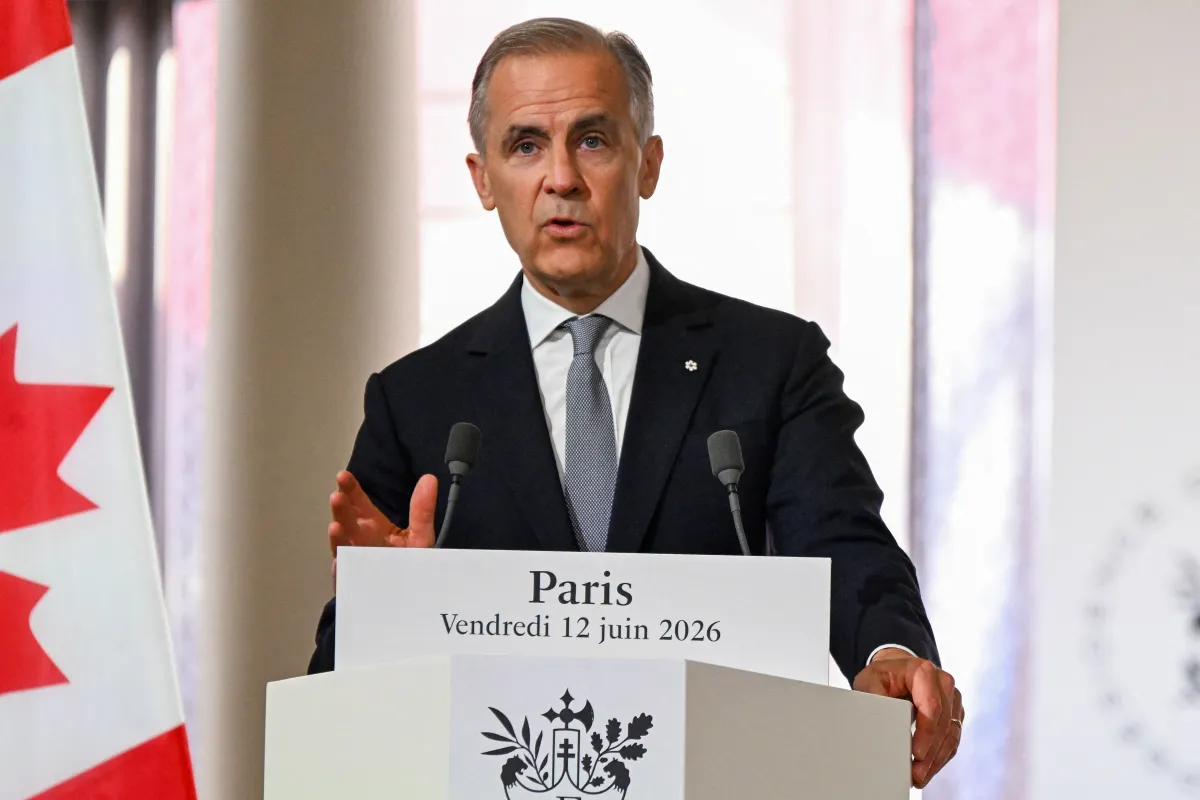
In the historic and intellectually charged atmosphere of Trinity College, Dublin, Canadian Prime Minister Mark Carney recently delivered a speech that was both a sobering wake-up call and a passionate rallying cry for a new global architecture. Standing before an audience acutely aware of shifting geopolitical tides, Carney articulated a vision where the future of international stability no longer hinges on traditional superpowers, but is instead being actively forged in Europe—with Canada acting as its primary transatlantic anchor. Describing Canada as “the most European of non-European countries,” Carney spoke of a profound “global rupture” that is rapidly dissolving the geographical and political buffers that once protected stable democracies. By framing the current geopolitical climate not just as a series of isolated diplomatic disputes but as an immediate, shared vulnerability to once-distant threats, he struck a deeply resonant chord. His words in Ireland were a clear signal that Canada is deliberately and dramatically realigning its foreign policy, choosing to anchor its economic, moral, and defense strategies to a European continent that is itself undergoing a profound historical reinvention.
This strategic pivot toward Europe comes at a time of deep anxiety regarding the reliability of the United States as a global security guarantor. For decades, the post-World War II international order relied on American military might and diplomatic leadership to maintain peace across the Atlantic. However, with the political landscape in Washington shifting under the influence of Donald Trump’s isolationist rhetoric and transactional approach to foreign alliances, that long-standing guarantee has begun to fray. Carney’s remarks, both in Dublin and during previous international forums, have quietly but sharply targeted this retreat. As the Trump administration actively seeks to reduce the American military footprint on the European continent and repeatedly berates NATO allies for failing to meet defense spending targets, Canada has chosen a completely different path. Rather than retreating behind geographic barriers or succumbing to cynical isolationism, Carney is advocating for an active, empathetic, and highly cooperative internationalism that seeks to fill the vacuum left by a retreating superpower.
Far from being mere diplomatic pleasantries, Canada’s commitment to this new axis of cooperation is backed by concrete, institutional integration. A prime example of this is Canada’s pioneering role in the European Union’s SAFE mechanism. By becoming the first non-European partner in this ambitious defense procurement initiative, Canada has effectively integrated its defense strategy with the EU’s €150 billion ($173 billion) financial instrument designed to rapidly scale up defense investment and production. This move represents a tectonic shift in how middle powers prepare for conflict and secure their sovereignty. Furthermore, in an era where resource security is synonymous with national security, Canada has forged 56 strategic partnerships spanning more than ten nations, primarily within Europe, to secure critical minerals. In a world increasingly fractured by supply chain vulnerabilities and economic coercion, these partnerships ensure that the essential building blocks of the modern economy—from semiconductors to green technologies—remain in the hands of nations that share a fundamental commitment to democracy and the rule of law.
This proactive stance is the logical continuation of a philosophical argument Carney first articulated at the World Economic Forum in Davos earlier this year. In that highly publicized address, he laid bare a harsh reality that many global leaders have been reluctant to face: the old, predictable rules-based international order is dead, and it is not coming back. Carney urged his peers not to mourn a lost past, but to seize the historic opportunity to build something entirely new, equitable, and resilient. He argued that the responsibility for constructing a “bigger, better, stronger, and more just” global framework falls squarely on the shoulders of middle powers. These nations, which lack the brute-force dominance of superpowers, are the ones with the absolute most to lose in a world divided into hostile, protectionist fortresses, yet they have the most to gain from genuine, reciprocal cooperation. By appealing to the collective strength of these nations, Carney is championing a form of humanized geopolitics where mutual respect and shared values triumph over raw power dynamics.
The scope of this reimagined partnership extends far cardiovascular and traditional battlefields; it is a holistic blueprint for a highly interconnected future. As Carney previously detailed during the European Political Community Summit in Armenia, the rebuilding of the global order from Europe will encompass the vital, everyday systems that sustain modern human life. Canada’s collaboration with Europe is expanding aggressively into digital infrastructure, clean technology, vaccine development, payment systems, space exploration, and semiconductor production. By focusing on these sectors, Carney is acknowledging that modern warfare and modern peace are waged not just with weapons, but through the resilience of a nation’s technological and societal nervous system. Safeguarding these sectors through collaborative innovations ensures that citizens in both Canada and Europe are protected from the insidious threats of economic blackouts, cyber disruptions, and health crises, making the alliance a lived reality for the average citizen rather than an abstract concept discussed in ivory towers.
As the global community looks forward, the upcoming G7 summit in Évian-les-Bains, France, represents the next critical venue where these ideas will transition from rhetoric to reality. Carney has suggested that the individual “strands” of this newly envisioned international tapestry will begin to be woven together by the world’s leading economies next week. In a world hungry for leadership that values stability, collective security, and moral clarity, the Canadian Prime Minister’s vision offers a compelling alternative to the zero-sum competition championed by populist movements. By positioning Canada as Europe’s indispensable partner, Carney is not only redefining his nation’s place on the world stage but is also offering a blueprint for how diverse democracies can stand together. Ultimately, this emerging alliance is a testament to the belief that even in a deeply divided and dangerous world, hope, unity, and a shared commitment to human progress can still pave the way for a more stable and cooperative future.