


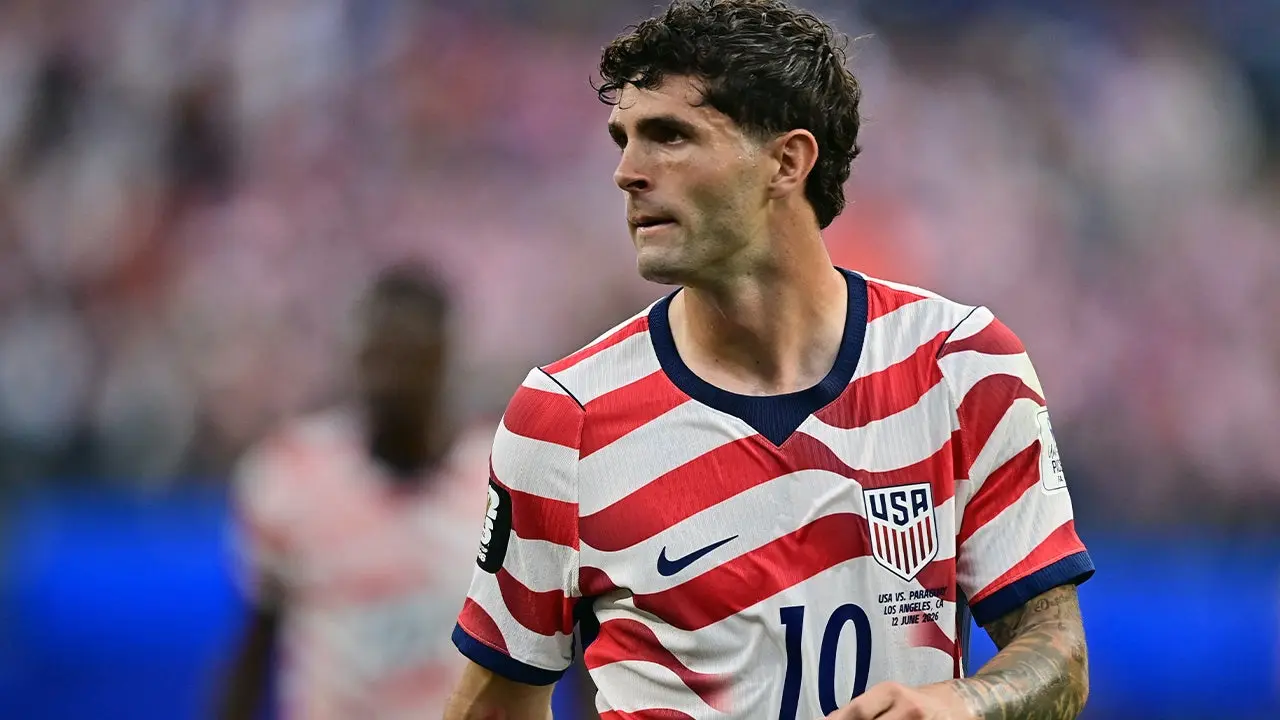
The global stage of the FIFA World Cup possesses an unparalleled ability to unite nations, spark intense emotions, and write legendary chapters in sporting history, a truth that was vividly illustrated during the sensational opening match between the United States Men’s National Team and a formidable Paraguay side. From the very moment the opening whistle blew, the energy vibrating through the stadium was nothing short of electric, setting the stage for what many passionate fans would quickly describe as a first half for the absolute ages. At the absolute center of this dazzling display of athletic prowess was Christian Pulisic, the pride of Hershey, Pennsylvania, whose brilliant rise through the ranks of global soccer has made him a household name and the undeniable talisman of American soccer. Currently showcasing his world-class talents in Europe with the iconic Italian club AC Milan, Pulisic played with the kind of fluid creativity, tactical intelligence, and fierce determination that has long defined his remarkable career. Every touch of the ball from the young winger seemed to create a promise of magic, a promise he spectacularly fulfilled when he sliced through the stubborn Paraguayan defense to deliver a breathtaking, pinpoint assist to Folarin Balogun, who clinically finished off the play to secure the United States’ second goal of the match. For those first forty-five minutes of intense play, Pulisic was not merely a player on the pitch; he was the master conductor of a magnificent symphony of attacking football. He moved with a lightness and confidence that left opposing defenders chasing shadows, filling the hearts of millions of American supporters with a profound sense of pride and optimism. It genuinely felt like the dawn of a golden era for the USMNT, where their brightest star was shining with maximum intensity on the grandest stage, turning collective dreams of international glory into a highly visceral, incredibly thrilling reality.
However, the beautiful game is notorious for its sudden, heart-wrenching shifts in narrative, and the euphoric high of the first half was abruptly shattered as the teams prepared to return to the pitch for the second sequence of play. As the American squad emerged from the dark stadium tunnel, eager eyes scanning the pitch immediately noticed a glaring, anxiety-inducing omission: the familiar figure of Christian Pulisic was nowhere to be found. Instead, the coaching staff had initiated a dramatic tactical substitution, sending in Sebastian Berhalter—the talented young MLS midfielder and son of the former USMNT player and manager Gregg Berhalter—to take the superstar’s place. Instantly, an icy wave of shock, confusion, and creeping dread rippled through the packed stands and lit up sports social media networks worldwide. To take off your most dangerous attacking asset during the biggest tournament in the world, especially when he was actively dominating the game, seemed to defy all conventional footballing logic. In the absence of any immediate, official explanation from the United States team’s communications staff, the silence from the locker room became deafening, actively allowing worst-case scenarios to fester in the minds of worried supporters. The vibrant, celebratory atmosphere that had defined the first half vanished in an instant, replaced by a tense, nervous energy as fans tried to balance the excitement of the ongoing match with the agonizing fear that their captain and savior might have suffered a catastrophic injury that could potentially derail their entire tournament campaign before it even truly began. This sudden shift highlighted just how incredibly fragile the hopes of a sporting nation can be, intimately tied to the physical well-being of a single, extraordinary individual whose presence on the field represents the dividing line between victory and despair on the global stage.
As the tense second half wore on, the primary focus of millions of eyes shifted away from the tactical battle on the grass and onto the desperate quest for any scrap of verifiable information regarding Pulisic’s sudden, quiet departure. During the live FOX Sports broadcast, commentators and touchline reporters worked tirelessly to pierce through the thick, frustrating shroud of mystery surrounding the bench, searching for physical clues or whisperings from the coaching staff with feverish intensity. A brief ray of hope finally pierced through the dark cloud of collective anxiety when it was reported that Pulisic, while making his way toward the team area, had made subtle but deliberate eye contact with his family members seated in the spectator stands. With a reassuring nod and a brief gesture, he subtly communicated to them that he was going to be okay, a deeply human and touching moment of quiet intimacy amidst the deafening noise and spectacle of a global sporting event. This small, private interaction offered an immense, instantaneous sigh of relief to his loved ones, but for the broader, anxious soccer community, a simple hand gesture was not quite enough to quiet the swirling storm of media speculation. Fans knew all too well that elite, professional athletes, thoroughly fueled by adrenaline and a fierce warrior spirit, frequently downplay their physical pain to comfort their families or to keep a brave, stoic face for the television cameras. The lack of an official, formal statement from the federation during the remainder of the match kept the collective anxiety of a nation balanced on a delicate knife-edge, reinforcing the harsh reality of how modern sports fans experience these high-stakes games, where the quiet human drama unfolding off the pitch can sit heavily upon the heart, completely overshadowing the actual goals being scored and the tactical adjustments being made before them.
When the final whistle blew, the scoreboard read an impressive 4-1 victory for the United States, a dominant scoreline that would normally trigger unbridled, joy-filled celebrations across the country, but the primary question on everyone’s lips remained entirely focused on the health and physical status of their star man. It was not until the highly anticipated post-game press conference that the collective holding of breath finally came to an end, as the newly appointed, world-renowned USMNT head coach Mauricio Pochettino stepped up to the microphone to offer some much-needed clarity to the desperate media corps. According to reporting from The Athletic’s veteran soccer insider Tom Bogert, the calm Argentine manager immediately sought to diffuse the rising national panic with a direct, highly analytical explanation of the locker room situation. Pochettino revealed that during the physical, bruising battles of the first half, Pulisic had sustained a sharp kick directly to his calf, which subsequently began to tighten up during the brief halftime interval as his body naturally cooled down. Recognizing the immense, unforgiving stakes of the global tournament and the absolute absurdity of risking his primary offensive weapon in the very first group match, Pochettino made the calculated, executive decision to pull him out of the game, framing the dramatic substitution as a purely precautionary measure systematically designed to protect the player’s long-term fitness. This crucial revelation of a calculated safety measure highlighted Pochettino’s highly mature, patient, and modern approach to squad management, demonstrating that he firmly prioritizes the holistic, long-term health of his players over short-term squad dominance on any given evening. While this rational tactical explanation logically resolved the mystery, it also served as a stark, human reminder of the incredibly fragile balance between high-intensity peak performance and physical vulnerability that elite athletes must navigate every single taxing minute they spend competing.
The intense sensitivity and swift, widespread panic exhibited by the American fanbase regarding Pulisic’s physical condition do not exist in a vacuum; rather, they are deeply rooted in the compounding narrative of his recent, highly frustrating injury history. Over the past several seasons, the brilliant forward has had to navigate a complex, exhausting labyrinth of physical setbacks that have repeatedly disrupted his competitive rhythm for both club and country. The immense wear and tear of modern, elite professional soccer is incredibly demanding, a harsh reality that forced Pulisic to make the heartbreaking, difficult decision to sit out the entirety of last summer’s prestigious Gold Cup tournament simply to allow his overworked body to properly recover after enduring a grueling, taxing fifty-match season with AC Milan. The subsequent domestic campaign brought its own fair share of physical tribulations, with Pulisic constantly battling through a series of nagging muscular strains and minor pulls that routinely threatened to derail his world-class momentum. Most recently, as documented extensively by major sports outlets like ESPN, he was sidelined from active club duty just last month due to a highly troublesome lower-back issue that required intense medical rehabilitation. Because of this continuous, fragile physical history, USMNT supporters have developed a form of collective anxiety whenever they see their favorite talisman slow to get up from an aggressive tackle or substituted unexpectedly. They understand all too well that Pulisic is the engine that drives this team’s creative identity, and his physical absence on the pitch creates a massive, near-impossible void to fill in the national team’s tactical lineup, making every minor leg knock or grimace feel like a potential disaster. This historical vulnerability adds a highly emotional, intensely anxious layer to his participation, transforming every match he plays into a high-wire act where fans watch with a unique mixture of awe and bated breath.
In the end, while Mauricio Pochettino’s calm, reassuring words did much to lower the temperature of the conversation, a lingering sense of unease will undoubtedly hover over the American soccer community until Pulisic is seen running, cutting, and scoring on the pitch once again. The absolute reality is that for all the young talent emerging across the United States roster, there is simply no direct, comparable replacement for the sheer quality, veteran leadership, and clinical instinct that Christian Pulisic brings to the starting lineup. His brilliant first-half performance against Paraguay served as a beautiful, glowing testament to what the team can achieve when their star player is operating at the absolute peak of his world-class powers. However, the subsequent second-half performance, where the team’s offensive fluidity was visibly diminished, highlighted a stark, uncomfortable truth about the squad’s immense reliance on his unique creative spark. As the USMNT moves deeper into the high-stakes, pressure-cooker environment of the World Cup, the physical management of Pulisic’s body will remain one of the most critical storylines of the entire tournament campaign. For the fans, the hope is that this early, precautionary substitution will prove to be a masterstroke of medical foresight, successfully preserving the health of their captain for the truly defining battles that lie ahead. Until then, supporters will keep their fingers firmly crossed, watching every training update and pre-match report with intense scrutiny, united in the collective hope that their leader will return to the pitch fully healthy, ready to carry the dreams of a passionate soccer nation on his shoulders. This delicate intersection of athletic brilliance, vulnerability, and national hope is what makes the World Cup so intensely compelling, reminding us that behind every great sporting spectacle lies a profoundly human story of perseverance, clinical caution, and the ultimate, relentless pursuit of greatness.