


On what began as a routine Friday morning in Midland, Texas, the familiar, comforting rhythm of daily life was shattered by sudden violence, leaving a community reeling in shock and sorrow. The tragedy unfolded at a veterinary clinic on West Wall Street—a place usually defined by compassion, healing, and the quiet bond between people and their pets. Instead, it became the epicenter of a terrifying ordeal when an armed man barricaded himself inside, transforming a sanctuary of care into a zone of active danger. Before the mid-day sun could reach its peak, the violence had claimed two lives, including that of the gunman himself, and left at least eleven other people physically injured, alongside countless others who will carry the invisible emotional scars of the day for years to come. In a city driven by the hardworking, tight-knit spirit of West Texas, the suddenness of the assault served as a painful reminder of how quickly safety can be compromised. Neighbors, families, and coworkers were thrust into an unimaginable nightmare, waiting in agony for news of their loved ones as the sirens began to wail across the city. The loss is felt not just in the cold statistics of the dead and wounded, but in the empty seats at family dinner tables and the collective grief of a town now forced to confront a senseless act of violence in their own backyard. This was not just a news event; it was a deeply human catastrophe that disrupted the peace of a community that prides itself on its resilience, neighborliness, and quiet strength. As the dust begins to settle, the focus inevitably shifts to the victims, their families, and the long, painful process of trying to understand how such a dark chapter could be written in a place so many call home.
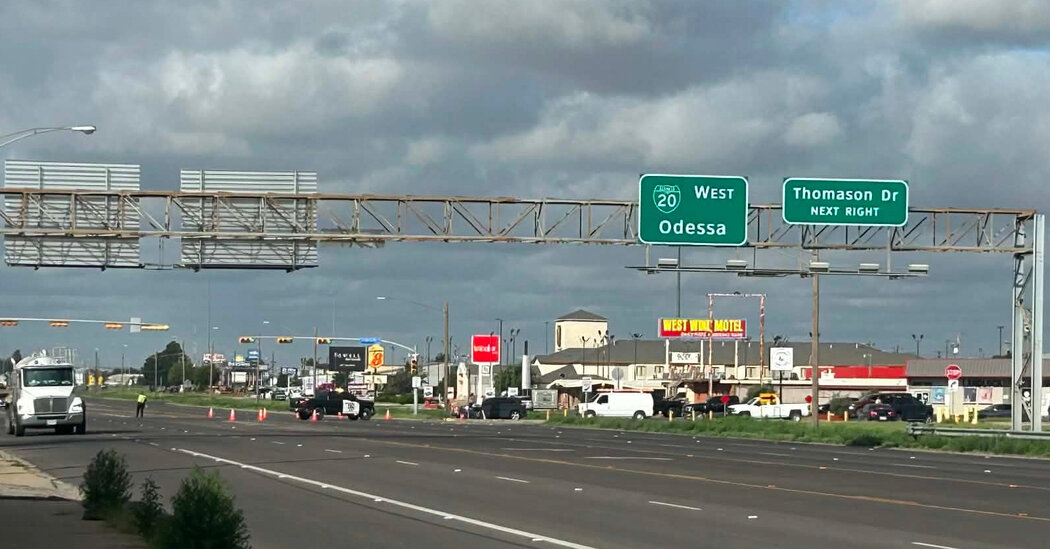
The response from law enforcement was swift, massive, and marked by a grim determination to protect the public from further harm. Around 8:00 a.m., as reports of gunfire began to filter through emergency dispatch channels, more than one hundred police officers, tactical units, and heavily armored vehicles converged on the 4600 block of West Wall Street. The scene quickly took on the appearance of a military operation, with the Midland Police Department and a SWAT team establishing a tight perimeter around the veterinary hospital near U.S. Highway 80. For the officers rushing toward the danger, the situation demanded a delicate balance of intense tactical precision and profound courage, as they knew that every passing second put more innocent lives at risk. Mayor Lori Blong aptly characterized the mobilization as an “all-hands-on-deck” crisis, bringing together multiple regional agencies in a unified effort to contain the threat and prevent the shooter from escaping into the surrounding neighborhoods. For hours, the heavily armed gunman remained barricaded inside the structure, turning the bustling commercial corridor into a ghost town of flashing blue lights, idling engines, and tense, whispered communications over police radios. The bravery of these first responders, who willingly placed themselves between a desperate shooter and the citizens of Midland, underscored the solemn duty of public service during moments of absolute chaos. They stood watch in the heat, navigated the high-stakes chess match of a barricaded suspect, and worked tirelessly to ensure that the surrounding community remained shielded from the volatile situation unfolding just yards away. The physical presence of armored personnel carriers and officers in tactical gear stood in stark contrast to the flat, open skies of West Texas, creating a surreal and unsettling visual landscape for residents who could only watch from behind police tape, praying for a peaceful resolution that seemed increasingly fragile with each passing minute.
While police secured the perimeter, another critical battle for survival was being waged just a few miles away at Midland Memorial Hospital. The medical center became a sanctuary of frantic hope and high-stakes trauma care as ambulance sirens heralded the arrival of nine victims from the shooting scene. Inside the emergency department, doctors, nurses, and support staff mobilized with practiced efficiency, thrusting themselves into the whirlwind of saving lives under extreme pressure. Four of the arrived patients were immediately rushed into operating rooms, where surgical teams worked frantically to repair the damage inflicted by gunfire, while five others were stabilized in critical but steady condition. The atmosphere within the hospital walls was further charged with tension as the facility was placed under a precautionary lockdown, a necessary measure that nevertheless amplified the anxiety of patients, visitors, and staff members cut off from the outside world. For nearly three hours, until the lockdown was finally lifted around 11:20 a.m., the hospital existed in a suspended state of fear and focus, with families of the wounded clutching each other in waiting rooms, suspended between hope and dread. The dedication of these healthcare workers, who transitioned instantly from routine medical care to managing a mass casualty event, highlights the quiet heroism that anchors a community during its darkest hours, proving that even in the face of sudden destruction, the human instinct to heal and comfort remains incredibly powerful. This sudden influx of trauma shook the hospital to its core, forcing staff to balance the intense physical needs of the wounded with the profound psychological shock of a city under siege. Outside the operating doors, the quiet weeping of relatives and the soft rustling of medical scrubs created a somber symphony, reminding everyone present of the fragile thread upon which human life hangs during such senseless acts of violence. The lifting of the lockdown brought some physical freedom, but the emotional weight of what those doctors and nurses witnessed—and what those families are now forced to endure—will linger in the hallways of Midland Memorial for a long time to come.
The geographic backdrop of the tragedy added a layer of everyday familiarity that made the violence feel all the more intrusive and shocking. The veterinary hospital sits along a stretch of West Wall Street characterized by budget hotels, local businesses, and the steady hum of highway traffic—a transit corridor where working-class people go about their daily routines. Among those watching the tragedy unfold in real-time was Vikram Khurmi, a front desk worker at the nearby Grand Texan Hotel & Convention Center. For Khurmi and other employees in the immediate vicinity, the morning began like any other, only to be abruptly interrupted by the screech of tires, the blare of sirens, and the sudden, overwhelming blockade of traffic by law enforcement. From hotel windows and storefront doors, workers and guests peered out at a landscape transformed into a high-stakes standoff, watching as streets they drove every day were cordoned off with yellow tape and guarded by heavily armed men. This disruption of the ordinary highlights how acts of public violence hijack the safe spaces of our daily lives, turning a routine Friday workday into a historical marker of collective trauma. The people who live and work along this corridor were not merely spectators; they were ordinary individuals forced to suddenly navigate the terrifying reality of a threat just outside their doorsteps, highlighting how deeply interconnected a community becomes when danger arrives unannounced. The juxtaposition of a veterinary hospital—a place where families bring their beloved pets for comfort and care—and the gritty commercial strip of motels and highway lanes amplified the sense of disorientation. Citizens who normally stopped for coffee or headed to work found themselves stranded on roadsides, communicating through frantic text messages to assure worried relatives they were safe. The collective heartbeat of the neighborhood seemed to pause, suspended in a state of hyper-vigilance as the community wrestled with the realization that their familiar streets had suddenly become a national news headline.
As the grueling hours dragged on, the tense standoff finally reached its grim conclusion shortly before noon, when authorities confirmed that the barricaded gunman was dead. While the termination of the active threat brought an immediate sense of relief to the law enforcement officers on the scene and the residents watching from afar, the resolution was devoid of any true triumph, shaded instead by the heavy pall of tragedy. The death of the suspect closed the tactical chapter of the crisis, but it opened a vast expanse of unanswered questions, grief, and unresolved anger for a community left to pick up the pieces. A silence fell over the 4600 block of West Wall Street as the armored vehicles began to slowly withdraw and the flashing lights faded, leaving behind a crime scene that would be studied for days to come. Investigators now face the difficult task of piecing together the timeline, searching for a motive, and trying to understand what drove an individual to unleash such devastating violence upon an unsuspecting public. For the families of the deceased and the injured, the end of the standoff offers no comfort for the physical and emotional wounds that have been opened, leaving them to navigate a world that has been permanently altered in the span of a single morning. The finality of death in these situations always leaves a bitter aftertaste, as the search for justice is complicated by the absolute absence of the one person who could explain the unexplainable. This complex emotional landscape—where relief at the end of danger is immediately overshadowed by the reality of the loss—is a familiar pattern in the aftermath of American gun violence. Neighbors stood on their porches, watching the police tape flutter in the midday West Texas wind, speaking in hushed tones about the fragility of life. The realization that the gunman would never stand trial, never offer an apology, and never explain the darkness that led him to that veterinary clinic left an empty, echoing void that no amount of investigation could fully satisfy.
In the days and weeks ahead, the city of Midland will face the challenging journey of healing, relying on the deep-seated resilience and community bond that have long defined this West Texas enclave. Located in the heart of the Permian Basin, near the New Mexico border, Midland is a place where neighbors look out for one another, and that spirit of mutual support will be more vital than ever as they navigate the aftermath of this tragedy. The process of recovery will not be swift; it will require patience, empathy, and collective care as the physical injuries heal and the psychological trauma begins to be processed. Communities that survive such horrific events often find that their strength lies not in their ability to forget, but in their capacity to come together to support the afflicted, honor those who were lost, and rebuild their shattered sense of safety. Through vigils, fundraisers, and simple acts of kindness, the people of Midland will undoubtedly demonstrate that love and solidarity are far more enduring than the momentary terror of a Friday morning shooting. While the scars of West Wall Street will remain as a permanent part of the city’s history, they will also serve as a testament to a community that refused to be defined by violence, choosing instead to stand united in the face of adversity and walk forward together into a future of hope and recovery. This collective determination to heal is the true story of Midland—not the violence of a single individual, but the overwhelming grace, courage, and unity of thousands of citizens rising up to support one another in the wake of an unthinkable tragedy. As the community gathers in churches, living rooms, and local parks, the conversations will inevitably turn away from the horror of the gunman’s actions and toward the immense gratitude for the first responders, the dedication of the medical staff, and the memory of the innocent life lost. The road ahead is long, but the foundation of Midland is built on solid ground, shaped by generations of people who know how to weather storms and emerge stronger on the other side.