


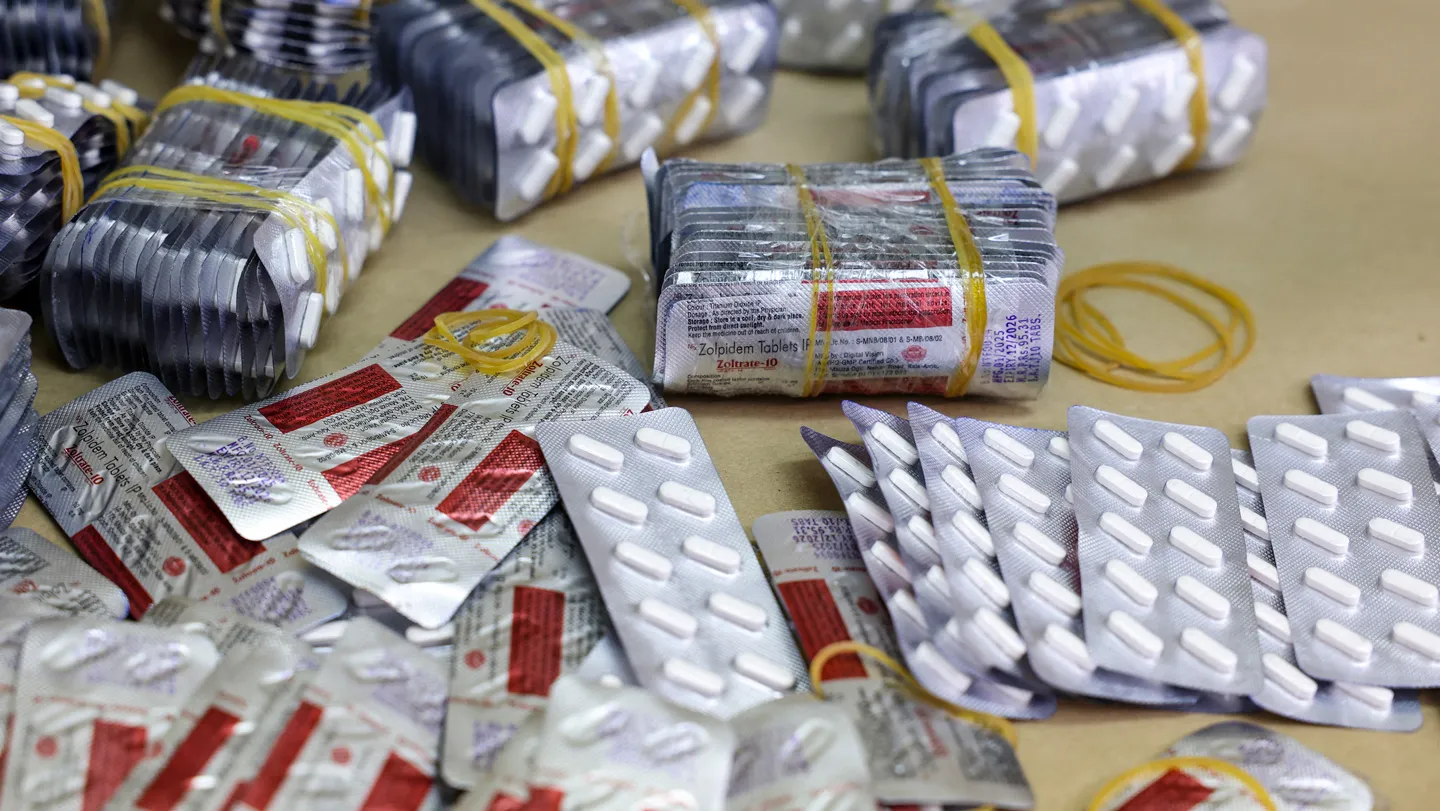
The devastating impact of the modern opioid crisis is a tragedy written in statistics, but its roots lie in a silent, high-tech war of chemistry. In communities worldwide, particularly across North America, illicit substances have evolved from processed agricultural products into highly engineered, fully synthetic compounds. At the dangerous vanguard of this transformation is fentanyl, a synthetic opioid developed in the mid-20th century for profound pain management and anesthesia. It is up to one hundred times more powerful than morphine, its natural cousin, meaning that a ludicrously miniscule dose can easily prove fatal. Just two milligrams of the substance—a tiny speck of powder that could effortlessly rest on the very tip of a sharpened pencil—is enough to suppress the human respiratory system and cause death. In 2023 alone, the United States recorded a staggering loss of more than 72,000 lives due to synthetic opioid overdoses. Because fentanyl is entirely synthetic, it contains absolutely no natural ingredients, meaning clandestine chemists do not need to rely on poppy harvests or vulnerable supply chains. Instead, they operate inside highly sophisticated, unregulated underground laboratories, utilizing basic precursors to craft deadly compounds. By making subtle, deliberate alterations to the chemical structure of the drug, these bad actors create novel variants. These unregulated analogs deliver the same powerful, heroin-like high to vulnerable users but remain completely invisible to standard law enforcement screen tests and regulatory frameworks, creating an incredibly profitable, highly addictive, and deeply lethal product.
The primary challenge facing the scientific, medical, and legal communities in combating this synthetic tide is the fundamental way we identify unknown chemicals. Historically, when a law enforcement official or toxicologist came across a suspicious pill on the street or in an autopsy, they relied on a physical comparison process. They would isolate the unknown molecule and compare its unique structural fingerprints against a reference library of known compounds. However, this repository is only as good as the physically synthesized, pure standards it contains. Generating these pure, certified reference materials in a legitimate laboratory is a slow, expensive, and legally complex process. Meanwhile, chemistry is practically infinite. Theoretical calculations indicate that there are billions of prospective chemical designs that can fit the fundamental blueprint of a fentanyl-like molecule. Out of these billions of possibilities, science has physically isolated, cataloged, and built standard reference guidelines for only about 60,000 variants. This enormous gap has plunged forensic and toxicology networks into an exhausting, reactive state of “whack-a-mole,” as biochemist David Wishart from the University of Alberta fittingly describes it. Every time authorities manage to catalog, ban, and develop testing kits for one specific version of fentanyl, underground chemists simply tweak an atom or swap out a molecular chain, producing a brand-new variant that slips right through the cracks of justice.
Recognizing that traditional reference libraries are a relic of a slower era, bioanalytical chemist Tom Metz and his innovative team of researchers at the Pacific Northwest National Laboratory in Richland, Washington, set out to construct a proactive alternative. They aimed to completely eliminate the historical dependency on physically synthesized reference materials, a shift that could revolutionize counter-drug operations. In his previous diagnostic work, Metz utilized customized, ultra-precise analytical instruments to study the structural traits common to all fentanyl molecules. The core logic of their approach relies on a clever botanical metaphor: all fentanyl variants share an identical, recognizable chemical trunk, regardless of how many superficial modifications are grafted onto them. Metz explains that it is highly reminiscent of a Christmas tree; while a pine tree remains fundamentally a pine tree, different households will decorate its branches with vastly different ornaments, lights, and garlands. Grounded in this insight, the PNNL researchers developed a computer program that systematically broke down all 60,000 known fentanyl and fentanyl-like compounds into their primary skeletal fragments. By computationally recombining these fragments into every mathematically viable configuration, the team successfully simulated the potential creations of illicit chemists, effectively dreaming up billions of hypothetical drug designs before they could ever be synthesized in a clandestine laboratory.
Naturally, generating a raw database of billions of theoretical molecules was only half the battle; the researchers had to separate chemical impossibilities from viable, dangerous drugs. To refine their massive virtual catalog, the team established several stringent filters within their software. They automatically discarded highly unstable molecules that would spontaneously break apart, as well as structures that lacked the specific chemical attributes necessary to cross the blood-brain barrier—a crucial physiological checkpoint that any psychoactive substance must pass to exert a heroin-like effect on the human body. For the remaining highly plausible structures, which still numbered over one billion unique variants, Metz and his colleagues leveraged the power of modern machine learning. They trained sophisticated artificial intelligence models to predict exactly how these non-physical, theoretical molecules would interact with high-end analytical equipment. The AI calculated exact values for how heavy each molecule would be, how it would fragment under stress, and what physical conformation or shape it would adopt during experimental analysis. By marrying chemistry with machine learning, the team succeeded in creating a comprehensive, entirely virtual dictionary of chemical signatures, effectively creating detailed profiles for countless deadly substances that do not yet exist in the physical world.
To demonstrate that this virtual directory could actually work in a real-world forensic scenario, the researchers designed a meticulous double-blind experiment that simulated a typical street seizure. They created a mock illicit pill by blending twelve commercially available, real-world fentanyl variants alongside a chemically similar non-opioid decoy molecule, mixing them with common street additives such as caffeine. They ran the mock pill through their specialized testing hardware to capture its raw structural data. Then, they handed this complex dataset—along with their custom, computer-generated library of over a billion virtual structures—to an independent analytical chemist who had absolutely no knowledge of the pill’s ingredients. The chemist’s objective was to determine whether the simulated library could identify the specific compounds without the aid of any physical reference standards. The results were nothing short of spectacular. Using iterative stages of elimination, the blind chemist successfully identified six of the fentanyl variants with flawless accuracy. For another four compounds, they narrowed the identity down to a minuscule list of highly probable candidates. While two variants managed to evade identification because they lacked the specific electronic markers utilized in this initial phase of the software, the study proved as a resounding proof-of-concept that virtual databases can reliably identify unknown synthetic poisons.
While the scientific community has praised this development as a monumental leap forward, experts urge caution, noting that significant hurdles remain before this technique can be deployed in everyday law enforcement. A. Way Fountain III, a chemist at the University of South Carolina, points out that the current process depends heavily on highly specialized, custom-built scientific instruments that are simply too expensive and complex for the vast majority of local crime labs and national security checkpoints to afford or operate. Additionally, the system must prove that it is not merely a one-trick pony; it needs to be tested and refined against other rapidly evolving, non-fentanyl drug classes, such as nitazenes—a highly dangerous new class of fully synthetic opioids that are increasingly popping up in fatal overdose cases. Metz and his team are already addressing these critiques, actively adapting their machine learning models to map out nitazene structures and planning more accessible iterations of their tech. Ultimately, as Columbia University molecular pharmacologist Gary Miller notes, this shift toward reference-free identification represents a true scientific revolution. By moving away from reactive, 19th-century cataloging methods and embracing proactive, machine-learning-driven prediction, we may finally possess the technological foresight needed to dismantle the illicit drug market, saving countless vulnerable lives.