


The tragic death of Austin Metcalf at a Texas high school track meet in 2025 was already a devastating loss of young potential, but the trial of his killer, Karmelo Anthony, quickly transformed a local tragedy into an explosive national lightning rod. Outside the Collin County courthouse, the air was thick with tension, grief, and a palpable racial divide long before the jury even began its deliberations. For weeks, the steps of the courthouse served as a makeshift stage where grieving family members, passionate activists, and polarized onlookers gathered under the hot Texas sun. What should have been a solemn search for accountability instead became a pressure cooker of societal anxieties, mirroring a deeply fractured nation where debates over justice, race, and self-defense are rarely confined to the quiet order of a courtroom.
When the jury finally handed down its verdict, convicting Anthony of murder and sentencing him to thirty-five years behind bars, the fragile peace outside shattered instantly. Prosecutors had successfully painted a picture of a senseless act of violence, arguing that Anthony had brutally stabbed Metcalf to death simply because the young man had asked him to leave a Memorial High School team tent. Though Anthony’s defense team argued passionately that their client had acted in desperate self-defense, the Texas jury remained unconvinced. As news of the decades-long sentence filtered out of the courthouse doors, the gathered crowd erupted. Visceral screams of relief clashed violently with cries of outrage, and the complex grief of the victim’s loved ones was momentarily drowned out by physical skirmishes and screaming matches that erupted on the pavement.
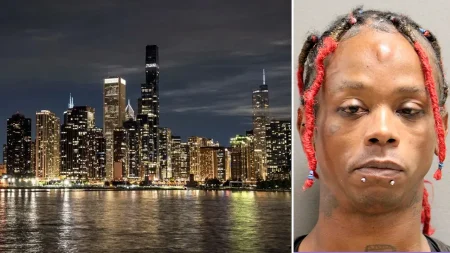
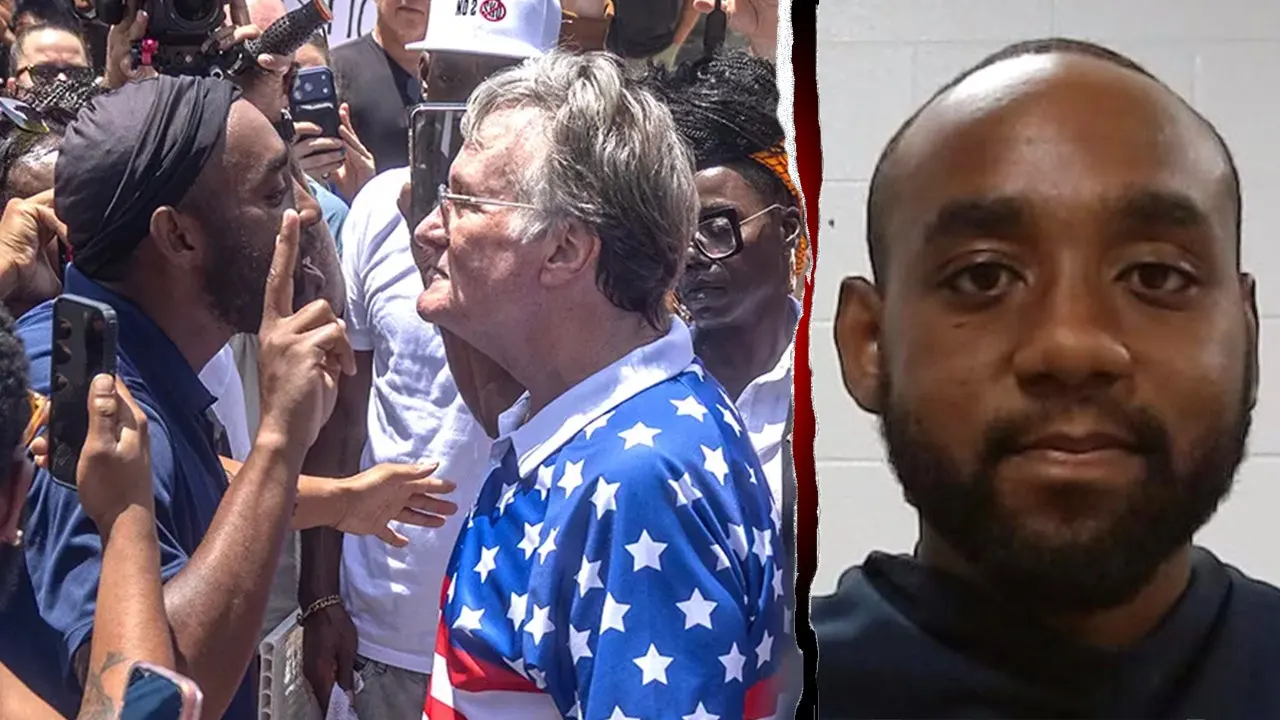
At the very center of this public explosion was a viral confrontation that epitomized the raw, face-to-face animosity of the day. A supporter of Anthony, later identified by authorities as Jerome Winston Parker, became the face of the day’s unrest when he was captured on camera in a heated, nose-to-nose shouting match with an Austin Metcalf supporter. To onlookers, Parker represented the deep-seated frustration of those who felt the justice system was inherently biased, but his dramatic public stand was cut short by the cold reality of the law. Shortly after the sentence was announced, Collin County sheriff’s deputies took Parker into custody not for his speech, but on an outstanding warrant for allegedly carrying a weapon unlawfully during an incident in the courthouse parking lot just three days prior. Held on a one-thousand-dollar bond, Parker’s sudden transition from passionate street advocate to jail inmate highlighted how quickly personal crusades can succumb to legal consequences.
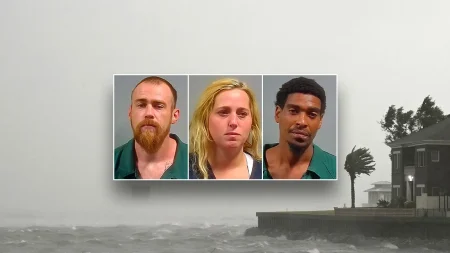
The chaos outside the courthouse did not just attract local demonstrators; it also drew in politically ambitious figures looking to make a statement, leading to another highly publicized arrest. Sholdon Daniels, an attorney, military veteran, and the Republican nominee for Texas’ 30th Congressional District, arrived at the scene wearing a distinctive pink tie and suspenders, seemingly prepared for both the media cameras and a political fight. Prior to his arrival, Daniels had taken to social media to deliver a searing indictment of Anthony, framing the murder as a culturally motivated hate crime and predicting a life sentence for a young man he claimed was raised to view himself as a victim. However, Daniels’ calculated political presence quickly degenerated into physical chaos when witnesses reported him getting involved in an alleged assault, culminating in his arrest by local police. Ultimately charged with public intoxication and booked on a five-hundred-dollar bond, the congressional hopeful went from projecting an image of law and order to sitting in a county jail cell.
To seasoned legal observers, the spectacle unfolding in Collin County bore a chilling resemblance to the racially charged media circuses of the past, most notably the highly polarized atmosphere of the O.J. Simpson trial. The defense’s narrative of survival and systemic bias clashed violently with the prosecution’s narrative of a cold-blooded murder, leaving no room for nuance or mutual understanding among the public. In an era dominated by hyper-partisan social media and instant video uploads, the courthouse lawn became an amphitheater of performance, where complex human tragedies were reduced to simplified talking points about race and cultural warfare. The genuine pain of a family mourning a son killed at a high school athletic event was tragically hijacked by ideological combatants, showing how easily the pursuit of justice can be overshadowed by the pursuit of political dominance and viral fame.
When the dust finally settled and the cameras were packed away, the sobering human cost of the entire ordeal remained painfully clear. Two men—Jerome Winston Parker and Sholdon Daniels—found themselves behind bars for letting their tempers get the better of them on the courthouse steps, their lives temporarily derailed by a conflict that was never truly theirs to fight. Meanwhile, Karmelo Anthony began a thirty-five-year journey behind concrete walls, his youth forfeit to a single moment of fatal anger, and the family of Austin Metcalf was left to navigate a lifetime of empty chairs and unspoken goodbyes. Ultimately, the events in Collin County served as a stark, tragic reminder that when a community loses its capacity for empathy and civil discourse, the courtroom ceases to be a place of healing, leaving only a cycle of anger, division, and ruined lives in its wake.