


Washington Broadens Global Crackdown on Iranian Weapons Procurement Networks
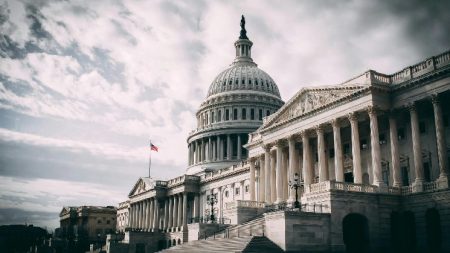
On Wednesday, the United States Department of the Treasury’s Office of Foreign Assets Control (OFAC) initiated a sweeping new round of economic sanctions, designating nine individuals and entities spread across mainland China and Hong Kong for their critical roles in facilitating illicit financial transactions and technological sourcing for Tehran. This strategic economic offensive, executed under the auspices of the government’s comprehensive “Economic Fury” campaign, directly target-blocks the complex operational systems underpinning Iran’s Islamic Revolutionary Guard Corps (IRGC) and the Ministry of Defense and Armed Forces Logistics (MODAFL). By intercepting these specific nodes in East Asia, Washington seeks to sever the stealthy supply lines through which Iran procures highly restricted Western and dual-use components—such as microelectronics, guidance systems, and specialized propellants—essential for its military-industrial complex, including missile programs and unmanned aerial vehicles (UAVs). As global tensions fluctuate in the Middle East and beyond, this latest enforcement action signals a major escalation in the United States’ long-standing commitment to neutralizing Iran’s regional power projection by choking off the third-party intermediary networks that allow its state-sponsored actors to operate within the cracks of the international financial system. By exposing these shadow connections, the Treasury Department is not merely issuing a punitive warning to the designated parties but is laying bare the systemic vulnerabilities of those global shipping and financing hubs—particularly in Hong Kong—that continue to harbor illicit state actors who knowingly subvert international non-proliferation standards to profit from regional destabilization.
Inside the ‘Economic Fury’ Campaign: Mapping the Multi-Billion Dollar Cyber-Financial Battlefield
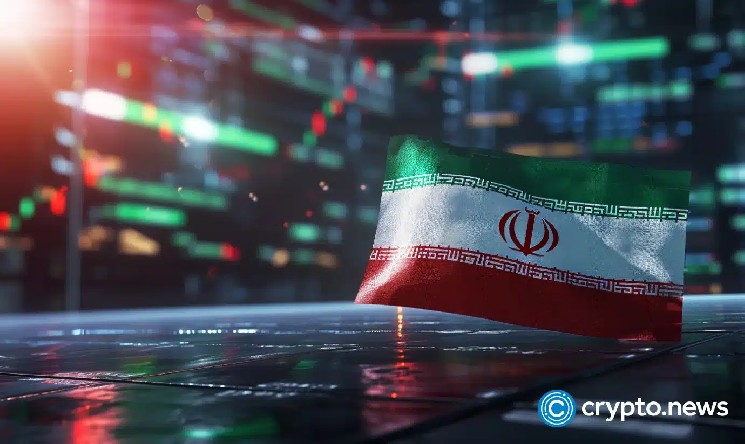
The deployment of these sanctions represents a focal point in the U.S. Treasury’s broader “Economic Fury” campaign, a meticulously designed pressure framework aiming to systematically dismantle the global procurement architectures that feed hostile foreign states. Rather than relying solely on traditional diplomatic posturing or broad trade embargoes, this initiative uses targeted financial intelligence to root out the specific shell companies, offshore bank accounts, and non-compliant money-routing entities that keep banned military apparatuses functional. In recent years, this strategic campaign has evolved from tracing simple international wire transfers to policing a highly dynamic, technologically advanced economic front, marked by the landmark freeze of nearly one billion dollars in Iranian-linked cryptocurrency assets. That massive cyber-forensic seizure demonstrated the immense scale of the financial networks at play, revealing how state actors have increasingly migrated their capital-grafting systems into decentralized digital spaces to bypass Western banking surveillance and maintain liquidity. Treasury officials emphasize that these illicit organizations operate like modern, decentralized multinational corporations, utilizing highly sophisticated liquidity pools, offshore trusts, and cross-border payment processors to obscure the ultimate destination of funds and materials. By coupling classic asset-blocking operations with aggressive digital-forensic tracking, the U.S. government is actively trying to outpace these adaptation strategies, sending a clear warning that any financial mechanism, whether operating within traditional Western jurisdictions or tucked away in unregulated electronic asset ledgers, remains fully vulnerable to targeted American enforcement.
The East Asian Corridor: How Shell Entities in Hong Kong and China Bypass Global Scrutiny
At the heart of this newly exposed network lies a geographic and corporate nexus operating out of the highly connected financial systems of Shanghai, Shenzhen, and Hong Kong, prominently featuring a Chinese national named Liu Boyu and a Hong Kong-registered corporate vehicle known as Mustad Limited. According to detailed regulatory findings released by American investigators, Liu allegedly functioned as a key strategic architect, manipulating a web of domestic and international corporate entities to quietly source critical raw materials and dual-use components on behalf of blacklisted Iranian military buyers. To hide the real identities of the end-users, these transactions were systematically routed through innocent-sounding shell companies such as Mustad Limited, an intermediary that has long drawn the scrutiny of Western intelligence agencies and was previously linked to a major enforcement action in May 2026. These East Asian entities leveraged Hong Kong’s historically liberal corporate registry laws, access to multi-currency banking networks, and strategic position as a global maritime shipping hub to purchase restricted technology and seamlessly transfer the necessary capital across international borders. By utilizing multi-tiered transnational payment structures, these intermediaries could disguise high-value military procurement contracts as routine commercial trade for consumer electronics or industrial machinery, capitalizing on the massive daily volume of global trade to shield their illicit actions from compliance officers. This case vividly illustrates how small, seemingly isolated trade consultancies and shell offices in dense commercial hubs can operate as vital, high-capacity economic valves, allowing state-backed weapons programs access to specialized components they could otherwise never legally acquire on the open market.
Executive Orders 13382 and 13902: The Legal Machinery Dismantling Proliferation Supply Chains
The statutory foundation enabling Washington’s decisive action rests upon a pair of powerful administrative tools: Executive Orders 13382 and 13902, which together provide the comprehensive legal framework required to block assets and freeze international trade channels. Executive Order 13382, established specifically to target the global proliferation of weapons of mass destruction and their delivery systems, allows the Treasury’s Office of Foreign Assets Control to aggressively lock any assets within U.S. jurisdiction belonging to individuals or organizations aiding these destabilizing programs. Complementing this is Executive Order 13902, which targets key productive sectors of the Iranian economy—such as construction, mining, manufacturing, and textiles—denying the Iranian regime the critical hard-currency revenue streams necessary to finance its regional proxies and military research. Under the severe terms of these executive directives, any property, bank accounts, or corporate shares held by the sanctioned entities within the United States or managed by American financial institutions are immediately frozen and reported to the government. Furthermore, these orders prohibit any U.S. citizens, permanent residents, or American corporations from conducting business with the designated targets, effectively cutting these foreign actors off from the U.S. dollar, which remains the foundational currency for the vast majority of global trade. By utilizing these dual legal mechanisms, the U.S. government implements a form of financial excommunication that extends far beyond domestic borders, as foreign banks that dare to continue hosting accounts for designated entities face the terrifying prospect of being cut off from the American financial system themselves.
The Beijing-Tehran Alliance: Rising Geopolitical Friction on the Global Stage
This aggressive sanctions rollout marks another highly contentious chapter in the complex, increasingly tense trilateral relationship between Washington, Beijing, and Tehran, particularly as China and Iran continue to solidify their 25-year comprehensive strategic partnership. From Beijing’s perspective, these unilateral measures represent a heavy-handed exercise of American “long-arm jurisdiction” that directly threatens Chinese economic sovereignty and the legitimate global trade activities of its private citizens and domestic corporations. U.S. policy planners, however, view China’s seeming reluctance to police these illicit procurement networks within its maritime borders as a tacit endorsement of Tehran’s aggressive regional posture and a direct threat to Middle Eastern stability. This friction is particularly visible in Hong Kong, once celebrated as a neutral bridge for global commerce, which is increasingly becoming a strategic battleground where Western export control policies clash directly with Beijing’s tightening administrative grip. The presence of entities like Mustad Limited highlights how the region’s vast financial infrastructure can be weaponized in modern proxy conflicts, forcing global multinational corporations to navigate an exceedingly complex and risky compliance landscape. As Western authorities pressure global banks to enforce these strict U.S. sanctions, Beijing has responded by drafting its own blocking statutes and anti-foreign-sanction laws, putting global financial institutions in the deeply precarious position of choosing between obeying American regulatory demands or facing severe legal retaliation from Chinese authorities.
The Strategic Horizon: Evaluating the Long-Term Pragmatism of Global Financial Sanctions
As the United States continues to intensify its economic warfare against foreign networks, many international security analysts are actively debating the long-term effectiveness of unilateral sanctions in an increasingly multipolar global economy. Critics frequently argue that rather than completely dismantling illicit procurement pipelines, constant financial blockades simply force these resilient networks to adapt, leading them to develop highly creative bypass methods, such as utilizing localized non-SWIFT financial networks, bartering, and state-backed digital currencies. Despite these criticisms, Treasury officials and foreign policy experts maintain that these targeted disruptions perform an essential defensive function by significantly increasing the logistical difficulty, time, and overall financial costs associated with Iran’s weapons acquisition efforts. By forcing Tehran to rely on complex, multi-tiered networks of illicit intermediaries and lower-tier, unrated foreign financial institutions, these sanctions dramatically slow down the pace of technological procurement and degrade the operational quality of the acquired military hardware. Ultimately, this ongoing campaign of economic attrition is not designed to produce a sudden, dramatic collapse of hostile regimes, but rather to systematically limit their capacity to destabilize global shipping lanes, threaten regional allies, and advance their nuclear aspirations. In this high-stakes, gray-zone conflict, the persistent and meticulous work of tracing paper trails, tracking digital assets, and shutting down front companies remains one of the Western alliance’s most valuable strategic tools for maintaining global security without resorting to active military engagement.