


A Continent Alight: World Cup Magic Returns to Mexico City Amid National Pride and Social Friction
A Historic Kickoff Amid a Sea of Green, White, and Red
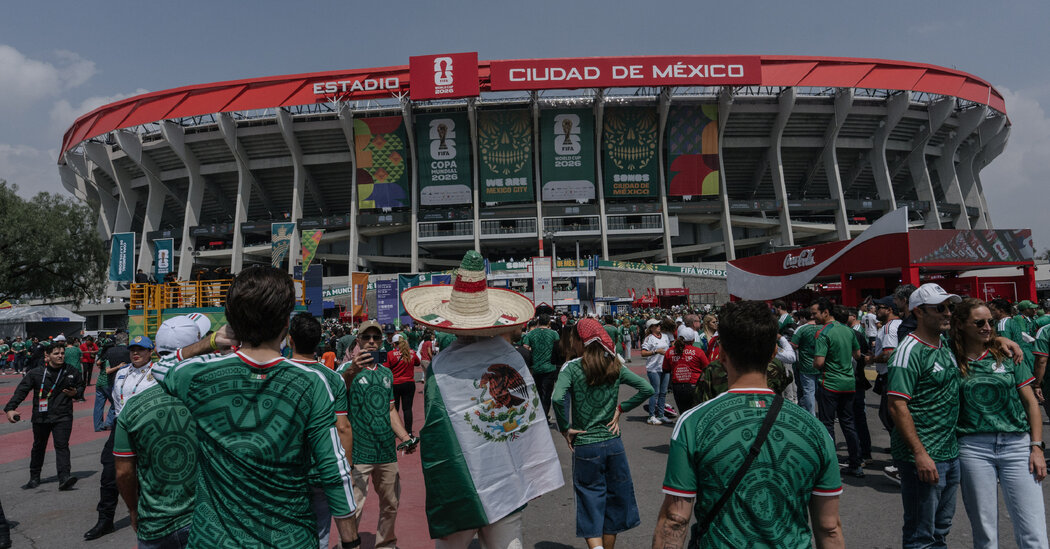
The air inside the colossal, sun-drenched bowl of the Estadio Azteca did not merely hum; it vibrated with a raw, kinetic energy that only the beautiful game can summon. As the referee’s whistle pierced the afternoon heat to signify the official kickoff of the FIFA World Cup, a deafening roar erupted from over eighty thousand spectators, transforming the historic stadium into a swirling kaleidoscope of green, white, and red. Mexico, a country where football is not merely a sport but a secular religion, was facing off against South Africa in an opening match laden with high expectations and deep cultural resonance. For months, the buildup to this moment had been characterized by an almost unbearable anticipation, with millions of fans across the country and hundreds of millions around the globe tuning in to witness the return of the world’s premier sporting event to Latin American soil. The sensory experience was overwhelming—the fragrance of sizzling street foods wafting through the concourses, the rhythmic beat of hand drums echoing from the upper tiers, and the collective intake of breath with every pass, tackle, and run. This was the long-awaited moment where athletic excellence and national pride converged, marking the start of a month-long carnival that promises to captivate humanity, unite disparate communities, and showcase the very best of international sportsmanship on a truly unprecedented scale.
The Streets Speak: Visualizing Dissent in the Shadow of the Stadium
Yet, just miles away from the stadium’s jubilant gates, a starkly different and far more somber drama was unfolding across the wide, tree-lined boulevards of Mexico City. An estimated 18,000 protesters converged on the city’s heart, turning the Paseo de la Reforma into a dense corridor of civic discontent that stood in sharp contrast to the corporate-sponsored euphoria of the World Cup kickoff. These demonstrators, representing a diverse coalition of grassroots organizations, human rights advocates, labor unions, and local communities, sought to leverage the immense, global media spotlight of the tournament to raise awareness for urgent domestic issues. Their grievances spanned a wide spectrum, from deep-rooted concerns over economic inequality and localized displacement driven by tournament infrastructure to demanding justice for systemic social issues that continue to challenge the nation. In response to this massive mobilization, the federal government executed a rapid and highly visible security operation, deploying thousands of heavily armored riot police officers across key intersections, public squares, and central transit hubs. The visual juxtaposition was striking—on one side of the city, fans painted their faces and waved flags in celebration, while on the other, walls of shields, helmets, and barricades stood as a silent, tense barrier between the state’s apparatus and citizens exercising their democratic right to protest.
   ┌────────────────────────────────────────────────────────┐
   │             THE WORLD CUP HOSTING TIMELINE             │
   └────────────────────────────────────────────────────────┘

                 1970 ───────► Mexico (Solo Host)

                 1986 ───────► Mexico (Solo Host)

                 Present ────► United States / Canada / Mexico
A New Administration Faces Its Ultimate International Litmus Test
Navigating this complex domestic tightrope is Mexico’s newly inaugurated President, Claudia Sheinbaum, who now finds her administration under an international microscope just as her term begins to take shape. Addressing the national and international press corps amid rising anxieties over the protests and the massive security presence, Sheinbaum project a calm, resolute demeanor, asserting that “everything is under control” and emphasizing her administration’s commitment to ensuring both public safety and the protection of civil liberties. For Sheinbaum, the World Cup is not merely an athletic showcase but a high-stakes geopolitical litmus test; she must demonstrate to foreign investors, visiting dignitaries, and global tourism markets that Mexico remains a secure, stable, and highly capable host for international mega-events. However, the presence of thousands of riot police on the streets highlights the delicate balancing act her government must maintain between presenting a polished, secure image to the world and addressing the profound, legitimate domestic challenges that continue to persist at home. The administration’s handling of these peaceful yet vocal demonstrations will undoubtedly set the tone for her presidency, proving whether her government can foster an environment where international economic opportunities and domestic social justice can genuinely coexist without conflict.
Trilogía de Fútbol: Mexico’s Unrivaled World Cup Legacy
The historical significance of this kickoff extends far beyond the immediate political and social tensions of the weekend, solidifying Mexico’s unique position in the pantheon of international football history as the very first nation to host the World Cup three times. This unprecedented trilogy began in 1970, an iconic tournament that saw Pelé lead a breathtaking Brazilian team to victory, forever cementing the Azteca’s reputation as a cathedral of modern sport. The magic returned in 1986, a tournament hastily organized after Colombia was forced to withdraw as host, which ultimately provided the stage for Diego Maradona’s legendary “Hand of God” and his spectacular “Goal of the Century” against England, cementing his status as a footballing deity. Now, by stepping onto the global stage once more, Mexico is not just hosting a tournament; it is reaffirming its deep, generational custody of the sport’s greatest narrative arc. This rich legacy serves as a source of immense pride for the Mexican people, bridging the gap between past triumphs and a modern era, reminding the global community that while players, tactics, and political administrations may change, the soul of international football remains deeply rooted in the soil, culture, and passion of Mexico.
┌─────────────────────────────────────────────────────────────────────────┐
│ MEXICO’S INCOMPARABLE HOSTING TRILOGY │
├──────┬──────────────────────┬───────────────────────────────────────────┤
│ Year │ Key Iconic Figure │ Defining Historical Moment │
├──────┼──────────────────────┼───────────────────────────────────────────┤
│ 1970 │ Pelé (Brazil) │ The crowning of Pelé’s legendary career │
│ 1986 │ Maradona (Argentina) │ The “Hand of God” & Goal of the Century │
│ Pres │ Joint North America │ The first tri-national tournament format │
└──────┴──────────────────────┴───────────────────────────────────────────┘
Borders Blurred by Football: The Geopolitics of the North American Bid
However, unlike the solo endeavors of 1970 and 1986, this iteration of the tournament marks a bold new frontier in sports diplomacy as a triple-joint-host initiative alongside Canada and the United States. This sprawling, continental format represents a massive logistical and diplomatic undertaking, stretching across different time zones, climates, and borders, and reflecting a broader trend toward collaborative, multi-national hosting models designed to distribute the immense financial and structural burdens of modern mega-events. The partnership serves as a fascinating exercise in soft power, temporarily blurring the complex political and trade borders of the North American continent in the name of a shared athletic spectacle. By presenting a united front, the three nations are seeking to demonstrate that despite their political differences, shared challenges, and occasional trade disputes, they can successfully cooperate on a project of unprecedented scale and complexity. Yet, this shared responsibility also brings unique pressures, particularly for Mexico, which must ensure its domestic infrastructure, transit systems, and security protocols seamlessly align with its wealthier northern neighbors, making this joint tournament a crucial test of regional integration and modern logistical capability.
Beyond the Scoreline: The World Cup as a Mirror of Modern Humanity
Ultimately, as the final whistle sounds on the opening day and the crowds slowly disperse into the warm Mexico City night, empty stadium seats and quiet avenues offer a moment of profound reflection on what the World Cup truly represents in the modern era. The juxtaposition of a joyous stadium celebrating a spectacular match against South Africa and the quiet determination of thousands of citizens marching for social change serves as a vivid reminder that the beautiful game does not exist in a vacuum. Rather, the tournament acts as a giant mirror reflecting the complex, often contradictory realities of the societies that host it—highlighting both our capacity for collective joy and the deep, unresolved challenges that exist beneath the surface of our global celebrations. Over the coming weeks, the goals, saves, and tactical masterclasses will dominate the sports headlines, but the true legacy of this tournament will be defined by how its hosts navigate the delicate balance between the spectacle on the pitch and the human lives off it. In this intersection of athletic brilliance, cultural legacy, and social resilience, Mexico City has set the stage for a World Cup that will be remembered not just for the trophies lifted, but for the complex, vibrant, and deeply human story it is sharing with the rest of the world.