


Hardware on the Chopping Block: How States Are Phasing Out Crypto ATMs to Combat Financial Fraud
The Frontline of Consumer Defense: States Lead the Charge Against Vulnerable Cash-to-Crypto Gateways
| ) | | | __| | | | / || | | | | / __||
| | | | | | | | |_ | || | |) | | | _ | |) |
| |) | || | | | | | | ) | | < | | _) | /
|__/ _/|||||____/|| ||| _ |_| |__/|_|
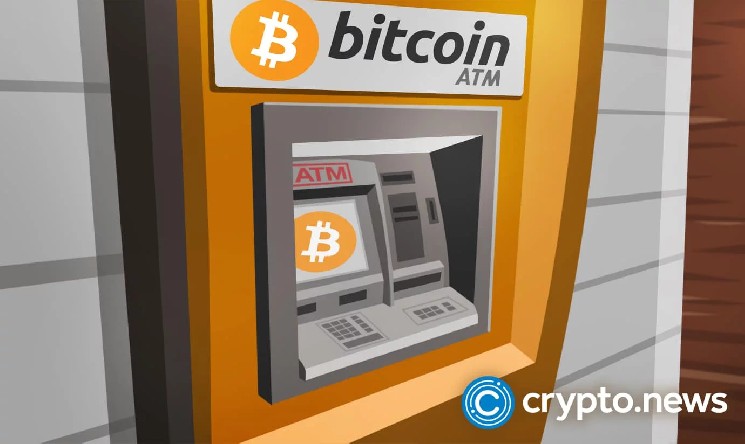
For nearly a decade, physical cryptocurrency automated teller machines—commonly known as crypto ATMs—proliferated in America’s gas stations, neighborhood convenience stores, and suburban strip malls. Marketed as democratic gateways to the complex marketplace of decentralized finance, these freestanding terminals allowed everyday consumers to instantly convert hard currency into digital assets like Bitcoin and Ethereum. However, what began as a novel convenience for tech enthusiasts has rapidly devolved into a major vulnerability for public consumer safety, prompting a decisive, bipartisan legislative rescue effort by state governments. In an unprecedented wave of consumer protection legislation, Delaware and New Jersey have advanced aggressive new bills aimed at completely outlawing these devices, moving both Mid-Atlantic states into alignment with pioneering jurisdictions like Indiana, Tennessee, and Minnesota, which have already codified total bans. This dramatic pivot from soft-touch regulation to absolute prohibition is fueled by alarming empirical evidence detailing how these machines facilitate financial crimes. According to the Federal Bureau of Investigation, digital asset fraud tied to physical kiosks reached historic highs, with the agency tracking 13,460 formal consumer complaints and a staggering $388.9 million in reported losses. Crucially, the FBI’s data highlights a poignant sociological crisis: individuals over the age of 50 accounted for more than half of these complaints, revealing that the primary victims of these untraceable cash-to-crypto pipelines are often vulnerable seniors who are systematically targeted by sophisticated, offshore criminal syndicates.
Inside Delaware’s House Bill 441: A Ninety-Day Mandate to Clear the Streets of Untrustworthy Terminals
| | ____| | / / / / |
| | | | | | | / / / / | |) |
| |_| | || | / / / / | <
|/||__// _/ // __|
In Dover, the legislative response to this rising tide of financial predation has been exceptionally swift and uncompromising. On June 9, the Delaware House Economic Committee overwhelmingly advanced House Bill 441, a piece of legislation designed to systematically dismantle the physical infrastructure of the local retail crypto market. Under the robust parameters of the bill, the ownership, installation, and operation of any cryptocurrency kiosk would be declared entirely illegal within state borders. Rather than offering operators a prolonged transition window or grandfathering in existing installations, the proposed statute demands that all operational machines be taken completely offline and physically removed from their locations within ninety days of the law taking effect. To prevent industry actors from finding creative loopholes to survive the ban, House Bill 441 explicitly bars retail point-of-sale systems and cashier-assisted solutions that mimic the functionality of an automated kiosk, effectively neutralizing the cash-for-crypto business model across the state. Democratic Representative Cyndie Romer, the primary sponsor of the measure, has consistently framed the bill as a necessary act of public hygiene, passionately asserting that these machines serve no viable economic purpose other than exploiting the uninformed. “These kiosks reduce digital currency to a predatory cash grab, strip-mining wealth from our local communities under the guise of technological progress,” Romer declared during a committee hearing. To back up its mandates, Delaware’s bill treats any violation of the ban as an unlawful trade practice under the state’s consumer protection statutes, exposing non-compliant operators to severe civil penalties of up to $10,000 per violation, while concurrently mandating that any illicit fees collected from consumers be refunded directly to victims or paid into the state’s Consumer Protection Fund.
New Jersey’s Decisive Move: Cutting Off the Physical Pipelines of Digital Asset Fraud
| | | | | | | | | | _ / || ____ / /
| | | | | | | | | | | | |) | _| V /
| | | |||| |||| | |_| < ) | |_ | |
|| _|____((() |||| ____/|| |_|
Directly across the Delaware River, lawmakers in Trenton are advancing a remarkably similar legislative campaign to purge their commercial centers of these controversial financial machines. On June 8, the New Jersey Senate Commerce Committee voted unanimously to advance Senate Bill 2141, a comprehensive piece of legislation that would make it classifiable as consumer fraud for any business entity to own, control, install, manage, sell, or offer crypto ATMs within the Garden State. New Jersey’s bill defines these devices with forensic precision, classifying them as any internet-connected terminal that allows users to execute two-way transactions—specifically buying, selling, sending, or receiving digital assets—using cash, debit cards, or traditional credit cards. During the committee sessions, state senators repeatedly linked the unchecked proliferation of these machines to an epidemic of elaborate phone-based fraud schemes, where bad actors pose as fake government officials, IRS agents, tech support specialists, or representative banking institutions to scare victims into depositing their life savings directly into a machine. The punitive structure of Senate Bill 2141 is designed to be highly deterrent, imposing a civil penalty of up to $10,000 for a first offense, which climbs to $20,000 for any subsequent violations alongside standard equitable consumer fraud remedies. If the bill successfully passes the full Senate floor—where it currently awaits a vote with significant bipartisan momentum—it will officially take effect on the first day of the sixth month following its executive signing, giving merchants a brief window to terminate their hosting contracts before facing state law enforcement procedures.
The Anatomy of a Scam: Why Physical Kiosks Have Become a Magnet for Elder Financial Exploitation
 _    _   _    _  _____ ___  ______   __  ___  _____   _     ____   ____  ____
/   |  | |  / |_   _/ _ |  _   / / / _ |  ___| | |   / ___| / ___||  _
/ | | | / | || | | | |) V / | | | | | | | _ | | | |) |
/ | | |/ | || || | < | | | || | | | | ) | | | /
// __| _// _| _/|| _|| _/|| |____|/ ||_|
To truly understand why lawmakers are moving toward complete prohibition rather than incremental regulation, one must examine the specific social psychology and operational design that make physical crypto kiosks the perfect instrument for digital asset fraud. Unlike online cryptocurrency brokerages, which generally require a multi-day onboarding process involving identity verification, bank account linking, and facial recognition scans, physical ATMs function on immediacy and anonymity. Scammers exploit this structural speed by keeping their victims on a live phone call, using high-pressure psychological tactics to induce panic—often claiming the victim’s social security number has been compromised, or that a warrant is out for their arrest. The victim is directed to drive to their nearest local grocery store, withdraw physical cash from their bank, and feed those bills into the machine, which then transfers the equivalent token value to a digital wallet address controlled by the scammer via a quickly scanned QR code. Because blockchain transactions are immutable, irreversible, and inherently pseudonymous, once the victim presses “send,” the money vanishes forever into the ether of global exchanges, leaving local police forces absolutely powerless to recover the stolen funds. For senior citizens who may feel intimidated by modern digital technologies, the tangible physical presence of a metallic ATM inside a respected local grocery chain lends a false veneer of security and legitimacy to the transaction, masking the underlying reality that they are transferring their retirements straight into hands of overseas cartels.
A Sector in Crisis: The Industry’s Defense and the Financial Collapse of Market Leaders
| |/ / / _ / || |/ / / | |
| ‘ / | | | | | ‘ / / | |
| . | | || |) | . / | |
||___/|__/||_ // ______|
As the regulatory noose tightens, the multi-billion-dollar crypto ATM industry is fighting an increasingly desperate battle for survival, arguing that a complete ban is a blunt, overly punitive instrument that harms legitimate merchant operators, hard-working hosts, and unbanked consumers who rely on cash-to-digital rails for cross-border remittances. Industry lobbying associations argue that the vast majority of transactions on their networks are entirely legitimate, pointing out that many operators have self-regulated by deploying on-screen scam warnings, mandatory transaction limits, and automated hold periods for high-risk transactions. However, these defense mechanisms have proved to be too little, too late in the eyes of state legislators, and the commercial fallout of this regulatory and legislative backlash is already visibly reshaping the corporate landscape. The most striking casualty of this hostile environment is Bitcoin Depot, once celebrated as the largest crypto ATM operator in North America, which was forced to file for Chapter 11 bankruptcy protection after a catastrophic perfect storm of escalating regulatory compliance expenditures, shrinking consumer demand, and mounting security overhead cut deep into their operational margins. This high-profile corporate collapse serves as a stark harbinger for the rest of the industry, illustrating that the golden era of placing unregulated financial terminals in public spaces is rapidly drawing to a close under theweight of public safety liabilities and intense sovereign scrutiny.
The Fragmented Future of US Fintech Regulation: Nationwide Bans and the Looming Institutional Shift
| | |/ | | _| | | | | | | |/ | | _| / | / |
| | | | | | |) | | | || | | || | | | | |) || | / / | | | || |_
| | | || | <| || | | | || | < | | / /| || | || | __) |
|| _|_/|| ______|| || || |_|_/|| _|// _/||____/
The accelerating wave of state-level crypto bans signals a profound, structural evolution in how the United States conceptualizes consumer protection, retail finance, and the boundaries of the digital asset economy. For years, federal regulators maintained a hands-off approach, hoping that market-driven self-correction and industry-led standards would sufficiently tame the criminal elements of the decentralized ecosystem. However, as the localized human cost of elder financial abuse becomes too severe for statehouses to ignore, states are reasserting their traditional roles as laboratories of democracy, deploying their localized police powers to protect their citizens when federal agencies seem stalled. This phenomenon is not confined to the United States; international markets like Canada have embarked on similar national trajectories, contemplating widespread bans on unregulated physical crypto transactions in response to identical spikes in domestic fraud reports. As we move deeper into 2026, the retail ecosystem will likely experience a sharp bifurcation, where physical cash-to-crypto gateways are permanently swept off the commercial map of progressive states, forcing the cryptocurrency market to revert entirely to digital-only, highly regulated bank transfer platforms. Ultimately, the systematic removal of these machines from our neighborhood convenience stores represents a healthy, necessary correction—a quiet declaration that the pursuit of financial innovation cannot be bought at the unconscionable expense of protecting our society’s most vulnerable citizens from ruin.