


Shadows Over the Levant: As Diplomacy Falters, Israeli Airstrikes Shatter Tyre’s Historic Sanctuaries
The Ash-Choked Skies of Tyre: Inside the Devastating Tuesday Bombardment
The ancient coastal skyline of Tyre, a historic cradle of Mediterranean civilization, was swallowed on Tuesday by towering columns of acrid black smoke as Israeli fighter jets unleashed a torrent of high-explosive airstrikes. The devastating bombardment, which targeted multiple high-rise structures and residential sectors across the southern Lebanese metropolis, came mere hours after the Israel Defense Forces (IDF) issued sweeping evacuation warnings that effectively ordered the entire municipality to empty out. According to urgent bulletins released by Lebanon’s Ministry of Public Health, the immediate aftermath of the strikes left at least eight people dead and dozens of others severely wounded, with rescue workers still clawing through mountain-sized heaps of concrete and twisted metal in search of survivors. The offensive was not confined to Tyre’s city limits; Lebanese state-owned media reported that Israeli warplanes and artillery units simultaneously pounded several surrounding towns and agrarian villages across the rugged valleys of southern Lebanon, frequently targeting locales that had received no prior evacuation notices. This sudden and intense escalation has underscored the complete unraveling of recent international diplomatic efforts, delivering a devastating blow to hopes that a freshly negotiated regional truce might finally bring quiet to a borderland ravaged by months of relentless cross-border warfare.
The Violation of Sanctuary: Panic in Tyre’s Ancient UNESCO-Protected Christian Quarter
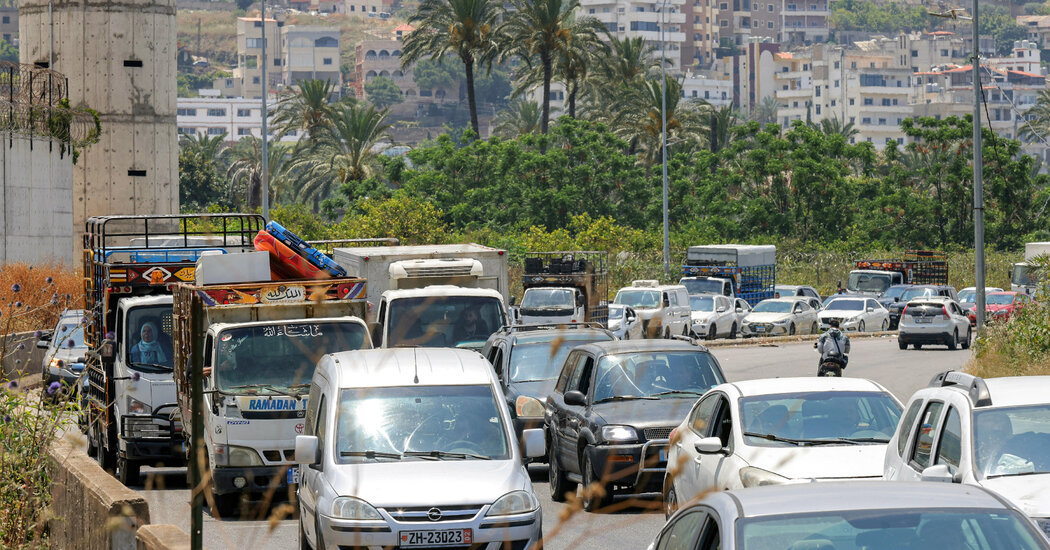
For the first time since the resurgence of open hostilities in March, the Israeli military’s urgent evacuation directives explicitly encompassed Tyre’s historic Christian quarter—a densely packed, labyrinthine neighborhood of cobblestone alleyways, traditional stone houses, and centuries-old churches that sits immediately adjacent to the city’s world-renowned Roman ruins. This inclusion marked a significant and terrifying expansion of the Israeli offensive, as the Christian quarter had long been regarded by locals as a neutral sanctuary, having been consistently spared from the heavy bombardments that have flattened other districts of the UNESCO World Heritage-listed city. In past conflicts spanning several decades of volatile Israel-Lebanon confrontations, residents of diverse sectarian backgrounds from all over Tyre fled to these harbor-side alleyways, seeking shelter under the presumptive safety of the neighborhood’s non-aligned status. On Tuesday, however, that long-standing illusion of safety evaporated instantly, prompting a desperate, chaotic mass exodus of the remaining population, with families packing cars to the brim with suitcases and elderly relative mobility-assist devices. Emergency shelters in the surrounding districts quickly became overwhelmed, forcing local municipal authorities and civil defense teams to scramble to evacuate bedridden seniors and vulnerable families before the first missiles struck the historic port.
The Collapse of Washington’s Peace Initiative: Trump’s Diplomatic Ambitions Under Fire
This latest cycle of violence has erupted at a highly sensitive geopolitical moment, directly threatening the centerpiece foreign policy initiative of the Trump administration, which has been working around the clock to broker a grand bargain to end the wider American military and diplomatic standoff with Iran. In a complex web of backchannel negotiations in Washington, Tehran’s representatives have steadfastly insisted on linking any resolution of the direct U.S.-Iran conflict with a permanent cessation of hostilities along the Israel-Lebanon border, arguing that regional peace is completely indivisible. Israel, however, has vehemently rejected any such diplomatic linkage, maintaining that its military operations to neutralize the threat of armed groups on its northern border must remain entirely separate from broader international treaties regarding Iran’s nuclear program and regional posture. Just last week, high-level negotiations convened in the American capital seemed to bear fruit when Israeli and Lebanese state officials tentatively reached a new, U.S.-brokered cease-fire framework aimed at stopping the bloodletting. Yet, the rapid escalation on the ground on Tuesday has laid bare the fragile reality of American diplomacy, proving that top-down diplomatic signatures in Washington struggle to hold weight when the underlying drivers of the regional proxy war remain completely unresolved.
The Spoiler of Peace: Hezbollah’s Defiance of the Washington Treaty
The structural flaw of the recent Washington-brokered truce lies in the political reality of Lebanon itself, where Hezbollah—the heavily armed, Iran-backed political and military movement—remains the country’s most dominant domestic force, yet was not a formal signatory to the peace talks. Hezbollah immediately and publicly rejected the terms of the cease-fire proposal, arguing that the agreement was fundamentally asymmetrical because it demanded that their fighters immediately cease all rocket and missile launches without extracting parallel, concrete defensive concessions or withdrawal guarantees from Israel. Because the officially recognized Lebanese civilian government in Beirut lacks the military power, political capital, or institutional capacity to compel Hezbollah to disarm or abide by international agreements, the diplomatic core of the treaty was effectively dead on arrival. In the days following the nominal agreement, Hezbollah units continued to stage tactical operations against Israeli border positions, which in turn drew devastating retaliatory strikes from the IDF, plunging both nations back into a state of active, unmitigated warfare. This dynamic illustrates the tragic paradox of modern Lebanese sovereignty, wherein the official state apparatus negotiates treaties in good faith on the international stage, only to find itself utterly powerless to enforce those commitments against an entrenched domestic militia that operates entirely outside the command structure of the national army.
Echoes of Dahiya: How a Single Beirut Strike Ignited a Direct Iran-Israel Confrontation
The path to Tuesday’s devastation in Tyre was paved by a dramatic weekend escalatory cycle that shattered the delicate, informal red lines that had previously prevented a wider, catastrophic regional conflagration. On Sunday, a high-precision Israeli airstrike leveled a heavily fortified compound in the Dahiya neighborhood—the sprawling, densely populated southern suburb of Beirut where Hezbollah maintains its primary command galleries and intelligence apparatus. The targeted strike in Dahiya was of such scale and strategic audacity that it prompted immediate retaliatory military responses from Iran, marking the first time the two regional powerhouses had exchanged direct military strikes since a highly fragile, U.S.-monitored truce took effect between Tehran and Jerusalem in April. Iran’s security council has since issued stern, public warnings to Israel, declaring that any continued military incursions into Lebanese territory, particularly southern strongholds like Tyre, will be met with overwhelming direct missile strikes against major Israeli urban centers. By attacking Tyre’s Christian quarter and broadening its target list, Israel appears to be calling Tehran’s bluff, betting that its sophisticated air defense systems and American backing will deter a full-scale Iranian intervention, even as the risk of a wider regional war reaches its highest level in decades.
The Struggle for Sovereignty: Lebanese Army Patrols Enter the Fray
In the tense hours preceding the airstrikes on Tuesday, the Israeli military defended its decision to target Tyre’s historic Christian neighborhood by claiming its intelligence services had identified a significant concentration of active Hezbollah operatives operating covertly from within the area’s civilian infrastructure. While the IDF publicly called on the local populace to demand the immediate expulsion of these partisan operatives from their residential streets, they notably declined to provide verified photographic or signal intelligence to support their claims to the public. In a desperate, late-stage bid to save the irreplaceable historic quarter from total physical ruin and prevent a humanitarian catastrophe, the Lebanese caretaker government ordered national army units to deploy directly into the neighborhood. Lebanese military patrols rapidly established checkpoints and began conducting sweeping security sweeps throughout the Christian quarter’s narrow plazas, attempting to reassure residents and establish a visible state security presence that would deny Israel a pretext for bombardments. These military maneuvers, however, ultimately proved too little, too late; the geopolitical momentum of the conflict had already crossed a critical threshold, and within hours, the first wave of warplanes arrived over Tyre, signaling a grim new chapter in a war that threatens to permanently alter the cultural, historical, and demographic landscape of Lebanon.